5 Smart Ways to Save Money on Groceries
Many people struggle with how to save money on groceries without sacrificing quality or convenience. It’s a common challenge, but you’re not alone in looking for smarter ways to keep costs down.
To save money on groceries, start by setting a clear monthly budget and tracking your spending. Plan your meals with simple, nutritious recipes and make a detailed shopping list organized by store sections.
Compare prices across different stores and choose store brands or buy in bulk for better value.
Also, time your shopping trips around sales and use loyalty programs for extra discounts.
Stick with these tips, and you’ll find even more ways to maximize your savings.
Key Takeaways
- Compare prices and shop at stores that offer the best deals and unit prices.
- Use store brands and buy non-perishable items in bulk when they’re on sale.
- Plan your meals and make a detailed shopping list to avoid impulsive buys.
- Sign up for loyalty programs and digital coupons to get personalized discounts.
- Time your shopping trips during sales events and try to avoid peak hours for better savings.
Set Your Grocery Budget and Know Your Limits
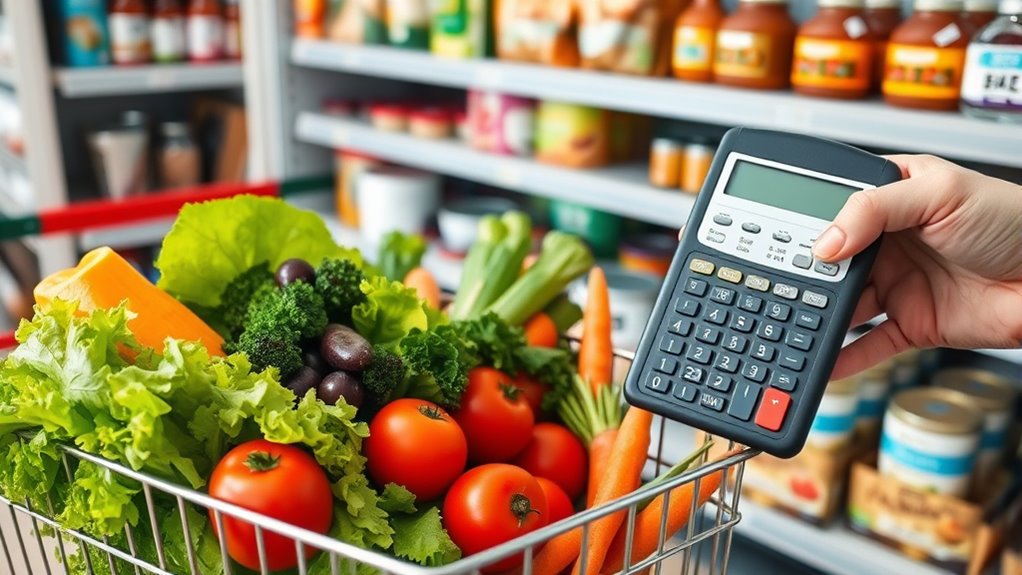
Before you start shopping, it’s important to set a clear grocery budget and know your spending limits. This helps you stay on track and avoid overspending.
Begin by looking at your monthly income and expenses, then decide how much you can comfortably spend on groceries. Use grocery tracking to keep an eye on your spending over time, which shows you patterns and keeps you accountable.
Break your budget into categories like produce, dairy, meats, and snacks. Assign a spending limit to each based on your typical needs, so you don’t overspend in one area and neglect others.
Keeping these categories in mind helps you prioritize essentials and cut back on unnecessary items. Regularly reviewing your grocery data helps you stay aware of your progress and where you might need to adjust.
Setting a firm budget and knowing your limits leads to smarter shopping and more savings over time.
Plan Your Meals and Make a Smart Shopping List
Once you’ve set your grocery budget and know your spending limits, the next step is to plan your meals and create a smart shopping list. Start by designing a weekly menu with simple, nutritious dishes. Incorporating meal prep can save you time and help cut down on impulse buys.
Plan your weekly meals and create a smart shopping list to stay within budget and reduce impulse purchases.
When planning, focus on seasonal produce because it’s usually cheaper and fresher. Make a detailed list of ingredients needed for each meal, and avoid buying extras that aren’t essential. Check your pantry and fridge first to see what you already have, so you don’t buy duplicates.
Organizing your list by store sections can make shopping easier and help prevent unplanned expenses. Think about batch cooking and using leftovers to make ingredients go further. Planning ahead stops last-minute buys and keeps your spending on track.
A good meal plan combined with a focused shopping list helps you stick to your budget and make smarter, cost-effective choices every time you shop.
Compare Prices and Find the Best Deals
To get the most bang for your buck, it’s important to compare prices across different stores and brands. Price comparison and deal hunting help you spot discounts and avoid overspending.
Before shopping, check flyers, apps, or online grocery sites to find the best deals. Don’t forget to compare unit prices—sometimes a larger size isn’t cheaper per ounce.
Use the table below to quickly see how different stores stack up:
| Store | Price for Item | Unit Price |
|---|---|---|
| Store A | $2.00 | $0.20/oz |
| Store B | $1.75 | $0.18/oz |
| Store C | $2.50 | $0.25/oz |
This simple comparison makes deal hunting easier and helps you buy the best quality at the lowest price.
Always take a moment to evaluate your options. Your wallet will thank you.
Choose Store Brands and Buy in Bulk to Save
Opting for store brands and buying in bulk can really cut your grocery expenses. Store brand benefits include similar quality at a lower price, so you save without sacrificing value.
Choosing store brands and bulk buying saves money without sacrificing quality.
Look for store labels on items like cereals, canned goods, and household essentials. They often cost less than national brands but offer similar quality.
When buying in bulk, follow tips like choosing non-perishable items or products you use often. This helps reduce packaging costs and means fewer store trips.
Keep an eye out for sales on bulk items and stock up when prices drop. Use airtight containers to keep your items fresh and prevent waste.
Be strategic: compare unit prices to make sure you’re getting the best deal. Only buy in bulk what you can realistically use before it expires.
Combining store brand choices with smart bulk buying practices helps maximize your savings and keeps your grocery budget in check.
Time Your Trips and Use Loyalty Rewards to Maximize Savings
Timing your grocery trips strategically and taking advantage of loyalty rewards can lead to big savings. Planning your shopping helps you avoid crowded stores or buying items when they’re less likely to be on sale.
Many stores release weekly deals on specific days, so shopping then is a smart move to access the best discounts. Using loyalty benefits also boosts your savings; sign up for store programs to earn points, discounts, or cashback on your purchases.
Check for personalized offers and digital coupons linked to your loyalty card to make your shopping more affordable. Combining smart timing and loyalty rewards ensures you’re getting great prices and earning rewards for future trips.
Stay alert for special promotions and seasonal sales, and plan your shopping around them to make your budget go further.
Frequently Asked Questions
How Can I Reduce Food Waste to Save More Money?
You can reduce food waste and save more money by practicing meal planning and portion control. Planning your meals ahead helps you buy only what you need, so you avoid impulse purchases.
Use proper portion sizes to prevent leftovers from going to waste. Store leftovers correctly and use them in future meals to stretch your groceries further.
Being mindful of expiration dates and getting creative with leftovers also helps minimize waste. This not only saves you money but also reduces your environmental impact.
Are There Specific Times When Grocery Stores Offer the Best Discounts?
You’ll find the best discounts during clearance sales and when stores mark down overstock, often right after holidays or seasonal shifts.
Ironically, that’s when you should shop in bulk, saving more money and avoiding last-minute splurges. Timing your visits around these sales means you can score great deals on essentials.
This way, your grocery budget can stretch further. Keep an eye out, and you’ll turn discount hours into your biggest savings opportunity.
What Are the Best Apps for Finding Grocery Deals?
You should try apps like Flipp, Ibotta, and ShopSavvy for finding grocery deals. These apps let you compare grocery prices easily, so you can spot the best deals around.
They also send you discount alerts, so you never miss a sale. Using them regularly helps you plan your shopping trips more efficiently and save money.
Plus, you can take advantage of exclusive digital coupons and discounts with these tools. They make saving on groceries simple and convenient.
How Can I Incorporate Seasonal Produce Into My Budget?
You can make the most of seasonal produce by planning meals around fresh, local items from farmer’s markets. Try incorporating seasonal recipes that highlight what’s in peak harvest, which is often cheaper and more flavorful.
Shopping at farmer’s markets not only saves you money but also supports local growers. Keep an eye out for deals and be flexible with your menus—it’s a win for your wallet and your taste buds.
What Tips Help Save Money on Organic or Specialty Items?
You can save money on organic and specialty items by looking for discounts and coupons online or in-store. Checking for deals regularly can really add up over time.
Visiting farmers markets often offers fresh, affordable produce, sometimes at lower prices than supermarkets. It’s a great way to get quality items without breaking the bank.
Consider buying in bulk when possible, as it reduces the cost per unit for specialty items. Plus, it’s convenient and helps you stock up on your favorites.
Signing up for store loyalty programs is also smart. They can give you access to exclusive discounts, helping you get more value out of your money on pricier goods.
Conclusion
By following these smart tips, you’ll turn your grocery shopping into a savings powerhouse. Set your budget, plan wisely, compare prices, and take advantage of store brands and rewards.
Time your visits just right, and watch your savings grow faster than a rocket ship blasting into space. With these strategies, you’ll conquer your grocery bills and keep more money in your pocket.
Smart shopping proves to be more powerful than you’d ever imagine, especially when you focus on saving money on groceries.