
7 Simple Strategies to Save Money on Groceries
Many people struggle with keeping grocery costs in check, especially with prices always on the rise. If you’re looking for ways to save money on groceries without sacrificing quality, you’re not alone.
To save money on groceries, plan your shopping list around meals, sticking to it and avoiding impulse buys. Shop during sales, off-peak times, and use coupons or cashback apps for extra savings.
Buy in bulk for non-perishables and choose store brands that match quality but cost less. Join reward programs and avoid shopping when hungry or stressed.
These simple ideas can greatly cut your bills. Discover more tips to stretch your budget even further.
Key Takeaways
- Plan your meals and make a detailed shopping list. This helps you avoid impulse buys and makes the most of your budget.
- Shop during sales, use coupons, and take advantage of cashback apps for extra discounts.
- Buy store brands and bulk items when you have space to store them. It saves you money per unit.
- Shop mid-week and during seasonal sales to find lower prices and fresh deals.
- Be mindful of triggers like shopping hungry, and use reward programs to boost your savings.
How to Plan Your Grocery List to Save Money
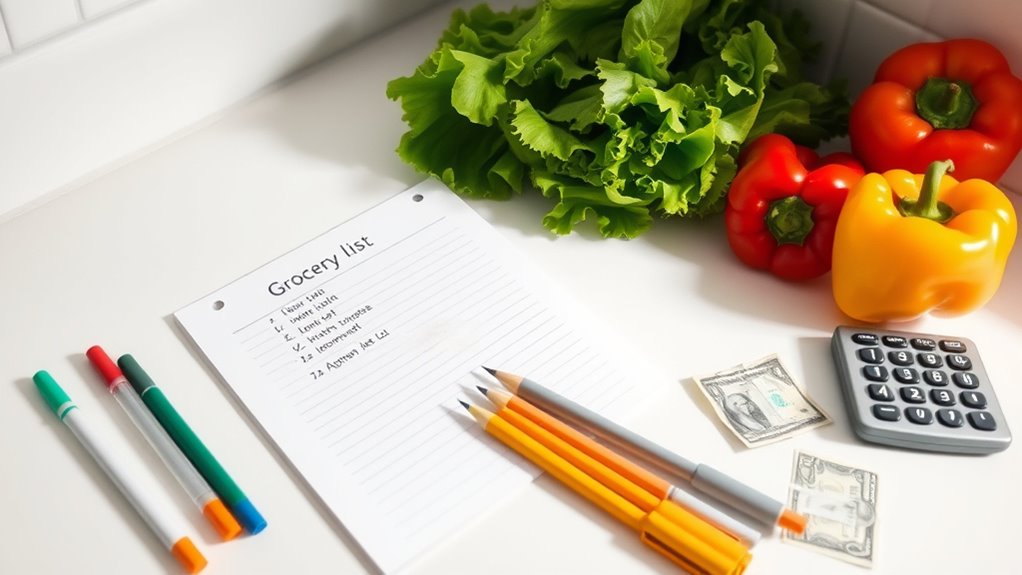
Creating a grocery list before you shop can really help cut your expenses. Start by planning your meals for the week, focusing on budget-friendly recipes that use affordable ingredients. This way, you avoid impulse buys and only get what you actually need.
Planning your grocery list helps save money by avoiding impulse buys and sticking to essential, budget-friendly ingredients.
Check your pantry and freezer to see what you already have. This helps reduce duplicate purchases and saves money. Make a detailed list based on your meal plan, grouping similar items together to save time and avoid forgetting essentials.
Stick to your list to prevent unnecessary splurges. Including versatile ingredients that can be used in multiple meals can also maximize your savings. Planning ahead means fewer last-minute trips to buy extra items, which often lead to higher spending.
Meal planning combined with a carefully prepared grocery list keeps your shopping focused. It helps you stick to your budget and make smarter, more economical choices.
When Is the Best Time to Shop for Lower Prices?
Timing your shopping trips can really help you save some cash. For instance, prices often dip during certain seasons or when big sales are happening. It’s like, if you know when stores are having their sales, you can get the best deals.
Also, a lot of stores update their weekly deals on specific days, so hitting the stores on those days can be a smart move. Once you get the hang of these patterns, planning your shopping trips becomes easier, and you’re more likely to score lower prices.
Seasonal Price Fluctuations
Understanding when seasonal price fluctuations happen can help you save a lot on groceries. Prices for seasonal produce tend to follow predictable patterns throughout the year. During peak harvest times, prices drop because there’s more supply, so it’s the best time to buy.
Off-season, prices usually go up because of limited availability. Keep an eye on these trends to get the most savings. Here’s a quick guide:
| Season | Typical Seasonal Produce | Price Trend |
|---|---|---|
| Spring | Asparagus, strawberries | Lower during peak |
| Summer | Tomatoes, berries | Lowest at harvest |
| Fall | Apples, pumpkins | Affordable during harvest |
| Winter | Citrus, root vegetables | Higher, off-season |
Knowing these cycles helps you plan your shopping around the best prices for seasonal produce.
Weekly Shopping Cycles
The best days to shop for groceries often depend on your weekly routine, but generally, shopping mid-week can help you find lower prices and better deals. By aligning your shopping frequency with sales cycles, you can optimize your budget and avoid impulse buys.
Use meal planning to figure out what groceries you need, which helps prevent unnecessary trips and keeps your shopping schedule consistent. Keeping an updated pantry inventory makes sure you’re not doubling up on items or missing essentials.
Shopping during mid-week usually means fewer crowds and access to discounts on perishable items nearing their markdown dates. Regularly reviewing your pantry and adjusting your shopping cycle can boost savings, making your trips more efficient and budget-friendly.
How to Find Grocery Deals and Coupons That Save You Big
Finding the best grocery deals and coupons can really help cut down your shopping bills. To save even more, check out digital coupons and grocery apps that often have exclusive discounts.
Use loyalty apps to earn rewards and get personalized deals. Keep an eye on seasonal sales and clearance racks for quick discounts on popular items.
Price matching at many stores lets you compare prices and get the lowest deal. Coupon stacking—combining manufacturer coupons with store discounts—can boost your savings even more.
Don’t forget community resources like local newspapers and online forums for extra coupons and deals. Here’s a quick comparison:
| Savings Method | How It Works | Best For |
|---|---|---|
| Digital Coupons | Redeem via grocery apps or websites | Regular shopping |
| Loyalty Apps | Rewards and personalized deals | Frequent shoppers |
| Seasonal Sales | Discounts during holidays/seasons | Big shopping trips |
| Clearance Racks | Last-chance markdowns on items | Stocking up |
Using these strategies, you’ll save big on your grocery bills.
Should You Buy in Bulk? Tips for Smart Bulk Grocery Shopping
Thinking about buying in bulk? Before you go for it, make sure you actually have enough storage space to keep everything safe and organized. There’s nothing worse than running out of room or having items go bad because they weren’t stored properly.
Also, don’t forget to compare those unit prices! It’s a smart way to make sure you’re really getting the best deal, especially when it comes to non-perishable stuff. Stocking up on these items can save you a lot of money in the long run, just be mindful not to clutter up your home with things you don’t need.
Assess Storage Space Availability
Wondering if bulk shopping is right for you? Before you jump in, take a good look at your storage space. Check your pantry, freezer, and cabinets to see how much bulk items you can store comfortably without creating clutter.
Think about your storage solutions and whether they’re flexible enough for larger quantities. Sometimes, reorganizing or adding shelves can make a big difference in space and access.
If your storage areas are limited or disorganized, buying in bulk might lead to waste or spoilage. But if you have plenty of well-organized space, bulk shopping can save you money and cut down on trips.
Be honest about your storage capacity so you can make smart, practical choices that work for your household.
Compare Unit Prices Carefully
Once you’ve checked your storage space, the next step is to compare unit prices to see if bulk buying really saves you money. Do this by dividing the cost of the larger package by its quantity.
This helps you figure out if the price per unit is lower than buying smaller packages. Don’t just go for the biggest package because it looks appealing; sometimes, the unit price is actually higher.
Look for unit price labels on shelves or do the math yourself. Remember, the goal is to get the best deal for your money, not just the biggest package.
Focus on Non-Perishable Items
Focusing on non-perishable items is a smart move because they last longer and can be bought in bigger amounts without going bad. Canned goods, dried beans, and pantry staples like rice and pasta have a long shelf life, making them perfect for bulk discounts.
When you’re shopping, take a look at nutrition labels to make sure you’re getting quality and good nutrition. Buying in bulk helps you stock up on emergency supplies and makes meal prep easier.
Look out for deals on items you use regularly, and be sure to store them properly to keep them fresh. This way, you cut down on store trips and save money over time.
Choosing Store Brands: Quality and Savings You Can Trust
Store brands are a smart way to save money on groceries without giving up quality. When you compare options, you’ll see they often cost less than national brands, making them a budget-friendly choice.
Many stores regularly check their store brand products to make sure they meet quality standards similar to name brands. Over time, your perception of store brand quality has improved as stores invest in better packaging and ingredients.
To feel more confident, read reviews or ask friends about their experiences. Sampling store brands at the store can also help you decide if they’re right for you before buying in bulk.
Keep in mind, many store brands are made by the same manufacturers as popular national brands. That’s why the quality is often quite similar.
Choosing store brands means getting the same reliability and taste at a lower price, so you can save money without sacrificing what matters most—quality.
Maximize Your Savings With Reward Programs and Cash-Back Offers
Taking advantage of reward programs and cash-back offers can really boost your grocery savings. Reward programs let you earn points or discounts on future buys, making each shopping trip more budget-friendly.
Many stores have loyalty cards that track your spending and give you exclusive deals. Signing up is usually free and simple, so it’s worth taking advantage of these programs.
Cash-back apps are a convenient way to earn money on your regular grocery trips. They often partner with stores to give you a percentage of your spending back, which you can redeem later.
To get the most out of these tools, compare different reward programs and cash-back apps to find the best fit for your shopping habits. Use them regularly to build up benefits over time.
How to Avoid Impulse Buys and Stick to Your Budget
Reward programs and cash-back offers can help you save money, but they might also tempt you into making unnecessary purchases. To avoid impulse buys, recognize your shopping triggers—whether it’s boredom, stress, or seeing appealing displays.
Reward programs can tempt unnecessary spending—be mindful of triggers like boredom, stress, or tempting displays.
Before heading to the store, create a shopping list based on your meal plan and stick to it. Practice mindful spending by pausing before grabbing extras and asking yourself if you truly need the item.
Avoid shopping when you’re hungry or tired, as these states make you more likely to buy impulsively. Use a fixed budget for each trip and leave your credit card at home if possible.
Keep a mental or written reminder of your financial goals to reinforce your commitment. By staying aware of your triggers and practicing mindful spending, you’ll reduce unplanned purchases and stay aligned with your grocery budget.
Frequently Asked Questions
How Can I Effectively Compare Prices Between Different Grocery Stores?
To effectively compare prices between stores, start by checking weekly flyers and online ads. Use store loyalty cards to access discounts and see if they offer price matching policies. This can help you get the lowest price without visiting multiple stores.
Keep track of prices for common items and consider apps that compare prices across stores. This way, you maximize savings while shopping efficiently.
What Are Some Common Shopping Mistakes That Increase Grocery Expenses?
Beware of busy-basket blunders like impulsive purchases, ignoring store layouts, or falling for brand loyalty. These habits can quickly add up and drain your budget.
Bulk buying can backfire if you haven’t planned ahead, and skipping seasonal shopping kills potential savings. Planning your meals helps avoid panic buys when you’re in a rush.
Understanding store layouts guides you past tempting temptations and helps you stick to your list. Staying mindful, planning well, and resisting unnecessary splurges keep your grocery costs in check and your wallet happy.
Are There Specific Days of the Week When Grocery Prices Are Typically Lower?
You’ll usually find lower grocery prices mid-week, especially on Tuesdays or Wednesdays, because of sales cycles and store restocking. Retailers often roll out weekly sales during these days.
Seasonal discounts also tend to be more attractive after holidays or changing seasons. Shopping during this time helps you maximize savings and avoid weekend crowds.
Plus, you can take advantage of fresh deals, which helps you stretch your grocery budget further.
How Can I Reduce Food Waste to Save Money on Groceries?
You can reduce food waste and save money by practicing meal planning and portion control. Start by planning your weekly meals so you only buy what’s needed.
Use proper portion sizes to prevent leftovers from going bad. Store perishable items correctly, and get creative with leftovers instead of tossing them.
These habits help you cut costs, minimize waste, and make your grocery budget stretch further.
What Are the Best Apps or Tools for Tracking Grocery Deals?
You should try grocery deal apps like Flipp, Ibotta, or ShopSavvy, which help you find the latest deals and discounts at your favorite stores. These apps make it easy to spot savings and plan your shopping trips.
Additionally, use price comparison tools like Google Shopping or PriceCruncher to compare prices across different retailers. They help you ensure you’re always getting the best deals.
These apps and tools make it simple to save money on groceries and get the most value out of your shopping.
Conclusion
By planning ahead and hunting for deals, you turn grocery shopping from a costly chore into a smart, budget-friendly habit. Imagine your cart filled with quality store brands and bulk buys, standing beside a tidy list and clipped coupons—each step saving you money.
Now, picture impulsive splurges replaced by mindful choices. With these strategies, you’re not just shopping—you’re building a financial safety net, one mindful decision at a time. Saving money on groceries is easier when you stay focused and intentional.