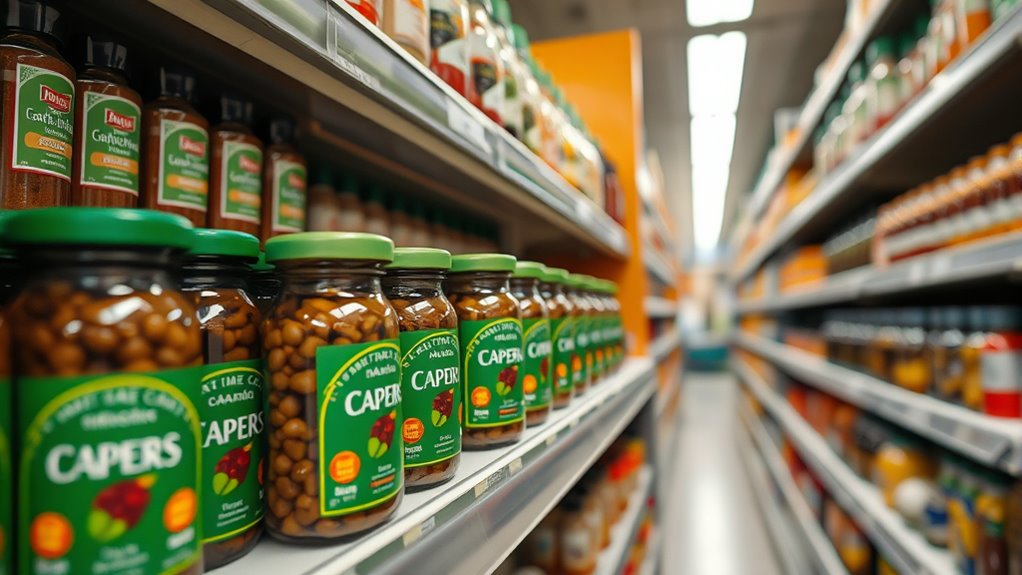
Where to Find Capers in the Grocery Store?
Finding specific ingredients like capers can sometimes feel like a treasure hunt in the grocery store. If you’re trying to whip up a Mediterranean dish or just want that perfect salty pop, you’re not alone—many people struggle with locating these tiny, flavorful jars. Don’t worry, I’ve got you covered.
You’ll usually find capers in the condiment or pickle aisle, near olives, pickled vegetables, or Mediterranean ingredients. Check jars or cans in these sections, especially in the international or gourmet food aisles.
Look for labels that specify “capers” and pay attention to packaging—whether in brine, vinegar, or jarred form.
If you don’t spot them right away, don’t hesitate to ask store staff for help.
Keep exploring to uncover more tips for finding and substituting capers.
Key Takeaways
- Check the condiment or pickle aisle for jarred or pickled capers, usually near olives and relishes.
- Look in the canned goods aisle for capers packed in jars or cans with brine or vinegar.
- Visit refrigerated sections for fresh or jarred capers near salads or seafood ingredients.
- Explore specialty or international aisles for Mediterranean or gourmet caper varieties.
- Ask store employees for help finding capers, especially if they’re in less obvious spots.
Where Are Capers Usually Shelved in Grocery Stores?

Capers are usually found in the condiment or pickle aisle of most grocery stores. When you’re looking for different varieties, you’ll often see them near other pickled vegetables or in jars alongside olives and relishes.
These tiny green buds come in various types, like brined, kosher, and nonpareil, so be sure to check the labels carefully. If you’re after recipes, look for jars labeled “capers,” which often include tips for how to use them.
In some stores, especially if they’re fresh or jarred, you might find capers in the refrigerated section near salads or seafood. Larger supermarkets tend to group them with ingredients used in Mediterranean or Italian cooking, making it easier to find what you need.
Knowing where they’re shelved can save you time and help you pick the right variety for your recipes.
Best Places in the Store to Find Capers
If you’re looking for capers, your best bet is to check out the canned goods aisle or the international food section. Those spots usually have a good selection, so it’s worth checking both to find the one that suits your taste. And while you’re at it, keep an eye out near other Mediterranean ingredients—capers often hang out there, making them easier to spot.
Canned Goods Aisle
If you’re looking for capers in the store, the canned goods aisle is your best bet. Here, you’ll find different storage options, usually in jars or cans that keep them fresh.
This aisle often stocks various capers, like non-pareil or larger ones, so you can choose based on flavor and size. Look for shelves dedicated to preserved vegetables or specialty condiments, usually near olives, pickles, and other preserved items.
Check the labels for brine or vinegar-based packs, which help maintain the capers’ flavor and texture. Since canned capers last a long time, they’re a convenient addition to your pantry.
International Food Section
After browsing the canned goods aisle, it’s worth checking out the international food section for more capers. This area often has products inspired by global flavors, giving you more culinary options.
You might find capers in jars or tins alongside other Mediterranean ingredients, making it easier to add them to authentic dishes.
Here are some spots to look for them:
- Mediterranean aisle—look for jars labeled “capers” or “Greek-style.”
- Specialty sections—these often carry imported ingredients for international recipes.
- Condiment shelf—some stores place capers near olives and pickles to highlight their culinary uses.
Exploring this section helps you discover different types of capers, so you can enhance your dishes with genuine flavors from around the world.
How to Recognize Capers in Different Packaging Types
Capers are available in several packaging options, each with unique features that make them easy to identify. Canned capers are the most common and are usually packed in brine or vinegar in glass jars or metal cans.
Look for labels that say “whole” or “pressed,” which indicate different types of capers. Pickled capers have a tangy flavor and are often stored in small glass jars, making them easy to spot on shelves.
You might also find caper paste or tapenade, which can be spread directly onto dishes. These are typically sold in small tubs or jars. Dried capers are rare but sometimes available in specialty stores. They are usually smaller and darker.
When shopping, think about your recipes. Some packaging works better for salads and garnishes, while others are great for cooking. Recognizing these packaging types helps you pick the right capers for your culinary needs.
Why Check Mediterranean and Specialty Food Sections for Capers
Because capers are a key ingredient in many Mediterranean dishes, checking the Mediterranean and specialty food sections can help you find higher-quality options. These sections often carry authentic and premium capers used in traditional Mediterranean cuisine, which means better flavor and texture.
Plus, specialty ingredients like capers are usually showcased here, making it easier to find varieties that aren’t in the regular aisles. Exploring these sections also gives you access to unique brands and preserved options, which can really elevate your dishes.
Here are three reasons to check these sections:
- Access to authentic Mediterranean cuisine ingredients.
- Better selection of high-quality, specialty capers.
- Opportunities to find unique brands and preserved varieties.
Pro Tips for Finding Capers in Large Grocery Stores
Looking for capers in a big grocery store? No worries! Usually, you’ll want to head over to the specialty aisle or check out the canned goods section first. Those spots are pretty common for capers.
And hey, don’t forget to glance near the condiments aisle too—sometimes you’ll find them next to pickles or olives. Keep these areas in mind, and you’ll be able to find that jar or tin you’re after in no time!
Check Specialty Aisle
Large grocery stores often stock capers in the specialty aisle dedicated to Mediterranean or international ingredients. Here, you’ll find gourmet ingredients and specialty items that cater to diverse cuisines. To locate capers efficiently, consider these tips:
- Look near other Mediterranean products like olives, anchovies, and sun-dried tomatoes.
- Check the shelf labels for sections marked “International” or “Gourmet Ingredients.”
- Don’t hesitate to ask a store associate if you’re unsure. Specialty items are sometimes shelved separately for easy access.
This aisle is ideal for finding high-quality capers, especially if you’re seeking authentic flavors or unique brands. Focusing on this section can save you time and guarantee you get the best ingredients for your recipe.
Search in Canned Goods
After checking the specialty aisle, your next stop should be the canned goods section. Here, you’ll find various canned varieties of capers, often packed in brine or vinegar. Look for labels that say “capers” or “small pickled flower buds.”
The flavor profiles can range from mild and salty to tangy and briny, depending on how they’re preserved. To narrow your search, check the shelves organized by cuisine or ingredient type.
| Canned Varieties | Flavor Profiles |
|---|---|
| Brined capers | Salty, tangy |
| Vinegar-packed capers | Slightly milder, sharp acidity |
| Capers in oil | Richer, more intense flavor |
| Smaller capers | Piquant, punchy |
| Larger capers | Milder, less salty |
Look Near Condiments
In big grocery stores, condiments are often grouped together on shelves or in refrigerated sections, making them a prime spot to find capers. Here, you can easily spot different capers varieties, such as salt-packed or jarred options, which influence their uses. Look for small jars or tins labeled “capers” near items like pickles, olives, and specialty spreads.
Check the condiment aisle for jars labeled “capers” or “pickled capers.”
Investigate refrigerated sections for fresh or marinated capers, often near dressings.
Examine specialty or international foods, especially Mediterranean or Italian sections, where capers are common.
This approach helps you find the right capers varieties quickly for your recipe needs.
How to Tell Capers Apart From Similar Pickled Items
Wondering how to tell capers apart from other pickled items? The trick is to look at their size, texture, and flavor. Capers are tiny, round, and usually about the size of a pea.
Capers are tiny, round, pea-sized, and have a firm, crunchy texture.
They’re packed in brine, giving them a salty, tangy taste. Unlike pickled olives, which are bigger, softer, and often have a richer, fruitier flavor, capers are firm and a little crunchy.
Brined vegetables like pickled cucumbers or carrots tend to be larger, crisper, and less pungent than capers. Pickled olives usually look glossy and may contain pits, while capers are seedless and have a matte, wrinkled surface.
When shopping, check the labels. Capers are usually marked as “capers” or “caper berries,” not as olives or mixed pickled vegetables. Recognizing these differences helps you choose the right ingredient for your dish.
How to Buy Capers Online and What to Look For
Thinking about buying capers online? It’s pretty straightforward, but there are a few things to keep in mind to make sure you’re getting the good stuff. First off, you’ll want to check the labels carefully. Look for details about how they’re preserved and where they come from—that way, you know they’re high-quality and authentic.
Also, it’s a good idea to shop with reputable sellers. Check out their reviews and ratings; this will give you a sense of their reliability and the freshness of their products. When you find a seller you trust, you can feel confident that your capers will meet your culinary needs and taste great.
Keep these tips in mind, and you’ll be able to make smart, confident choices when shopping for capers online. Happy cooking!
Selecting Quality Capers
Choosing high-quality capers starts with paying close attention to their appearance and packaging. Look for firm, plump, and uniformly colored capers—these are signs of freshness and good quality.
Check the packaging for a clear label showing the capers types, like nonpareil or surfinié, and make sure it’s sealed properly to prevent spoilage. When selecting, think about the benefits of capers, such as their tangy flavor and health perks.
Here are some key points to guide your choice:
- Opt for capers stored in brine or vinegar for preservation and flavor.
- Avoid packages with excess liquid or signs of spoilage.
- Trust reputable brands known for quality and consistency.
Best Online Purchase Tips
Buying capers online offers convenience and access to a wider variety, but it’s important to know what to look for to secure quality. When shopping online, focus on reputable sellers with good reviews and clear product descriptions.
Check for proper packaging, like glass jars or vacuum-sealed containers, to keep the capers fresh. Look for different varieties such as nonpareil or capote, and read labels carefully to understand their flavor profiles and salt content.
Choose products with minimal additives or preservatives for a healthier option. Comparing prices across sites can help you find a good deal, but don’t compromise quality just to save money.
Finally, pay attention to shipping policies and delivery times to make sure your capers arrive fresh and ready to use.
What to Do If You Can’t Find Capers in Your Local Store?
If you can’t find capers at your local store, don’t worry. There are several easy alternatives to get a similar tangy, briny flavor. These capers substitutes work well in your recipes.
Here are three options:
- Green olives – Chop them finely for a salty, tangy punch similar to capers.
- Pickles – Finely diced dill pickles can add a comparable briny flavor.
- Lemon zest and juice – Mix with a pinch of salt to mimic the acidity and saltiness of capers.
Using these options, you can recreate the flavor profile without missing out on the dish’s essence. Just remember to balance the saltiness and acidity to suit your recipe.
These flavor substitutions help you keep the intended taste even when capers aren’t available.
Top Substitutes When Capers Are Out of Stock
When capers are out of stock, you can still get that desired flavor by using effective substitutes. Options like chopped green olives, pickled green peppercorns, or artichoke hearts can mimic the briny, tangy taste you’re after.
Green olives, especially when chopped, offer a similar salty and savory profile, though they don’t have quite the same sharpness as capers. Pickled green peppercorns give a nice burst of tang and heat, making them great for bold dishes.
Chopped green olives and pickled green peppercorns both provide salty, tangy flavors to enhance your dishes when capers are unavailable.
Artichoke hearts, when marinated, add a mild, slightly nutty flavor that works well in many recipes. When choosing these substitutes, think about their flavor profiles and adjust your seasonings as needed.
While no substitute is exactly the same, these options can still deliver the salty, tangy notes that capers bring, so you don’t have to compromise on flavor if capers aren’t available.
Quick Tips for Finding Capers in Any Grocery Store
Finding capers in any grocery store is easier than you might think with a few simple tips. First, check the condiments aisle or the specialty foods section, where caper varieties like brined or kosher capers are usually stocked.
Second, look near other Mediterranean ingredients, such as olives and pickles, since capers are common in those recipes. Third, don’t hesitate to ask a store employee—they can quickly point you to the right spot.
When browsing, keep in mind that different caper varieties may be used in various recipes, so choosing the right type can improve your dish. If you don’t find them in the usual spots, some stores place them near jarred anchovies or in the international aisle.
Frequently Asked Questions
Are Capers Available in Organic or Non-Gmo Varieties?
Yes, capers are available in organic and non-GMO varieties. When you’re shopping, look for products with organic certification labels, which mean they’re grown without synthetic chemicals.
Non-GMO labeling shows that the capers aren’t genetically modified. These options are often found in health food sections or specialty aisles.
Always read labels carefully to confirm the product’s certification. This helps you choose capers that match your organic and non-GMO preferences.
Do Different Brands of Capers Vary Significantly in Flavor?
Yes, different brands of capers can vary a lot in flavor. You might notice differences in saltiness, tanginess, and overall intensity when you compare brands.
Some brands have a bold, briny taste, while others are milder and more delicate. These differences come from how they’re processed and where they’re sourced.
To find your favorite, try a few brands side by side and explore their unique flavor profiles.
Can Capers Be Found in International or Ethnic Food Aisles?
Yes, you can find capers in international cuisine or ethnic food aisles. These sections often carry various types, including traditional French capers and smaller, more pungent Mediterranean varieties.
Exploring these aisles gives you access to authentic options used in different cuisines. Look for jars or tins labeled with the cuisine or region to find a range of flavors.
These are perfect for enhancing Mediterranean, Middle Eastern, or Southern European dishes.
Are There Any Seasonal or Special Edition Caper Products?
You might stumble upon seasonal or special edition caper products, especially during holidays or regional celebrations.
These unique options often come with creative caper pairings or are tailored for specific caper recipes.
Keep an eye on limited-time displays or specialty sections—these products can add a touch of exclusivity to your dishes.
Their fleeting availability invites you to experiment and savor new flavors before they vanish.
How Long Do Unopened Capers Typically Last in Storage?
Unopened capers usually last about 1 to 2 years if you store them properly. Keep them in a cool, dark place, ideally in their original jar or an airtight container.
Storing them this way helps them stay fresh longer and keeps their flavor and texture intact.
Always check the expiration date on the package. If the brine looks cloudy or the capers smell off, it’s best to toss them out.
Conclusion
Just like following the breadcrumbs in a fairy tale, knowing where to look makes finding capers a breeze. Whether you’re searching for them on the shelves or exploring online options, your culinary adventure is within reach.
With a little patience and these tips, you’ll soon be adding that perfect burst of flavor to your dishes. Remember, every great chef started where you are now—ready to uncover hidden treasures in the grocery aisles.
When searching for capers, check the condiment or pickle aisle. They’re often near jarred olives or pickled vegetables. If you don’t see them there, browse the international foods section.
You can also find capers in the canned or jarred section, sometimes alongside other preserved vegetables. Online shopping makes it even easier—just search for “capers” and have them delivered right to your door.
So, whether on the grocery store shelf or online, knowing where to find capers makes your culinary journey smoother. Happy cooking!