Top 10 Grocery Items You Need to Buy
Feeling overwhelmed trying to figure out what to buy at the grocery store? You’re not alone—many people struggle with knowing which essentials to keep on hand. The key is focusing on top grocery items that make meal prep easier and healthier.
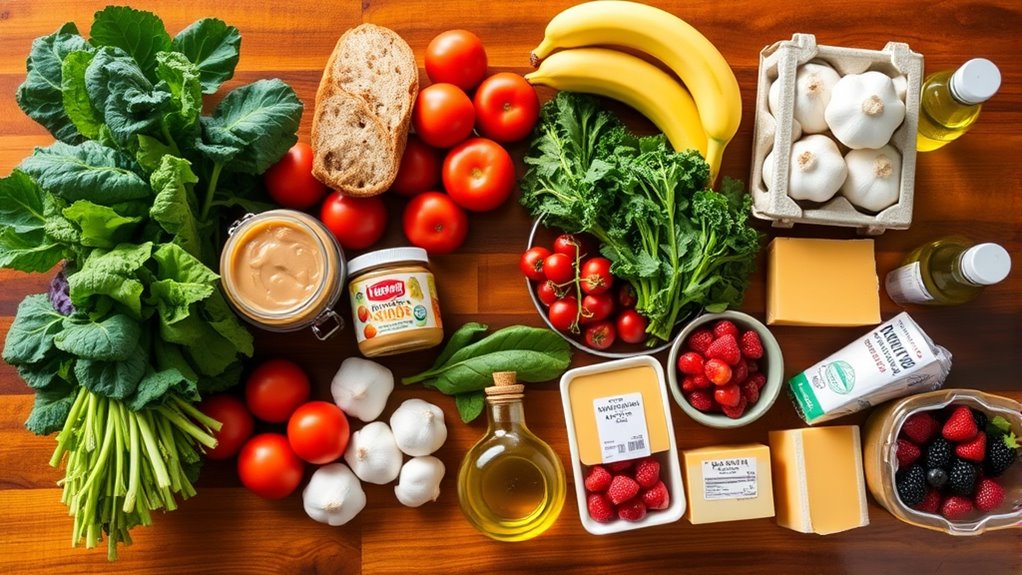
To equip your kitchen with essentials, focus on pantry staples like canned goods, dried legumes, and cooking oils. Pick fresh produce based on seasonal and ripeness indicators. Include versatile proteins such as chicken, eggs, and tofu, along with healthy fats like avocado and nut butters.
Don’t forget flavorful condiments and healthy snacks to keep cravings in check. Keep your staples organized and shop smart.
If you keep exploring, you’ll uncover more ways to make grocery shopping easier and smarter.
Key Takeaways
- Focus on essential pantry staples like canned goods, dried legumes, cooking oils, baking essentials, and seasonings for versatility. Having these on hand makes cooking a breeze and keeps your meals interesting.
- Prioritize fresh, seasonal produce with vibrant appearance and proper ripeness indicators for optimal flavor. It’s worth selecting produce that looks bright and feels firm for the best taste.
- Include key protein sources such as chicken, lentils, tofu, eggs, and seafood for balanced nutrition. These options cover a variety of tastes and dietary needs.
- Stock healthy fats, oils, and dairy alternatives like avocado oil, nut butters, almond milk, and plant-based cheeses. They add flavor and nutrition without extra hassle.
- Keep condiments and healthy snacks like hot sauce, soy sauce, nuts, and fresh fruit for flavor enhancement and on-the-go options. They’re perfect for quick bites and adding a punch to any meal.
What Are the Essential Pantry Staples for Every Kitchen?
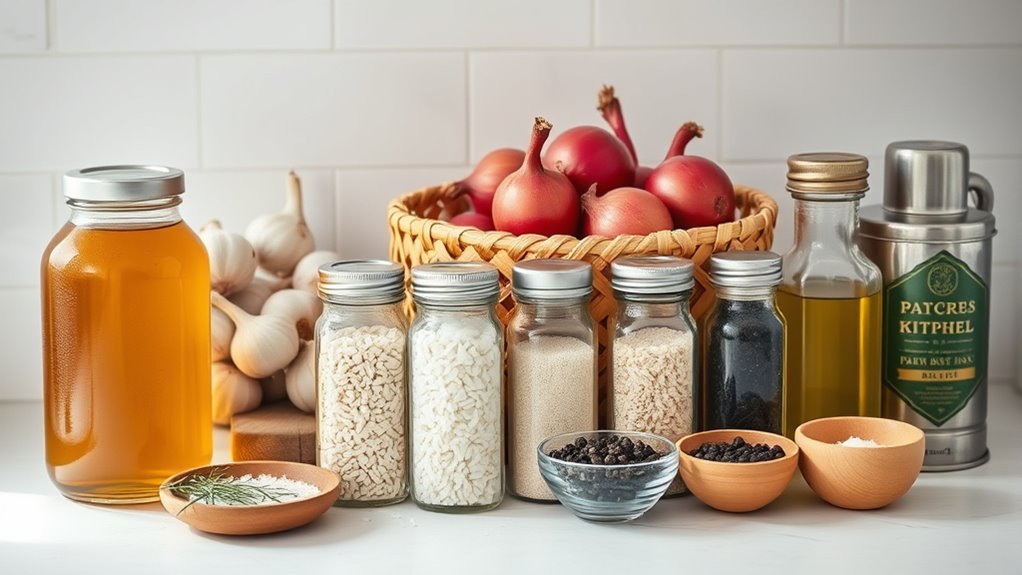
Having a well-stocked pantry guarantees you can whip up meals anytime without last-minute trips to the store. Essential pantry staples include canned goods like beans, tomatoes, and tuna, which add convenience and variety to your meals.
A well-stocked pantry ensures quick, easy meals without last-minute store runs.
Dried legumes such as lentils and chickpeas provide nutritious, versatile options for soups and salads. Cooking oils like olive oil and vegetable oil are fundamental for sautéing, roasting, and dressing dishes.
Baking essentials—flour, sugar, baking powder, and yeast—are vital for homemade bread and treats. Seasoning blends, salt, pepper, and herbs help enhance flavors effortlessly.
Don’t forget snack bars for quick energy boosts or easy snacks when you’re on the go. These staples form the backbone of your kitchen, ensuring you’re prepared for anything.
Stocking these items keeps your culinary options open while streamlining your shopping trips. It makes meal prep faster and more enjoyable.
How to Choose the Best Fresh Produce for Your Meals
When selecting fresh produce, paying attention to appearance, aroma, and texture can make all the difference in ensuring you bring home the best quality ingredients for your meals. Look for vibrant colors and firm textures, which often indicate freshness.
Use ripeness indicators like soft spots for avocados or a sweet aroma for melons. Seasonal selections tend to be more flavorful and cost-effective, so choose produce in season whenever possible to maximize taste and nutrition.
| Produce Type | Ripeness Indicator | Best Season |
|---|---|---|
| Tomatoes | Slight softness | Summer |
| Berries | Bright color, firmness | Spring/Summer |
| Apples | Firm with a crisp snap | Fall |
| Peaches | Fragrant, slight give | Summer |
Must-Have Proteins and How to Use Them
Proteins are essential staples that add flavor, texture, and nutrition to your meals, so including a variety of must-have options can keep your dishes interesting and balanced.
Grilled chicken is versatile—you can toss it into salads or serve it alongside veggies. Lentil soup offers plant-based protein and warmth, perfect for cozy dinners.
Tofu stir fry is quick to prepare and absorbs flavors beautifully, making it an excellent meat substitute. Egg muffins are easy to make ahead and great for breakfast on the go.
Quinoa salads combine protein and crunch, ideal for light lunches. Beef tacos provide hearty flavor and are easily customizable. Salmon patties are rich in omega-3s and perfect for a quick dinner.
Chickpea curry is filling, flavorful, and ideal for vegetarian meals. Shrimp skewers cook fast and pair well with rice or veggies. Finally, protein smoothies offer a convenient way to boost your intake anytime.
Easy Carbohydrates to Keep You Energized
Carbohydrates are your body’s main energy source, so choosing the right ones can keep you energized all day. For quick energy, go for simple carbs that digest easily, like fruits and certain grains.
These foods give you an immediate boost when you need it. Incorporate fresh fruits like apples or bananas for instant energy, and choose whole grains like whole wheat bread or oatmeal for sustained stamina.
Vegetables such as carrots and sweet potatoes also boost your energy levels. Legumes like beans and lentils provide long-lasting carbs to keep you going longer.
Healthy Fats and Oils to Boost Flavor and Nutrition
Including healthy fats and oils in your grocery list adds rich flavor and boosts the nutritional value of your meals. These fats are essential for heart health, brain function, and overall well-being.
For example, avocado oil has a high smoke point and a mild, versatile flavor that’s perfect for salads or cooking. Nut butters like almond or peanut are great sources of protein and healthy fats, making snacks and spreads more satisfying.
Olive oils, whether extra virgin or light, bring unique flavors and are excellent for dressings or sautéing. Coconut oil can be used in baking or stir-fries, adding a subtle sweetness and aroma.
Flavor-boosting fats like ghee offer a rich, nutty taste and are ideal for roasting or finishing dishes. Incorporating these oils and fats makes your meals more delicious and nutritious.
Dairy and Dairy Alternatives for Cooking and Snacking
Dairy options like milk, cheese, and yogurt are pretty much staples when it comes to cooking and snacking. They add flavor and nutrition to all kinds of dishes and snacks.
On the other hand, plant-based alternatives like almond milk, soy yogurt, and vegan cheese are becoming more popular, especially for folks looking for variety or who have specific dietary needs.
Thinking about both types can help you find the best fit for your recipes and your lifestyle.
Popular Dairy Options
In regards to cooking and snacking, choosing the right dairy or dairy alternative can improve your dishes and satisfy your cravings. Popular dairy options include a variety of cheese varieties, from creamy artisan cheeses to sharp cheddar, perfect for cheese boards or cooking.
Yogurt benefits extend beyond snacking, offering probiotics and dairy nutrition that support digestion. Milk alternatives like almond, soy, or oat milk provide lactose-free options for those with sensitivities.
Butter options range from traditional to plant-based, while cream choices add richness to sauces and desserts. Proper dairy storage keeps these items fresh longer, ensuring quality.
Whether you prefer sour cream for dips or butter for baking, these options boost your culinary experience and cater to different dietary needs.
Plant-Based Alternatives
As more people look for plant-based options for cooking and snacking, dairy alternatives have become really popular, especially for those with dietary restrictions or preferences. You can explore different plant milks like almond, soy, or oat—great for breakfast or baking.
Incorporate tofu and tempeh into your legume recipes or use meat substitutes for filling, hearty meals. For extra flavor and nutrition, sprinkle nutritional yeast or try vegan snacks that satisfy your cravings.
These dairy alternatives are often sustainably sourced, making them an eco-friendly choice. Plant-based proteins like legumes and soy boost your diet’s nutritional profile.
Whether you’re blending smoothies or making stir-fries, these options let you enjoy delicious, nutritious meals while supporting a more sustainable lifestyle.
Spices and Condiments to Elevate Your Cooking
Adding the right spices and condiments can really take your cooking to the next level. They have this magical way of turning an ordinary dish into something flavorful and exciting—trust me, it’s like a little boost of flavor in every bite.
Essential Spice Staples
Spices and condiments are the backbone of flavorful cooking, turning simple ingredients into memorable dishes. Focus on essential spice staples like cumin, paprika, and turmeric to build your spice collection.
These spices form the base for many blending techniques and combinations. Keep a well-stocked spice jar collection to quickly add depth and complexity to your meals.
Experiment with blending spices to create signature seasoning mixes that suit your taste. Knowing how to combine and balance flavors makes cooking easier and more fun.
By understanding core spices, you’ll unlock countless flavor possibilities, making every dish more inviting and satisfying. Use cumin, coriander, and chili powder for versatile blends, and cinnamon and nutmeg for sweet and savory dishes.
Garam masala and curry powder add robust flavor profiles that elevate your cooking. With these staples, you’ll be well on your way to flavorful, expertly seasoned meals.
Flavor-Boosting Condiments
| Condiment | Ideal Pairings |
|---|---|
| Hot Sauce | Eggs, tacos, grilled chicken |
| Soy Sauce | Rice bowls, stir-fries |
| Mustard | Sandwiches, roasted veggies |
| Ketchup | Burgers, fries |
| Vinegar | Salads, marinades |
Stock up on these to effortlessly boost flavor and elevate everyday meals.
Pantry Organization Tips
Organizing your pantry efficiently makes it easier to access the condiments and spices that can instantly improve your cooking. Start with a clear pantry inventory to see what you have and what you need.
Implement organization systems like labeled jars or pull-out drawers to keep everything visible and accessible. Group similar items together, such as herbs, spices, and sauces, for quick retrieval.
Regularly review and update your pantry inventory to avoid duplicates and expired products. Proper organization minimizes clutter and saves time during meal prep.
Consider using stackable containers or a spice rack to maximize space. Maintaining a tidy pantry helps you quickly find and use your flavor boosters, making cooking more efficient and enjoyable.
Healthy Snacks and Treats for Every Craving
When a craving hits, it’s important to have healthy snacks that satisfy without messing up your diet. Stocking up on nutritious options means you always have something satisfying at your fingertips.
Choose crunchy veggies like carrots, celery, or bell peppers paired with hummus for a low-calorie, fiber-rich treat. Fresh fruit such as berries, apple slices, or banana chips offer natural sweetness and antioxidants.
Nuts and seeds give you healthy fats and protein to help curb hunger longer, just watch your portions. Greek yogurt with a drizzle of honey or some granola makes a creamy, satisfying snack.
For a crunchy, savory fix, roasted chickpeas or air-popped popcorn are great choices. These nutritious options help you stay on track while satisfying every craving—whether you want something sweet, salty, or crunchy.
Add these snacks to your routine, and you’ll enjoy guilt-free indulgences whenever hunger strikes.
How to Store Your Grocery Staples and Household Items
Properly storing your grocery staples and household items guarantees they stay fresh, accessible, and in good condition for longer periods. Use effective grocery storage solutions like airtight containers to prevent spoilage and pests.
Clear, stackable containers help you see what’s inside and make the most of your space. Keep dry goods such as rice, pasta, and cereals in airtight containers to maintain freshness and avoid moisture.
For items like spices and snacks, small jars or containers work well to keep flavors intact. Label everything clearly so you can find what you need quickly and avoid waste.
Store canned goods and bottled items in a cool, dark place to prolong shelf life. Organizing your pantry by category not only saves time but also keeps your household items in top shape.
Proper storage isn’t just about convenience; it’s about maintaining the quality and longevity of your groceries and household essentials.
Smart Tips for Budget-Friendly Grocery Shopping
Keeping your grocery budget in check starts with smart shopping strategies that maximize value and minimize waste. One effective tip is to plan your meals ahead through budget meal planning, which helps you buy only what you need and avoid impulse purchases.
Make a shopping list based on your planned meals and stick to it to prevent unnecessary spending. Look for sales, discounts, and store brands, which often offer quality at a lower price.
Comparing unit prices can help you find the best deals on staples. Shopping in bulk for non-perishable items also reduces costs over time.
Avoid shopping when you’re hungry, as this can lead to impulse buys. Using digital coupons or apps can give you extra savings.
Frequently Asked Questions
How Can I Tell if Produce Is Truly Fresh and High-Quality?
To tell if produce is truly fresh and high-quality, look for bright, vibrant colors, a firm feel, and a fresh smell.
Avoid anything with blemishes, wrinkles, or soft spots. Seasonal produce is usually at its peak, so go for items in season.
Gently squeeze fruits to check for firmness, and look for crisp, unwrinkled leaves on greens.
These simple tips help you pick the freshest, best-quality produce every time.
What Are Some Common Substitutions for Expired or Unavailable Items?
When items are expired or unavailable, you can try recipe swaps like using Greek yogurt instead of sour cream or applesauce in baking.
Keep pantry essentials like canned beans, rice, or pasta handy for quick substitutes.
For fresh ingredients, consider frozen or dried options. These swaps help keep your recipes on track without a trip to the store.
That way, you can still enjoy your meals with minimal disruption.
How Do I Organize My Pantry for Maximum Efficiency?
To organize your pantry for maximum efficiency, create designated zones for different categories like grains, snacks, and canned goods.
Use clear storage solutions such as labeled jars and baskets to keep everything visible and easy to find.
Arrange items by how often you use them, placing everyday essentials at eye level for quick access.
Regularly declutter and rotate stock to prevent spoilage and keep things fresh.
This system saves you time, reduces clutter, and keeps your pantry neat and functional.
Which Grocery Items Have the Longest Shelf Life?
Canned goods and dried beans have some of the longest shelf lives among grocery items. You can store canned foods for 1 to 5 years, depending on the type.
Dried beans typically last 2 to 3 years if kept in a cool, dry place. To maximize their shelf life, keep them in airtight containers away from sunlight.
Regularly check for any signs of spoilage, and you’ll enjoy these staples for years.
How Can I Reduce Waste When Shopping for Perishables?
To reduce waste when shopping for perishables, focus on planning and storage strategies. Buy only what you’ll use soon and pick fresher items.
Store perishables properly—keep dairy in the fridge’s coldest section and fruits or vegetables in breathable containers.
Use leftovers promptly, and consider freezing items before they spoil. These steps help you cut down on waste, save money, and enjoy your groceries longer.
Conclusion
Stocking your pantry is like planting a garden. You’ll enjoy endless benefits with a little effort. Choosing versatile essentials, storing them properly, and shopping smart create a strong foundation for your daily life and cooking adventures.
Think of your grocery list as a roadmap guiding you through a delicious journey. Each item is a stepping stone toward tasty meals and nutritious choices. With these tips, you’ll turn your kitchen into a haven of flavor and nourishment.
By focusing on the top grocery items you need to buy, you’ll always have what’s necessary to whip up something satisfying. This approach makes meal prep easier and keeps your kitchen stocked with the essentials.