How Do You Find Cornstarch in Your Grocery Store?
Finding cornstarch at the grocery store can be tricky, especially with so many options and aisles to browse. Many people struggle to locate it quickly, which can be frustrating when you’re in the middle of a recipe.
To find cornstarch in your grocery store, head to the baking aisle near flour and baking powders, where it’s often in yellow or clear packaging.
Check the gluten-free or natural foods sections, and look for it in small cartons, pouches, or bulk bags.
Store layouts vary, so don’t hesitate to explore other aisles like thickeners or international foods.
If you want to uncover more tips and tricks, keep searching for helpful strategies.
Key Takeaways
- Check the baking aisle near flour, baking powders, or thickening agents.
- Look for yellow or clear packaging, often in small cartons or resealable pouches.
- Explore Asian or gluten-free sections, as cornstarch is common there.
- Observe organized shelves or end caps that highlight baking products.
- If you’re unsure about the product’s location, ask store employees for help.
How Is Cornstarch Usually Located in Grocery Stores?
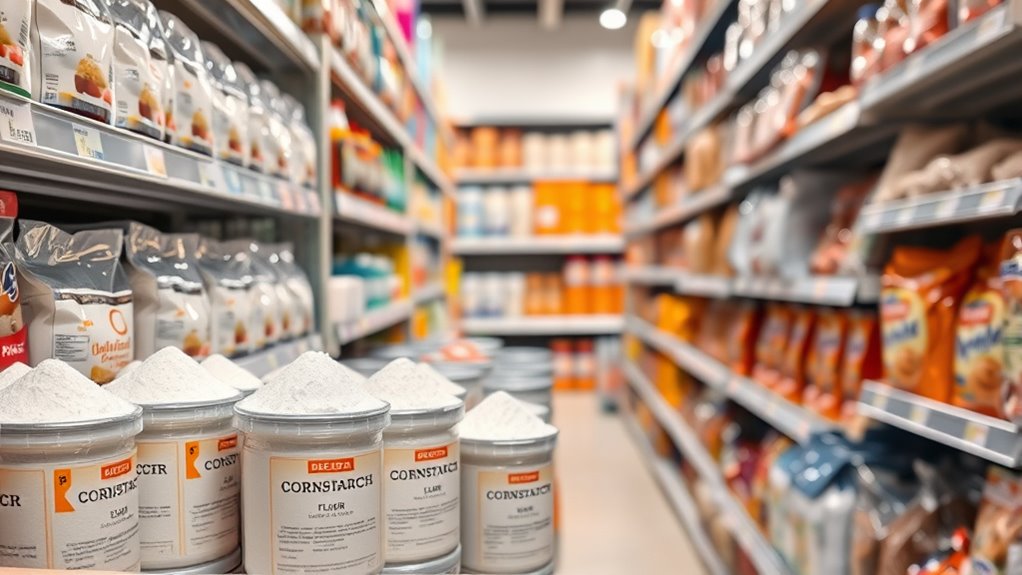
In most grocery stores, cornstarch is usually found in the baking aisle, often near flour and baking powders. You’ll typically see small boxes or bags labeled “cornstarch,” making it easy to spot.
If you’re in a hurry, look for the iconic yellow or clear packaging. Sometimes, it’s placed alongside other thickening agents or gluten-free products.
If you can’t find it there, check the aisle with Asian ingredients, since cornstarch is popular in Asian cuisine for thickening sauces and stir-fries.
Keep in mind, if cornstarch isn’t available, substitutes like arrowroot, potato starch, or tapioca starch work well in many recipes. They can often replace cornstarch for thickening or binding.
Knowing where to find cornstarch and its alternatives can make your cooking quicker and easier, whether you’re making sauces or desserts.
Are There Other Store Sections Where You Might Find Cornstarch?
Besides the baking aisle, you might also come across cornstarch in the Asian food section since it’s often used in Asian cooking recipes. Sometimes, stores put it near other thickening agents or specialty ingredients, so it’s worth taking a quick peek there. If you don’t spot it where you usually expect, just check these other areas—you might find it tucked away somewhere unexpected!
Baking Aisle Placement
While the baking aisle is the most common place to find cornstarch, you might also come across it in other sections of the store. This is especially true if you’re searching for baking substitutes or ingredient alternatives.
Cornstarch is often near other baking essentials or thickening agents. You might find it in the gluten-free baking section, natural or organic food aisle, or thickening and gravy mixes area.
It may also be in international or specialty food aisles, or in the baking powders and emulsifiers section. These locations can vary by store, so if you don’t see it in the baking aisle, check nearby sections.
Stores sometimes stock cornstarch alongside flour or other starches, making it easier to compare options for your recipes.
Asian Food Section
Many stores stock cornstarch in the Asian food section, especially where they carry ingredients used in Asian cuisine. This area often features thickening agents essential for dishes like stir-fries and sauces.
Since cornstarch is a culinary staple in Asian cooking, it’s usually placed near soy sauces, rice, and noodles. You might also find it alongside other ingredient substitutes for traditional recipes.
If you’re looking for cornstarch as a thickening agent, this section is a reliable spot. Keep in mind, some stores may place cornstarch near baking supplies or in the general grocery aisles, but the Asian food section remains the most common location.
Exploring this section can help you uncover different brands and packaging options suited to your culinary needs.
What Types of Cornstarch Packaging Will You Find?
When browsing the baking aisle, you’ll notice that cornstarch typically comes in a variety of packaging options. These vary in materials, size, and branding, giving you choices based on your needs. Most common are small or medium-sized paper or plastic cartons, which are easy to store and measure from.
You might also find larger bulk bags or resealable pouches, great for frequent baking. Some brands now offer organic options, often in eco-friendly packaging made from recycled or biodegradable materials.
Here are some packaging types you may encounter:
- Small cardboard cartons
- Resealable plastic pouches
- Bulk bags for larger quantities
- Glass jars for premium brands
- Organic options in eco-friendly packaging
These options help you choose based on convenience, sustainability, or organic preferences, making it easier to find the right cornstarch for your kitchen.
How Can You Recognize Cornstarch When It’s Not Clearly Labeled?
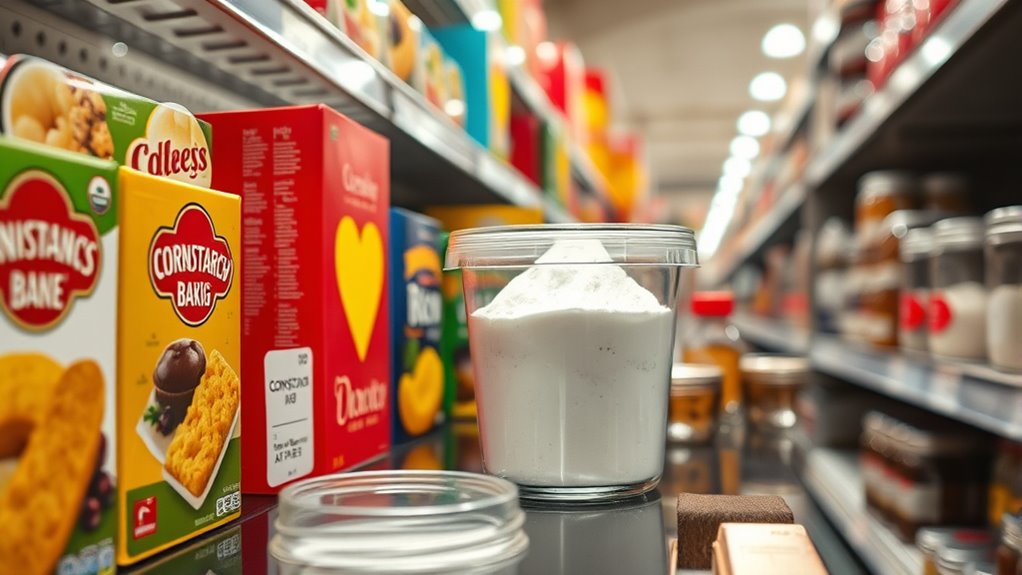
Even if the packaging isn’t clearly labeled, you can still identify cornstarch by examining its appearance and texture. Cornstarch usually looks like a very fine, white powder with a silky feel.
It’s much smoother and lighter than flour, often sifted and almost cloud-like in texture. When you touch it, it should feel silky and powdery, not gritty or coarse.
Recognizing this can help you tell cornstarch apart from powders like baking soda or powdered sugar, which have different textures and appearances.
Cornstarch is used to thicken sauces, soups, and desserts, so knowing what it looks like can help you find it quickly.
If you’re unsure or can’t find cornstarch, you might try substitutes like arrowroot powder or tapioca starch, which have similar thickening properties.
Familiarity with its appearance and texture makes it easier to identify cornstarch at the store, even when labels are unclear.
Are Health Food or Specialty Stores Better Places to Find Cornstarch?
While grocery stores often carry cornstarch, health food and specialty stores can be better places to find high-quality or organic options. These stores usually offer brands that focus on purity and health benefits, making them great if you’re after organic or non-GMO cornstarch.
You might also come across options with added nutritional benefits, like gluten-free or unbleached varieties. If you’re looking for specific health perks or premium ingredients, specialty stores often have better choices than regular grocery chains.
Here are some reasons to consider shopping at specialty stores:
- Access to organic and non-GMO cornstarch
- Availability of brands focused on health benefits
- Better selection of gluten-free or allergen-friendly options
- Higher quality products with fewer additives
- Support for local or small-scale producers
Tips for Quickly Spotting Cornstarch on Grocery Shelves
Looking for cornstarch quickly can be straightforward if you know where and how to spot it on the shelves. Start by familiarizing yourself with common grocery organization strategies; stores often group baking ingredients together, making cornstarch easy to find in the baking aisle.
Look for clear labels or packaging with bright colors like white or light blue, which are typical for cornstarch containers. Keep an eye on shelf labels and signs that highlight baking essentials.
If you’re in a store with limited space, check the middle shelves, as these are often meant for staple ingredients. For ingredient substitution tips, remember that cornstarch can sometimes be swapped with flour or arrowroot powder, which are usually stored nearby.
Does Shopping Online Make Finding Cornstarch Easier?
Here are some advantages:
- Instant search options make it easy to find specific products quickly.
- You can see detailed product descriptions and images to help you decide.
- Availability updates happen in real time, so you know what’s in stock.
- It’s simple to compare brands and prices side by side.
- Plus, grocery delivery services add extra convenience to your shopping.
Common Mistakes to Avoid When Looking for Cornstarch
Many folks think all cornstarch is pretty much the same, but that’s not quite right. You’ll find different types scattered in various parts of the store, not just the baking aisle. Sometimes, it’s tucked away in storage areas or specialty sections, so it’s easy to overlook.
Assuming It’s All-Purpose
Assuming cornstarch is just a type of all-purpose flour can lead to confusion and mistakes while shopping. Both are used as thickening agents, but they aren’t interchangeable in all recipes.
Cornstarch acts quickly and produces a clear, glossy finish, unlike flour. To avoid errors, recognize that substitutes for cornstarch include arrowroot, potato starch, or tapioca starch—each with different thickening properties.
Be cautious not to mistake cornstarch for other powders in the baking aisle, like baking soda or flour. Here are some key points:
- Cornstarch is a fine, white powder used for thickening
- It’s different from all-purpose flour in texture and function
- Check labels carefully to confirm you’re selecting the right product
- Use the correct thickening agent for your recipe
- Avoid using flour as a direct substitute without adjustments
Overlooking Storage Areas
Even if you know what cornstarch looks like, it’s easy to miss where it’s stored in the grocery store. Stores often hide it in unexpected spots because of how they manage inventory or storage.
Check not just the baking aisle but also nearby areas like spice racks, specialty baking shelves, or bulk food sections. Cornstarch might be tucked behind larger items or on lower shelves.
| Location | Common Storage Solution | Why It’s Overlooked |
|---|---|---|
| Baking aisle | Shelves with baking ingredients | Overcrowded with similar products |
| Bulk section | Bins or jars | Not labeled clearly |
| Lower shelves | Bottom of pantry aisles | Out of sight, out of mind |
Always explore different storage areas so you don’t miss out because of poor inventory management.
How Store Layouts Affect Where Cornstarch Is Shelved
Store layouts play a big role in where cornstarch ends up on the shelves. Grocery stores arrange products based on shelf strategies to make shopping easier. Cornstarch is usually found in specific sections, depending on aisle patterns and store design.
Store layouts influence where cornstarch is placed, making it easier to find in baking or thickening agent sections.
In larger stores, baking ingredients are often grouped together, so you’ll likely find cornstarch in the baking aisle. Smaller stores might put it near other thickening agents or with flour. Pay attention to these clues:
- Near related baking supplies like flour and baking soda
- Shelved in the middle of high-traffic aisles
- On end caps for promos or popular items
- Signage pointing to baking or cooking sections
- Organized shelves that help you find things faster
Knowing these layout tricks helps you find cornstarch quickly, whether you’re in a big chain or a local shop.
What Should You Do If You Still Can’t Find Cornstarch?
If you still can’t find cornstarch after searching the usual spots, don’t give up. You can try cornstarch substitutes like arrowroot powder, potato starch, or tapioca starch, which work well in most recipes. These alternatives often have similar thickening properties and can be used in baking, sauces, or custards.
If you’re feeling creative, consider using these substitutes in unexpected ways, such as thickening smoothies or making gluten-free bread. You might also check specialty stores or health food shops, where they often stock these options.
Don’t hesitate to ask a store employee for help—sometimes, they know where hidden items or less common products are located. Remember, even if cornstarch remains elusive, there are plenty of options to keep your cooking on track.
Exploring cornstarch substitutes not only solves your immediate problem but also opens up new culinary possibilities with creative uses.
Frequently Asked Questions
Is Cornstarch Ever Sold in Bulk or Larger Quantities?
Yes, cornstarch is often sold in bulk or larger quantities, especially at stores that cater to bulk shopping. You can usually find it in bigger bags or containers.
These larger options are great for storing in your pantry. Just make sure to keep the cornstarch dry and fresh.
Buying in bulk can save you money and ensure you always have enough for baking or thickening recipes.
Can Cornstarch Be Found in the Baking Aisle or Near Spices?
You’ll usually find cornstarch in your baking aisle, often near flour and baking powders. Sometimes, it’s close to the spice section, just waiting to be discovered like a hidden gem.
If you’re looking for ingredient substitutes or a key part of your recipes, cornstarch is easy to spot in these areas. Keep an eye out because its subtle packaging makes it a quiet but essential player in your cooking adventures.
Are There Alternative Names for Cornstarch on Store Labels?
Yes, cornstarch can be labeled as “corn flour” or “cornstarch” on store labels. But keep in mind that in some regions, “corn flour” refers to a finer grind of whole corn, not the thickening agent.
If you need substitutes, arrowroot powder or potato starch work well for thickening. Always check the ingredient instructions to make sure these alternatives match your recipe’s needs and give the right consistency.
Do Grocery Store Layouts Vary by Region or Store Size?
Grocery store layouts do vary by region and store size, influenced by regional differences and store organization strategies.
You might find baking supplies, including cornstarch, in different sections depending on the store. Larger stores often have dedicated baking aisles, while smaller ones might group items by type or brand.
Being aware of regional differences and understanding store organization helps you locate cornstarch more efficiently during your shopping trip.
How Often Do Grocery Stores Restock Cornstarch?
Your grocery store probably restocks cornstarch more often than you’d think—sometimes multiple times a week. This depends on the store’s size and how much people buy.
The supply chain moves quickly to keep shelves stocked, especially for popular items like cornstarch. Restocking frequency varies, but bigger stores tend to update their stock more often to meet demand.
Keep an eye out, and you’ll likely find a fresh supply whenever you need it.
Conclusion
Finding cornstarch is like navigating a maze, but with a little patience, you’ll find your way. Check the typical baking aisles first, but don’t forget to look in alternative sections like the baking or pantry shelves.
If you’re unsure, don’t hesitate to ask store staff—they’re usually happy to point you in the right direction. Shopping online is also a quick way to find cornstarch without the hassle of searching the store.
With a clear plan and a sharp eye, you’ll soon have cornstarch in hand. It’s just waiting behind the next aisle, ready to help you take your baking adventures to new heights.