Where to Find Dates in the Grocery Store?
Finding dates in the grocery store can be tricky, especially if you’re not familiar with where to look. You’re not alone—many people struggle with locating these sweet treats quickly.
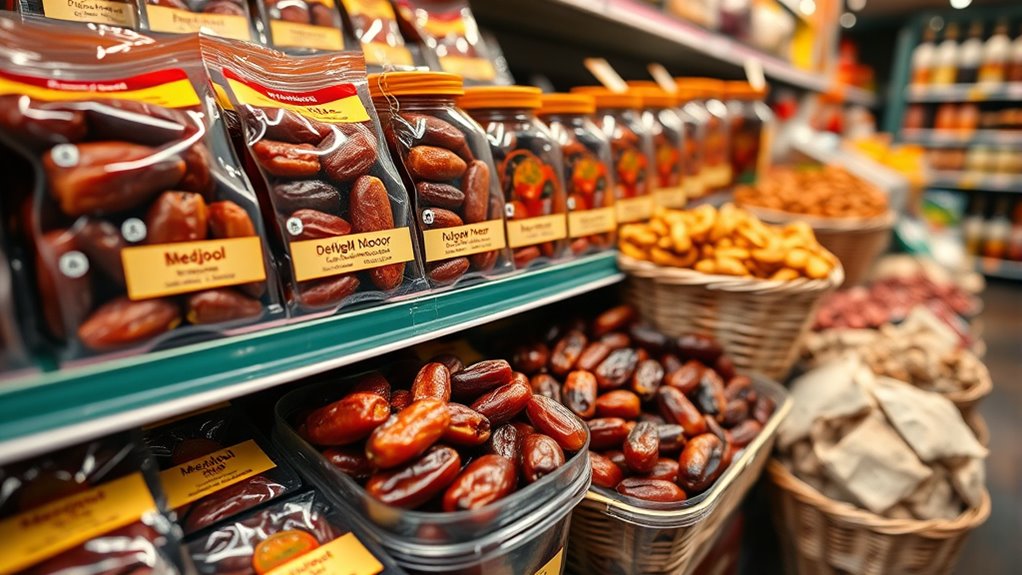
You’ll usually find dates in the dried fruit or snack aisle, but if you’re after fresh Medjool dates, check out the produce section.
Packaged dates are often in the baking or health food aisles, and specialty or organic options may be grouped together.
Knowing the store layout helps speed up your search. Keep exploring, and you’ll uncover tips on identifying the best types and storing them properly for maximum freshness.
Key Takeaways
- Dates are usually found in the dried fruit or snack aisle of the grocery store.
- Fresh Medjool dates are commonly located in the produce section.
- Packaged dates can often be found in the baking or health food aisles.
- Specialty or organic dates tend to be grouped together, often near other dried fruits.
- Knowing the store layout can help you find different types of dates quickly.
Where Are Dates Usually Found in Grocery Stores?
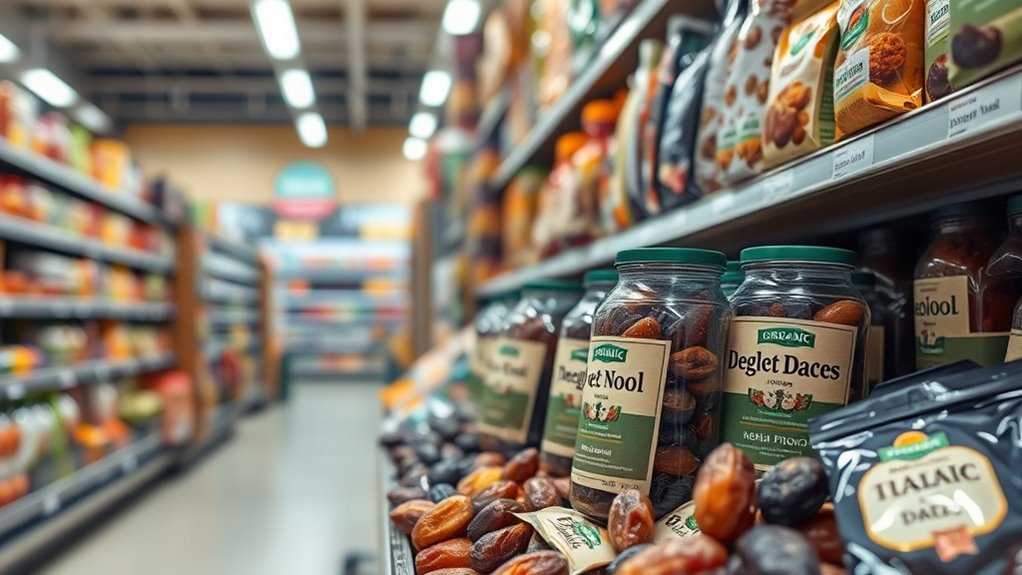
You’ll usually find dates in the grocery store’s dried fruit or snack aisle. This section often has different varieties like Medjool, Deglet Noor, and Barhi, so it’s easy to compare options.
These sweet, chewy fruits are popular for snacking and cooking, so they’re placed where you can grab them quickly or add them to recipes. If you want larger, softer dates like Medjool, they’re typically in the premium dried fruit section.
Deglet Noor dates, being more common, are often in bulk bins or pre-packaged. For making date-based treats or smoothies, dried dates are perfect for recipes that need natural sweetness.
Stores may also stock pitted and unpitted varieties, depending on what you need. Keep an eye on this aisle, and you’ll find the right dates for snacking or cooking, making it easy to include these versatile fruits in your favorite recipes.
How to Spot Different Types of Dates in Store Aisles
When browsing the dried fruit aisle, spotting different types of dates becomes easier once you know what to look for. Date varieties vary in size, color, and texture, which often indicate their flavor profiles and nutritional benefits.
Medjool dates are large, plump, and soft, with a rich, caramel-like taste. Deglet Noor dates are smaller, firmer, and have a slightly nuttier flavor. Barhi dates are rounder, softer, and sweeter, often enjoyed fresh.
To identify these dates:
- Check the size and shape—larger, softer dates tend to be Medjool, while smaller ones are likely Deglet Noor.
- Observe the color—Medjool dates are darker, whereas Deglet Noor dates are lighter and more translucent.
- Read the labels for specific variety names to understand their nutritional benefits, like higher fiber or natural sugars.
Knowing these distinctions helps you choose the right date variety for your taste and health needs.
Are Organic or Premium Dates Better for You?
Are organic or premium dates genuinely better for your health? Organic date benefits often include fewer pesticides and chemicals, making them a healthier choice if you prioritize clean eating. They’re typically grown without synthetic fertilizers, which can lead to a purer, more natural flavor.
Premium date advantages usually involve superior quality, such as larger size, better texture, and richer sweetness. These are carefully selected and often more carefully processed.
While organic dates might have slightly more nutrients due to fewer chemicals, both types provide essential vitamins, fiber, and antioxidants. The decision depends on your priorities: if avoiding pesticides matters most, organic dates are the way to go.
If taste and quality are your main concern, premium dates might suit you better. Ultimately, both options are nutritious, but choosing based on your health goals and flavor preferences helps you get the most out of your dates.
Finding Fresh vs. Dried Dates: What to Look For
When you’re picking out fresh dates, you want to look for ones that are plump and shiny. They should feel firm but not hard, and definitely free of wrinkles or cracks—that’s a good sign they’re fresh and juicy.
Now, if you’re going for dried dates, the texture is what really matters. They should be chewy and firm, not too hard or sticky. And keep in mind, fresh dates don’t last very long, so you’ll want to eat them sooner. Dried dates, on the other hand, can last quite a while if you store them in a cool, dry place. That way, they stay tasty for longer!
Fresh Dates Appearance Tips
Have you ever wondered how to tell fresh dates from dried ones just by appearance? Fresh dates usually have a plump, glossy surface that looks moist and tender. They should feel firm but not hard, with smooth, unwrinkled skin.
Using appearance guidelines, you can spot fresh dates by their vibrant color, which ranges from golden to deep reddish-brown depending on the variety. Dried dates, on the other hand, look shriveled, darker, and less shiny.
They often feel leathery and dry to the touch. Keep an eye out for fresh dates that look plump and shiny, indicating ripeness and moisture content. These cues help you pick the juiciest, freshest dates at the store.
Dried Dates Texture Check
While appearance offers helpful clues, feeling the texture of dates provides another reliable way to distinguish dried dates from fresh ones.
Dried dates typically feel firm and leathery, with a slightly wrinkled surface that’s less soft than fresh dates. Use texture indicators like firmness and moisture content to identify dried dates: they should be somewhat dense and chewy, not overly moist or squishy.
Fresh dates tend to be plump, smooth, and soft to the touch, whereas dried dates feel more compact and leathery. If they’re too sticky or feel overly dry and brittle, they might be past their prime.
Relying on texture indicators helps guarantee you pick dried dates that are properly dried, not overly dried or too moist. This ensures the best quality for your needs.
Storage and Shelf Life
Proper storage is key to keeping your dates fresh and extending their shelf life.
Fresh dates should be stored in the refrigerator in an airtight container to prevent spoilage. They typically last up to two weeks.
Dried dates have a longer shelf life when kept in a cool, dark place or sealed in an airtight container. They can last several months this way.
When selecting dates, consider the different varieties like Medjool, Deglet Noor, or Barhi. Each offers unique flavors and nutritional benefits.
To ensure freshness, look for dates that are plump and moist, without mold or crystallization.
Proper storage helps preserve their natural sweetness, texture, and nutritional value, making it easy to enjoy their health benefits whenever you want a nutritious snack.
Where to Store Dates at Home for Maximum Freshness
If you want your dates to stay fresh and tasty for as long as possible, the best way is to keep them in an airtight container. That way, they’re protected from moisture and air, which can make them spoil faster.
And don’t forget about the storage spot! Keep your dates in a cool, dark place—like a pantry or cupboard—away from direct sunlight and heat. If you’ve got a big batch, though, it’s a good idea to pop them in the fridge. Refrigeration helps extend their shelf life without losing that lovely flavor and moist texture you love. So, with the right storage, your dates will stay delicious and fresh for longer!
Keep Dates Refrigerated Properly
Storing dates in the refrigerator helps keep them fresh and prevents spoilage. Use proper preservation methods and ensure they’re stored at the right humidity levels to keep them at their best.
Keep dates in an airtight container or sealed bag to lock in moisture and stop them from drying out. Place them in the crisper drawer, where humidity is usually higher, to help maintain their texture.
Check your fridge temperature regularly. It should be between 32°F and 40°F to slow down spoilage and keep your dates fresh longer.
Use Airtight Containers
Using airtight containers is one of the best ways to keep your dates fresh at home. The airtight benefits prevent moisture and air from reaching the fruit, which slows down spoilage and preserves flavor.
You have several container options, from glass jars to plastic containers with tight-fitting lids. Choose a container that seals well and fits your dates comfortably to avoid crushing them.
Proper sealing keeps out humidity and pests, extending freshness and preventing mold. Make sure your dates are dry before storing to maximize shelf life.
Using the right container helps maintain their chewy texture and rich taste longer. Keep your dates in an airtight container, and you’ll enjoy fresh, tasty dates for weeks to come.
Store in Cool, Dark Place
Keeping your dates in a cool, dark place helps preserve their freshness and flavor. Different date varieties stay best when stored at an ideal temperature, around 60-65°F. Light and heat can cause dates to dry out or spoil faster, so a pantry or cupboard is perfect.
Store them away from direct sunlight and heat sources to maintain their moisture and sweetness. Use a dark, airtight container to keep out light and humidity. Avoid storing near strong-smelling foods that can transfer odors.
Check regularly for any signs of spoilage, especially if stored for a long time.
Tips for Choosing High-Quality Dates on Shelves
When selecting dates from the shelves, focus on visual cues that indicate quality. Look for plump, moist, and shiny fruit, which signals freshness and good quality. Avoid dates that appear dry, shriveled, or have cracks, as these may be past their prime.
Check the color, which varies among date varieties. Medjool dates are darker and larger, while Deglet Noor are lighter and more translucent. The texture should feel soft but not sticky or overly wet.
Consider the packaging—tightly sealed containers help preserve freshness. Choosing high-quality dates guarantees you get the best taste and maximum health benefits, such as fiber, antioxidants, and natural sugars.
While the variety affects flavor and texture, all good dates should feel fresh and look appealing. Keep these cues in mind to select dates that are both delicious and nutritious, making your snack or ingredient truly worthwhile.
Where to Buy Dates in Bulk or Pre-Packaged
You can find dates in bulk or pre-packaged form at a variety of stores, each offering different options to suit your needs. If you want to buy in larger quantities, look for stores that provide bulk pricing, so you can purchase as much as you need at a lower cost.
Bulk bins or sections are great if you want to scoop out just what you require, often giving you better value. Pre-packaged options are convenient for quick grab-and-go shopping and ensure consistent quality.
These packages come in different sizes, making it easy to buy the right amount for your recipe or snack.
Visit health food stores or specialty markets for bulk dates with affordable bulk pricing.
Check grocery store snack aisles for pre-packaged dates in convenient containers.
Look for bulk bins at larger supermarkets for customizable quantities and better savings.
Using Store Layouts to Quickly Locate Dates
Most stores tend to keep dates in certain spots, like near dried fruit or snack aisles. So, if you know where to look, you can save a lot of time. Sometimes, signs above the shelves can give you clues, but don’t hesitate to ask staff if you’re not sure where to find them.
Getting familiar with the store’s layout can really help you find what you need faster. Once you know the common areas where dates are kept, shopping becomes much smoother and quicker.
Common Date Locations
Understanding store layouts can save you time when searching for dates. Typically, you’ll find various date types in specific sections, making your shopping more efficient.
For example, dried dates are often near the snack aisle or baking supplies, while fresh Medjool dates are usually in the produce section.
If you’re interested in date recipes, look for packaged dates in the baking or health food aisles. Sometimes, specialty or organic dates are grouped together, so check those areas if you want high-quality options.
Keep an eye out for:
- Produce section for fresh Medjool and other fresh dates
- Baking aisle for dried and pitted dates
- Health food or organic section for specialty date varieties
Knowing these common locations helps you quickly find the right dates for your recipes.
Store Layout Tips
Familiarizing yourself with the typical layout of grocery stores can save you time when hunting for dates. Using grocery navigation strategies, you can target the right aisles quickly.
Most stores organize baked goods, snacks, or dairy sections near the perimeter, where dates are often stocked. Look for aisle signs or labels like “Dried Fruits” or “Baking Supplies,” which are common spots for dates.
In larger stores, the produce section may also carry fresh or packaged dates. Keep in mind that health food or organic aisles sometimes feature specialty or organic dates.
Common Overlooked Places to Find Dates
Have you ever thought about some of the best places to meet potential dates being right outside your usual routine? Grocery stores hide hidden gems, including spots you might overlook where you could encounter dates.
Check the snack aisle beyond the dried fruits, where specialty date varieties like Medjool or Barhi often sit near nuts and energy bars. You can also find dates in the baking section, paired with ingredients for creative recipes like energy bites or date-based desserts.
Don’t forget the produce section, where fresh Medjool or Deglet Noor dates are usually tucked near other exotic fruits. These spots are perfect for discovering new date varieties, great for both snacking and cooking.
Exploring these hidden areas might inspire your next recipe or even lead to a chance encounter. Keep your eyes open—sometimes the best connection starts with a simple grocery trip to these overlooked places.
Ask Staff: Help Finding the Best Dates in Your Store
Ever find yourself unsure which dates are the freshest or best quality? Don’t hesitate to ask store staff for help. They’re familiar with different date varieties like Medjool and smaller Deglet Noor dates and can guide you to the ripest, sweetest options.
Staff recommendations can save you time and help you avoid older, less flavorful dates. When asking, mention what you’re planning to do with the dates—whether eating them straight, stuffing, or baking—so they can suggest the best type and quality.
Employees often know when new stock arrives and can point you toward the freshest dates in the store. Plus, they can advise on how to store dates properly at home to keep them fresh longer.
Asking staff is a quick, reliable way to find high-quality dates and make confident choices tailored to your needs.
Frequently Asked Questions
Are There Specific Brands Known for Higher-Quality Dates?
You’ll find higher-quality dates from brands that specialize in Medjool dates, known for their rich sweetness and large size. Deglet Noor dates are also popular but tend to be less moist.
Look for organic options if you want fewer pesticides. Packaging can differ—some brands offer resealable bags, which help maintain freshness.
Trusted brands like Natural Delights or Dole often provide consistently high-quality dates, so check their labels for freshness and origin.
Can Dates Be Found in the Refrigerated Produce Section?
Did you know that over 80% of dates are consumed fresh, making their storage important? You can find dates in the refrigerated produce section, especially if you’re buying fresh or pre-packaged varieties.
Proper storage keeps them moist and flavorful for longer. Look for them near other dried fruits or in the refrigerated produce aisle to ensure they stay fresh.
Refrigeration helps maintain quality, especially for softer, fresher dates.
Do Dates Have Seasonal Availability in Grocery Stores?
Dates don’t have strict seasonal availability in grocery stores because they’re harvested during specific times and stored for year-round sale. Typically, date harvesting peaks in late summer and fall, especially in regions like the Middle East and North Africa.
During these seasonal peaks, fresh dates are most abundant. But you can usually find dried dates anytime since they’re preserved and stored for long periods.
Are There Different Varieties of Dates Suited for Baking Versus Snacking?
Yes, there are different varieties of dates suited for baking versus snacking. Snacking varieties like Medjool dates are larger, softer, and juicier, making them perfect for eating straight or stuffing.
Baking varieties such as Deglet Noor are firmer and drier, which makes them ideal for chopping and adding into recipes. You can choose based on the texture and sweetness you prefer. Pick the variety that best fits your recipe or snack idea.
How Do Store Layouts Differ Between Grocery Chains for Date Placement?
You’ll notice store layouts differ in date placement through varied shelf placement and date packaging. Some grocery chains put dates near dried fruit or baking aisles, while others position them with snacks or produce.
Packaging also varies—some are in clear plastic containers, others in vacuum-sealed pouches. These differences are meant to catch your eye and make shopping easier.
Conclusion
Next time you’re shopping, keep an eye out—you might just stumble upon dates in unexpected spots, like the produce aisle or near the nut section. Sometimes, the best finds happen when you’re not looking for them.
Trust your instincts and ask staff if needed. Enjoy the little surprises along the way. The perfect date could be hiding where you least expect, just waiting for you to uncover it.