
7 Smart Ways to Save Money at Grocery Stores
Many people struggle with sticking to a budget while grocery shopping. It’s easy to overspend when we’re surrounded by tempting deals and endless options.
If you’re looking for smarter ways to save money at grocery stores, you’re not alone—these tips can help you keep more cash in your wallet.
To save money at grocery stores, plan your shopping list to focus only on necessary items and organize it by store sections. Use coupons and digital deals to maximize savings, and buy store brands or in bulk for long-term affordability.
Shop during seasonal sales or clearance events and take advantage of cashback and reward programs.
Proper food storage and portion control help reduce waste and stretch your budget further.
Keep exploring for more smart tips to keep costs down.
Key Takeaways
- Organize and update your shopping lists based on meal plans and sales to avoid impulse buys. This way, you only pick up what you really need.
- Use digital coupons, loyalty programs, and stack discounts whenever possible. It’s a great way to save more on your regular shopping.
- Shop during seasonal sales and markdowns to get fresh, discounted perishable items. It keeps your grocery bill lower and your fridge stocked.
- Buying in bulk and choosing store brands can significantly cut down your per-unit costs. It’s often smarter and more budget-friendly.
- Properly store and track your food to prevent waste. Making the most of leftovers helps stretch your grocery dollars even further.
Struggling to Keep Grocery Costs Down? Here’s How to Start
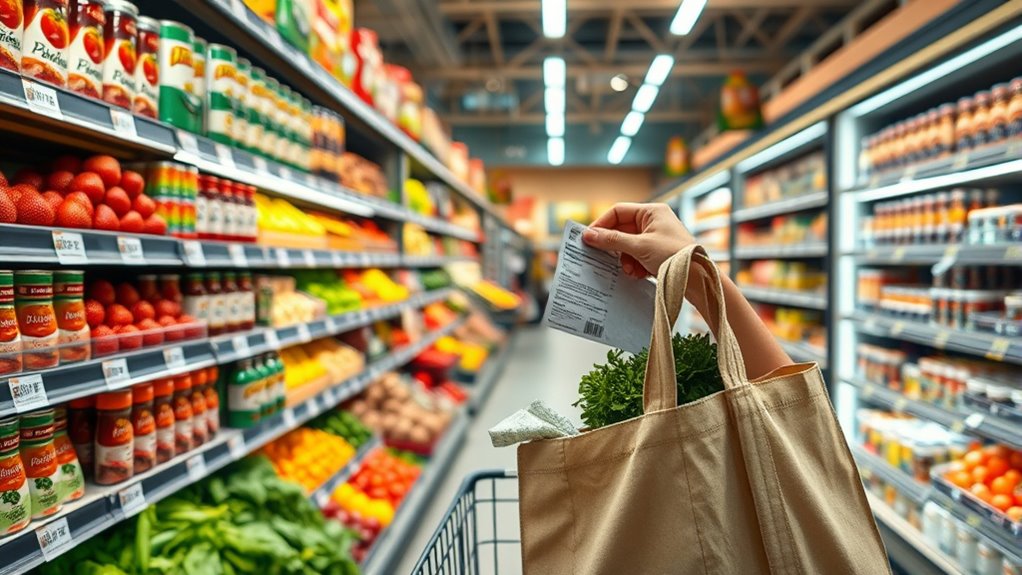
Are rising grocery prices making it hard to stick to your budget? You can start by adopting simple budgeting strategies that make a difference. First, track your expenses to see where your money goes each week.
Next, plan your meals around sales and seasonal shopping, which often offers the best prices on fresh produce and essentials. Shopping seasonally helps you take advantage of discounts when items are in peak harvest, saving you money in the long run.
Creating a flexible grocery list based on these sales ensures you buy only what you need, reducing impulse purchases. Also, consider setting a weekly spending limit to stay on track.
Plan Your Grocery List to Save Money and Reduce Waste
Planning your weekly meals is a great way to make sure you’re only buying what you actually need. It helps you save money and reduces the chance of throwing away leftovers or unused ingredients. Having a shopping list in hand and sticking to it can really keep those impulse buys at bay.
Before you head out to the store, take a quick look at what you already have at home. Checking your inventory means you won’t double up on items you don’t need, which is a simple trick to keep costs down and waste out of the picture.
Prioritize Weekly Meal Planning
By creating a weekly meal plan, you can streamline your grocery shopping, making sure you only buy what you need and avoid impulse purchases. Planning ahead helps you include meal prep strategies and seasonal ingredients, which makes your meals more affordable and flavorful.
When you prioritize meal planning, you also reduce food waste and save money by buying in bulk or on sale. Imagine the satisfaction of knowing exactly what to cook each day, so you won’t have to make last-minute store trips.
You’ll feel confident in your choices, and your wallet will thank you. Plus, meal prep keeps you on track, preventing unnecessary spending.
Feel empowered as you control your food choices and budget.
Experience the joy of creating nutritious, seasonal dishes.
Save time by shopping smarter, not harder.
Reduce waste and stretch your dollars further.
Use Shopping Lists Effectively
Having a well-organized shopping list can make all the difference in sticking to your budget and minimizing waste. An effective list helps you focus on what you need, preventing impulse buys that often lead to unnecessary spending.
Plan your list around your weekly meal variety, making sure to include ingredients for different dishes without overbuying. Group similar items together, like produce, dairy, and pantry staples, so you can shop efficiently and avoid forgetting essentials.
Keep your list updated based on your meal plan and household needs. This helps reduce food waste and saves money. By being intentional and organized, you’ll avoid buying extra items you don’t need, stay within your budget, and enjoy a wider variety of meals with less waste.
Check Inventory Before Shopping
Checking your household inventory before heading to the store guarantees you don’t buy duplicates or unnecessary items. Conducting an inventory assessment helps you see what’s already in your pantry, fridge, and freezer.
Proper pantry organization makes it easier to spot what you have, preventing impulse buys and reducing waste. When you know exactly what’s available, you can plan meals around existing ingredients, saving money and time.
Avoid overbuying that leads to spoilage. Prevent frantic trips for forgotten essentials and make smarter, targeted shopping decisions.
Reducing clutter, stress, and food waste becomes easier when you take a few minutes to review your inventory. It’s a simple step that makes your grocery trips more efficient and cost-effective.
This quick check maximizes your grocery budget and helps keep your home organized and waste-free.
Find and Use Deals and Coupons Effectively
To maximize your savings, it’s essential to find and use deals and coupons effectively. Start by checking digital coupons offered through store apps or websites—these often provide discounts not available elsewhere. Load these coupons directly to your store loyalty card or account; it makes savings automatic at checkout.
Don’t overlook loyalty programs, which reward your shopping habits with exclusive deals, discounts, or points you can redeem later. Signing up is usually free and straightforward. Regularly browse your store’s weekly ads and digital coupon sections to spot deals on items you buy often.
Combine coupons with sale prices to double your savings, but always verify the terms. Keep track of expiration dates on coupons and offers so you don’t miss out. By actively seeking out digital coupons and leveraging loyalty programs, you guarantee you’re getting the best deals every time you shop, making your grocery budget go further.
Choose Store Brands and Bulk Items for Long-Term Savings
Using deals and coupons can really cut down your grocery bill, but you can save even more by choosing store brands and buying in bulk. Store brand products are a great deal—you get quality items at a fraction of the name-brand price, helping you make your money go further.
Buying in bulk allows you to purchase essentials in larger quantities, which lowers the per-unit cost and means fewer shopping trips. Imagine the satisfaction of saving money while stocking up on your favorites.
Feel confident knowing you’re making smart, cost-effective choices. Enjoy the convenience of always having pantry staples on hand. Watch your grocery expenses shrink and feel a sense of independence as you master your shopping budget.
When Is the Best Time to Shop for Discounts?
Have you ever wondered when the best time to find discounts at grocery stores is? The answer often lies in seasonal sales and holiday promotions. Stores usually discount perishable items like produce, dairy, and meat at the end of each season to make room for new stock.
For example, you might find deep discounts on summer fruits as fall approaches or on winter produce in early spring. Holiday promotions also offer big savings, especially around major holidays like Thanksgiving, Christmas, and Easter, when stores clear out holiday-specific products.
Planning your shopping trips around these events can save you a lot of money. Many stores also run weekly markdowns on items nearing their expiration date. Visiting regularly and checking weekly flyers can help you snag the best deals.
Timing your shopping around these periods guarantees you get the most value for your money.
Maximize Savings With Cashback and Reward Programs
Many stores and brands now offer cashback and reward programs to help you save money on your grocery bills. By using cashback apps and loyalty programs, you can earn rewards on your regular shopping trips. These programs often provide exclusive discounts, bonus cashback offers, and personalized deals that make your money go further.
Imagine feeling excited every time you scan your loyalty card or open a cashback app, knowing you’re saving without extra effort. You’ll get instant savings, cashback deposits, or points toward future purchases, turning everyday shopping into a rewarding experience.
Feel the thrill of watching your savings grow with each purchase. Uncover hidden discounts tailored just for you. Turn routine shopping into a money-saving adventure and build a stash of rewards you can use on future trips.
Making the most of these programs can significantly cut your grocery expenses while making shopping more satisfying.
Tips to Reduce Waste and Boost Your Grocery Budget
Reducing food waste is one of the smartest ways to stretch your grocery budget further. By practicing good food preservation, you can extend the freshness of leftovers and perishables, preventing unnecessary spoilage. Invest in airtight containers, vacuum sealers, or proper storage bags to keep food fresh longer.
Reducing food waste saves money and keeps your groceries fresh longer through smart preservation methods.
Portion control also plays a key role. Instead of cooking large amounts, measure out servings to avoid throwing away uneaten food. Planning your meals carefully helps you buy only what you need, reducing impulse purchases and waste.
Keep track of what you already have in your pantry and fridge to prevent duplicate buys. Use leftovers creatively in new dishes, and freeze excess portions for later. These small habits add up, helping you save money and minimize waste.
When you preserve food properly and control portions, you maximize every dollar spent. This way, your grocery budget works harder for you.
Frequently Asked Questions
How Can I Compare Prices Between Different Grocery Stores Effectively?
To compare prices effectively, start by checking weekly ads and online flyers from different grocery stores. Use price comparison apps or websites to quickly see prices side-by-side.
Create a list of your regular grocery items and track their prices. This way, you can easily spot deals and save money.
Regularly comparing prices makes sticking to your grocery budget easier and helps you get the best value. It’s a simple way to make smarter shopping decisions every time.
Are There Apps That Help Track Discounts and Deals Automatically?
Yes, there are apps that automatically help you track discounts and get deal alerts.
Apps like Flipp, RetailMeNot, and Ibotta scan store flyers, track discounts, and send you notifications based on your preferences.
These tools make it easy to stay updated on savings opportunities so you can plan your shopping trips around the best deals without constantly checking multiple sources.
What Are the Best Days or Times to Shop for the Freshest Produce?
You should shop for the freshest produce during seasonal shopping peaks, usually early in the week and in the mornings when stores restock.
Visit local markets, especially late in the day, as vendors often discount leftover items. These times help you get ripe, high-quality fruits and vegetables.
Planning your shopping around these periods lets you enjoy fresh, affordable produce while supporting local growers.
How Do I Avoid Impulse Buying at the Grocery Store?
To avoid impulse buying, stick to your budgeting strategies by creating a detailed shopping list before heading to the store.
Make sure to plan your meals and only buy what’s on your list, resisting tempting displays.
Use cash instead of cards to limit spending, and shop on a full stomach to reduce cravings.
Staying focused and disciplined helps you save money and avoid unnecessary purchases.
Can Meal Planning Really Reduce My Overall Grocery Expenses?
Meal planning really can cut your grocery bills. By outlining your meals ahead of time, you avoid last-minute splurges and stick to budget-friendly recipes.
This strategy helps you buy only what you need, reducing waste and impulsive purchases. Plus, it streamlines shopping trips, saving you time and money.
Conclusion
By applying these smart strategies, you can keep your grocery bills in check and save money in the long run. Planning ahead, hunting for deals, and choosing store brands are your best tools.
Remember, it’s not about breaking the bank but making your dollar stretch further. Don’t let this opportunity slip through your fingers. Seize the moment and take control of your grocery spending today with these budget-friendly tips.