7 Smart Tips for Budget Grocery Shopping
Many people struggle with budget grocery shopping, trying to save money while still getting nutritious food. You’re not alone—most want to stretch their dollars without sacrificing quality.
With a few smart strategies, you can make your grocery budget go further.
To budget grocery shop smartly, set a realistic spending limit and stick to it, focusing on essentials. Compare prices using apps and look for deals or coupons to maximize savings.
Choose affordable, nutrient-dense foods like bulk grains, frozen vegetables, and store brands. Plan your weekly meals to reduce waste and track your expenses to stay on target.
Keep these strategies in mind, and you’ll uncover more helpful tips along the way.
Key Takeaways
- Set a realistic grocery budget and keep track of your expenses regularly so you stay financially aware.
- Use price comparison apps and coupons to find the best deals on the essentials you need.
- Prioritize buying store brands and seasonal produce to save more money.
- Plan your meals with a detailed shopping list to avoid impulse buys and reduce waste.
- Shop during sales and clearance events to get extra discounts on groceries.
Set a Grocery Budget You Can Stick To
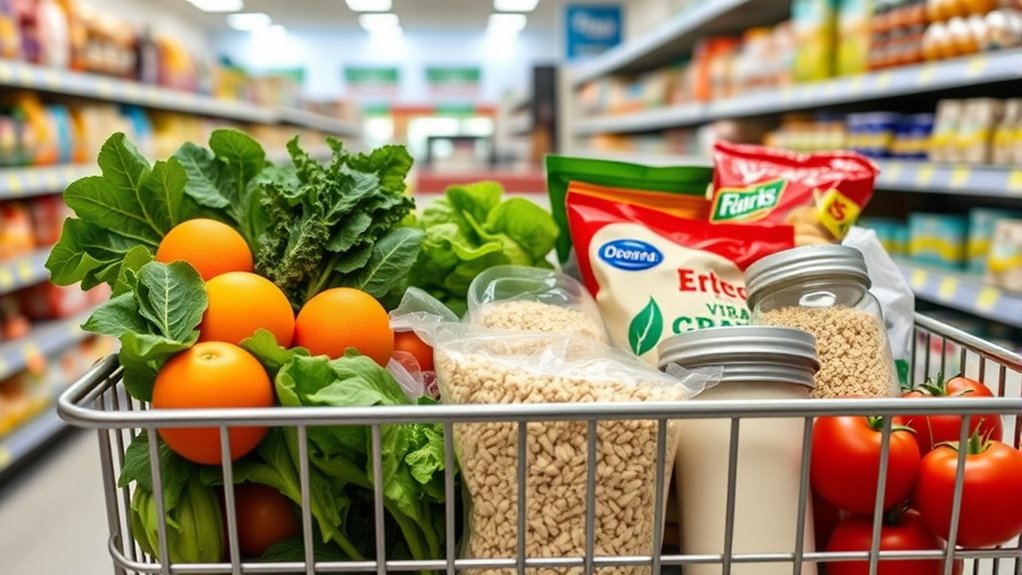
Setting a clear grocery budget is the first step to saving money every time you shop. To do this effectively, focus on your essential expenses and plan realistically.
Start by analyzing your spending limits and setting achievable savings goals. Financial discipline is key—stick to your predetermined budget to avoid impulsive buys.
Analyze your spending and set realistic savings goals to maintain discipline and avoid impulsive purchases.
Tracking methods like receipts or budgeting apps can help you monitor your spending and stay accountable. This way, you’ll see where you might overspend and can make adjustments.
Prioritize your needs over wants and set boundaries for each shopping trip. By establishing a budget you can stick to, you create a system for consistent savings and better financial health.
Compare Prices and Find Deals When Grocery Shopping
To save some cash when you’re grocery shopping, it’s a good idea to compare prices first. You can use price comparison apps—they make it super easy to see which stores have the best deals on what you need.
And don’t forget to check out store deals and coupons. Scanning for those can really help you get the most bang for your buck and maximize your savings.
Use Price Comparison Apps
Using price comparison apps can save you a lot of money by helping you spot the best deals quickly. These apps come with features like price tracking, comparison tools, and user reviews to help you make smarter grocery choices.
They also offer tips on savings and can help you plan your budget better. By using comparison features, you can change your shopping habits to get the most bang for your buck.
Check out the table below to see some popular apps and what they offer:
| App Name | Key Features | User Experiences |
|---|---|---|
| GroceryCompare | Price tracking, deals | Positive, easy to use |
| ShopSmart | Comparison, reviews | Highly rated |
| DealFinder | Savings tips, alerts | Quick, reliable |
| PriceCheck | Price history, scanning | User-friendly |
| BudgetGrocery | Budget planning tools | Helpful for beginners |
Scan for Store Deals
Scanning for store deals while grocery shopping helps you compare prices right then and there and find the best discounts. Use your store loyalty cards and app notifications to access digital coupons, promotional events, and seasonal sales.
Check the clearance sections for hidden bargains and consider shopping at local markets for fresh, affordable produce. Online shopping options and price matching policies can also help you get the lowest prices.
Buying in bulk can save you money in the long run, especially during sales. Keep an eye out for app alerts about special deals or upcoming promotional events to maximize your savings.
Choose Affordable, Nutrient-Dense Foods
Choosing affordable, nutrient-dense foods allows you to maximize your grocery budget while still nourishing your body. Start by prioritizing whole grains like brown rice, oats, and whole wheat bread, which are inexpensive and filling.
Incorporate seasonal produce for better prices and freshness, or opt for frozen vegetables—they retain nutrients and last longer. Plant proteins such as beans, lentils, and chickpeas are cost-effective, versatile, and rich in nutrients.
To save more, buy in bulk when possible. Staples like grains and legumes are ideal for this. Store brands often offer comparable quality at lower prices, making them a smart choice.
Consider visiting local markets for fresh, affordable produce and unique finds. Meal prepping helps you plan meals around these affordable, nutrient-dense ingredients, reducing waste and unnecessary spending.
Plan Your Weekly Meals to Reduce Waste
Planning your weekly meals helps you stay organized and avoid impulsive buys that often lead to waste. Start by creating a detailed shopping list based on your kitchen inventory and meal prep ideas.
Focus on seasonal ingredients to maximize freshness and cut costs. Incorporate recipe rotation to keep meals interesting and prevent leftovers from piling up.
Practice portion control to avoid overeating and unnecessary leftovers. Get your family involved in meal planning to ensure everyone’s preferences are met, making leftovers easier to use.
Consider bulk buying staples to save money and streamline your shopping. Improving your cooking skills helps you make the most of ingredients and reduces waste.
Keep track of what you already have at home so you don’t buy duplicates. Planning ahead helps minimize waste, save money, and enjoy nutritious, well-balanced meals.
Use Coupons and Loyalty Programs to Save Money
Taking advantage of coupons and loyalty programs can really help cut your grocery bills over time. Using coupon stacking—where you combine multiple coupons on one item—lets you save even more.
Many stores also offer loyalty cards that give you discounts or points for future shopping. Be sure to sign up for those.
Keep an eye out for digital coupons and in-store promos—they’re easy to access and can boost your savings.
| Tip | Benefit |
|---|---|
| Use coupon stacking | Save more on each item by combining coupons |
| Enroll in loyalty programs | Earn rewards and discounts regularly |
| Check for digital coupons | Access discounts easily via apps or websites |
Shop at the Right Time for Discounts
Want to save more money? Try shopping during clearance events or when there are discounts on items that are close to their expiration date. These deals can really add up and help you cut costs. Just remember to check the quality of those near-expiry items before you grab them.
Timing your shopping trips to hit those sales can make a big difference in your grocery budget. It’s all about being strategic and taking advantage of discounts when they’re available. Happy saving!
Shop During Clearance Events
Shopping during clearance events is one of the best ways to score big savings on groceries. Look for clearance sections in your store, where items are marked down to clear out inventory.
These often include products from seasonal sales, which are heavily discounted once the season ends. To get the most savings, keep an eye out for fresh produce nearing its expiration date, packaged goods with damaged packaging, and overstocked or discontinued items.
Timing is everything. Visit the store after holidays or seasonal events when markdowns are at their peak. By shopping during these clearance events, you can stock up on essentials at a fraction of the regular price and stretch your grocery budget further.
Purchase Near Expiry Dates
Purchasing items close to their expiration dates can save you a lot on your grocery bill. These products are often marked down to clear out inventory, so you get great discounts for being a smart shopper.
Buying near-expiry items means you get quality products at a fraction of the regular price. Just be sure to plan to use them soon after buying to avoid waste.
Check the dates carefully and store everything properly to keep it fresh. Many stores clearly label these discounts, so it’s easy to spot a good deal.
This is a smart way to stretch your budget without sacrificing quality. With a little planning, you can enjoy savings and still have fresh, tasty food on hand.
Track Your Grocery Spending to Stay on Budget
Keeping a close eye on your grocery spending is key to staying within your budget. By practicing grocery tracking, you get a better idea of your spending habits and can make smarter budget choices.
Use shopping logs to record each purchase. This helps you monitor your expenses and spot areas where you can cut back. Tracking your spending also boosts your financial awareness, making mindful spending easier.
Regularly review your cost assessment to see where your money goes and adjust as needed. Here are some tips to help you stay on track:
- Track every purchase to understand your spending habits
- Set spending limits based on your usual grocery expenses
- Review your shopping logs weekly for patterns and adjustments
Frequently Asked Questions
How Can I Start a Budget Grocery Shopping Plan if I’M a Beginner?
Start your budget grocery shopping plan by creating simple meal plans for the week, focusing on affordable ingredients. This helps you know what you need and prevents unnecessary purchases.
Make a detailed shopping list to avoid impulse buys. Sticking to your list means you’ll spend less and stay within your budget.
Use store loyalty programs to get discounts and rewards. They can add up and save you money over time.
Stick to your list and buy in bulk when possible. Buying in larger quantities often lowers the cost per item.
Compare prices at different stores and plan meals around sales. This way, you can maximize your savings and make the most of your budget.
Are There Specific Days When Grocery Stores Offer the Best Deals?
You’ll find the best deals on specific days by tracking sale cycles and seasonal discounts, often highlighted in weekly ads. Stores usually rotate stock and put out clearance sections, especially after holidays or seasonal changes.
Check local markets for fresh discounts too. Using price matching and loyalty programs can help you save even more.
Visiting on days when stores update their stock or clear out old items can also help you score better deals.
What Are Some Tips for Shopping for Organic or Specialty Items on a Budget?
To save on organic and specialty items, keep an eye on sales and discounts at your local store. Signing up for store newsletters or loyalty programs can help you stay informed about these deals.
Consider shopping at farmers’ markets or joining a wholesale club for better prices. Buying in bulk whenever possible can also save you money.
Finally, compare prices online to make sure you’re getting the best value on these unique items.
How Can I Ensure I’M Getting the Best Nutritional Value for My Money?
Like a knight in shining armor, you can guarantee you’re getting the best nutritional value by doing quick nutritional comparisons on labels. Choosing seasonal produce often offers better nutrients at lower prices.
Focus on whole, unprocessed foods and diversify your diet to cover all essential nutrients. This way, you maximize your grocery budget while nourishing your body effectively.
What Tools or Apps Can Help Me Track My Grocery Spending Effectively?
You can use grocery budget apps and spending trackers to monitor your spending effectively. These tools help you set limits, organize receipts, and analyze your expenses over time.
Apps like Mint, YNAB (You Need A Budget), or specialized grocery trackers make it easy to stay on top of your grocery budget. By regularly updating these tools, you gain better control and insight.
This way, you can ensure you stick to your financial goals while shopping smartly.
Conclusion
Sticking to a grocery budget doesn’t have to be tough. Imagine saving enough each month to treat yourself to a special meal or try out a new recipe.
For example, Sarah, a busy mom, used these tips to cut her grocery bill by 20%, freeing up funds for her kids’ activities.
By planning, comparing prices, and using coupons, you’ll find that smart shopping isn’t just about saving money. It’s about making your budget work for you with budget grocery shopping.