10 Essential Tips for Budgeting Groceries
Many people struggle with managing grocery expenses, feeling like their spending gets out of control. You’re not alone—staying on top of your grocery budget can be tough, but with some simple strategies, you can make it easier.
Start by tracking your expenses for a month to see where your money goes. Set a realistic, flexible budget based on your income and lifestyle, and review it regularly.
Plan weekly meals and stick to a shopping list to avoid impulse buys. Use price comparison apps and store brands to maximize savings, and avoid shopping when hungry.
Keep a close eye on your spending, and adjust your budget as life changes.
There’s more to uncover that can help you stay on track with your grocery budget.
Key Takeaways
- Track your current grocery expenses to see where you might save money.
- Create a weekly meal plan to cut down on impulse buys and food waste.
- Use price comparison apps and store flyers to find the best deals on essentials.
- Stick to a shopping list and don’t shop when you’re hungry to avoid overspending.
- Regularly review and tweak your grocery budget as your needs and financial goals change.
Why Managing Grocery Expenses Matters (And How to Start)
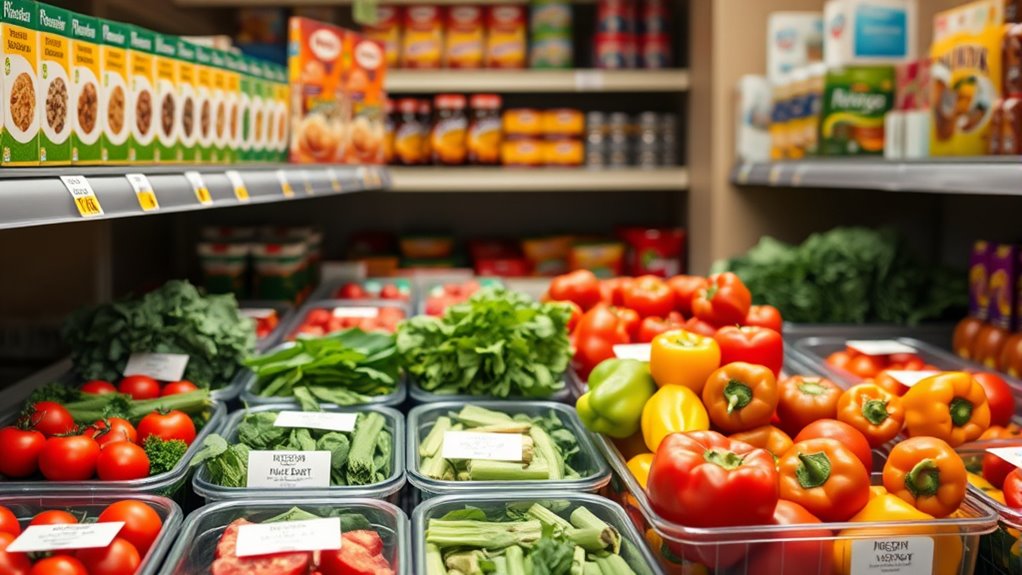
Managing your grocery expenses is essential because food costs can greatly affect your overall budget. To get started, take a look at your shopping habits—are you impulsively buying or sticking to a list?
Refining your meal prep and controlling portion sizes can cut down on food waste and save you money. Shopping seasonally helps you grab discounts and fresher produce, which boosts your nutrition.
Refining meal prep and controlling portions reduce waste, save money, and boost your nutrition with seasonal produce.
Keep a pantry inventory to avoid buying duplicates and plan meals based on what you already have. Building your cooking skills allows you to make affordable, healthy dishes instead of relying on costly takeout.
Getting your family involved in planning and shopping encourages shared responsibility and smarter choices. Prioritize reducing food waste by storing leftovers properly and using ingredients efficiently.
Developing these habits improves your financial wellness, making grocery shopping more intentional and budget-friendly. Small adjustments can lead to big savings while supporting a balanced, nutritious diet.
Set a Realistic Grocery Budget That Works for You
How do you determine a grocery budget that truly fits your lifestyle? Start by evaluating your spending habits and personal preferences.
Use these budgeting strategies to create a realistic plan:
- Track your current expenses for a month to see how much you typically spend.
- Identify areas where you can cut back without sacrificing your favorite foods.
- Set a monthly limit that aligns with your income and financial goals.
- Adjust your budget based on seasonal changes or special occasions.
Create a Weekly Meal Plan to Save Money
Creating a weekly meal plan can really help you save money by making sure you buy only what you need and avoid impulse buys. Planning ahead means you can include meal prep strategies, like cooking in batches, to save time and cut down on waste.
This way, you’ll use ingredients efficiently and prevent leftovers from going bad. By shopping for sales and seasonal produce, you can stretch your budget even more. Don’t hesitate to swap out expensive ingredients for more affordable ones without losing flavor.
Keeping your meals simple and versatile lets you reuse ingredients across different dishes, saving money and reducing clutter. Stick to your plan and try not to make spontaneous purchases at the store. A detailed weekly meal plan helps you stay focused, control costs, and shop more efficiently, leading to smarter spending habits.
Make a Shopping List Based on Your Weekly Needs
Start by reviewing your weekly meal plan and noting down all the ingredients you’ll need for each dish. This helps you create an accurate shopping list based on what you’ll actually use. Check your grocery inventory first to see what’s already available, so you avoid buying duplicates. Focus on essentials that support your meal prep and weekly meals.
Next, follow these steps:
- List all key ingredients needed for your planned dishes.
- Cross-check with your current grocery inventory to eliminate items you already have.
- Prioritize buying versatile ingredients that can be used in multiple recipes.
- Keep your list organized by categories like produce, dairy, and pantry items to make shopping quicker.
Creating a precise list based on your weekly needs helps minimize impulse buys, prevent waste, and stay within your grocery budget. Stick to your list to maximize savings and ensure you only buy what you truly need.
Compare Prices to Maximize Your Savings
Want to save more money? Using price comparison apps is a great way to quickly find the best deals out there. It’s super easy to see where you can get your favorite items at a lower price instead of just guessing.
Don’t forget to check out the weekly flyers too. They’re a handy way to spot discounts on the stuff you actually need. When you combine these tricks, you’re pretty much guaranteed to get the most bang for your buck on your grocery shopping.
Use Price Comparison Apps
Using price comparison apps can really help boost your grocery savings by making it easy to find the best deals fast. These apps are great at tracking prices, giving you real-time updates and alerts so you catch discounts early.
To get the most out of them, start by reading reviews to find user-friendly apps with accurate data. Look for features that let you compare prices across stores and track shopping trends.
Set up price alerts for the items on your list so you can grab deals as soon as they pop up. Also, incorporate tips from other users’ experiences and savings strategies into your budget planning.
Check Weekly Flyers
Checking weekly flyers is a practical way to spot discounts and compare prices across different stores. With flyer scanning, you can quickly see local sales and special offers that match your grocery list.
Many stores release flyers online or in print, so you can browse them easily before shopping. This helps you plan your trip around the best deals and avoid paying full price.
By keeping an eye on flyers, you can prioritize sale items and stock up when prices are lowest. Comparing flyers regularly ensures you get the most value and helps prevent overspending.
Incorporate flyer scanning into your weekly routine to maximize savings and make smarter grocery choices.
Use Coupons and Loyalty Programs Effectively
Using coupons and loyalty programs can really help cut down your grocery bills. It’s all about making the most of those discounts and rewards, so you get the biggest bang for your buck.
Just try to stay on top of the deals and rewards you’ve earned — that way, you’re sure to get the best value every time you go shopping.
Maximize Coupon Savings
To maximize your coupon savings, it’s important to stay organized and proactive.
Use coupon stacking by combining digital coupons with store promotions and seasonal sales to double your savings.
Download coupon apps and regularly check for digital coupons and cashback offers that match your shopping list.
Participate in grocery contests and watch for store promotions, which often feature exclusive coupon policies.
Keep track of coupon policies to make sure you’re getting the most discounts without breaking any store rules.
Join Loyalty Rewards
Building on your coupon strategies, joining loyalty rewards programs can really boost your savings. These programs give you perks like exclusive discounts, cashback, and personalized deals.
To get the most out of them, compare different programs to see which fits your shopping habits best. You’ll find variations in reward points, redemption options, and special offers.
Be sure to sign up at stores you visit often to get targeted discounts. Keep track of your points and expiration dates so you don’t lose any rewards.
Using coupons along with loyalty programs can really amplify your savings. Always read the fine print to understand the rules.
Here’s a quick comparison to help you choose:
| Store | Loyalty Benefits | Program Comparison |
|---|---|---|
| Grocery A | Discounts, cashback | Points per dollar, redemption options |
| Grocery B | Exclusive deals, coupons | Rewards structure, expiration policies |
| Grocery C | Personalized offers | Bonus points, redemption flexibility |
| Grocery D | Free items on milestones | Minimum spend, reward tiers |
| Grocery E | Member-only sales | Sign-up process, points transferability |
Save Money by Choosing Store Brands
Opting for store brands can significantly cut your grocery bill without sacrificing quality. Many shoppers overlook these options, but store brand benefits are clear: you save money while still getting good quality products. When comparing store brands to national brands, the key is quality comparisons—most are just as good, if not better, for a lower cost.
Here are four reasons to choose store brands:
- Cost Savings: Store brands are usually 20-30% cheaper, helping you stretch your budget.
- Comparable Quality: Many store brands go through strict quality control, so they meet or even exceed national standards.
- Availability: Store brands are conveniently placed alongside national brands, making shopping easier.
- Variety: Stores often offer a wide range of store brand products, from pantry staples to personal care items, giving you more options.
Choosing store brands is a simple and effective way to save money without sacrificing quality.
How to Avoid Impulse Buys and Tempting Aisles
Avoiding impulse buys and tempting aisles takes focus while shopping. Knowing how grocery stores try to influence you and using smart shopping tricks can help you stay on budget.
Stay mindful by sticking to your list and avoiding aisles that trigger impulse buying. Planning your purchases ahead of time makes it easier to resist temptation.
Check out this table to spot common impulse triggers and tactics:
| Impulse Triggers | Temptation Tactics | Shopping Strategies |
|---|---|---|
| Eye-catching displays | Limited-time offers | Stick to your list, avoid browsing |
| In-store demos | Placement near checkout | Shop with a budget mindset, not emotion |
| Hunger | Discount signs | Shop after eating to reduce cravings |
Track Your Grocery Spending to Stay on Budget
Keeping close track of your grocery spending is key to sticking to your budget. It helps you spot spending habits and avoid overspending.
To make it work, try these steps:
- Write down every purchase, whether with a budgeting app or a notebook, to keep your spending clear.
- Check your receipts weekly to make sure you’re staying within your budget and to catch any unnecessary expenses.
- Group your spending into essentials and extras so you can see where your money goes each month.
- Adjust your shopping habits based on what you find—like skipping costly brands or shopping sales.
Adjust Your Grocery Budget as Your Needs Change
As your circumstances change, so should your grocery budget; adjusting it guarantees you stay on track without overspending. Life is unpredictable, and grocery fluctuations often happen because of lifestyle changes like a new job, moving, or family size shifts.
When your needs shift, review your spending and modify your budget accordingly. If you’re eating out more or buying specialty items, allocate more funds. If your schedule becomes busier and you cook less, cut back.
Tracking these changes helps you avoid overspending and ensures your budget reflects your current lifestyle. Regularly reassess your grocery needs, especially after big events, to stay aligned with your financial goals.
Monitoring your spending keeps your budget aligned with your current lifestyle and financial goals.
Flexibility is key. Adapting your grocery budget as your needs change keeps your finances balanced and stress-free. This proactive approach helps you manage fluctuations efficiently while supporting your evolving lifestyle.
Frequently Asked Questions
How Can I Incorporate Organic or Specialty Items Into My Grocery Budget?
You can incorporate organic substitutions and specialty items into your grocery budget by shopping smart. Look for sales and discounts on organic products, and buy in bulk when possible.
Consider prioritizing organic options for produce or items you use most often. Store brands or local markets often have better deals, so check those out.
Planning your meals around sales is a great way to enjoy organic and specialty items without overspending. This helps your budget stretch further.
What Are the Best Days or Times to Shop for Discounts?
Did you know that many stores mark down prices by up to 50% during certain discount days? To get the most savings, plan your shopping around these days, which are usually mid-week or right after the weekend.
Shopping early in the morning or late at night can also help you find fresh deals and avoid crowds. By targeting these times, you’ll snag the best discounts and make your grocery budget stretch further.
How Do I Handle Unexpected Grocery Expenses?
When unexpected grocery expenses hit, use your emergency fund first to cover costs without stress. Then, compare prices at different stores to find the best deals.
Keep a small reserve of cash or store credits for emergencies, and track these expenses so you can adjust your budget as needed.
Practicing price comparison regularly helps you avoid overspending and stay prepared for surprises, keeping your budget on track.
Can Meal Prepping Help Reduce Overall Grocery Costs?
Meal prepping can really help cut down your grocery bills. When you plan, portion, and prepare meals in advance, you’re less likely to make impulse buys or waste food.
The benefits of meal prep include better budget control, fewer daily decisions about what to eat, and more efficient shopping trips. It’s a simple way to save both time and money.
In the end, meal prepping not only boosts your grocery savings but also helps streamline your schedule. Plus, you get to enjoy fresh, tasty meals every day without the stress.
How Do Seasonal Changes Affect Grocery Prices and Budgeting?
Seasonal changes really affect grocery prices and your budget. When seasonal produce is in peak harvest, prices usually drop, making fruits and veggies cheaper to buy.
On the flip side, out-of-season items tend to be more expensive because of price fluctuations. To save, try planning your meals around seasonal produce and buy in bulk when prices dip.
Staying flexible with your shopping list can also help you manage costs all year. It’s a simple way to keep your grocery bills in check no matter the season.
Conclusion
By keeping a gentle hand on your grocery budget, you’ll find it’s easier to enjoy delicious meals without overextending yourself.
With a little planning and mindful choices, you can turn everyday shopping into a rewarding dance of savings.
Remember, it’s all about finding a rhythm that works for you. So relax, adapt as needed, and watch your financial peace of mind grow—one well-spent dollar at a time.
Focusing on budgeting groceries makes it simple to enjoy good food without stress.