7 Must-Buy Grocery Store Items for a Healthy Pantry
Many people struggle with keeping their grocery pantry both healthy and organized, especially with so many options out there.
You’re not alone in wanting to make nutritious choices easy and accessible every day.
Stocking your pantry with the right essentials sets the foundation for healthy, nutritious meals.
Focus on versatile whole grains like brown rice and oats, along with diverse protein options such as beans, eggs, and lean meats.
Add healthy fats like nuts and olive oil, plus a variety of fruits, vegetables, and herbs to boost flavor and nutrients.
Keep things organized with labeled containers, making it easier to select balanced ingredients every day.
Stay tuned for tips to keep your pantry tidy and accessible.
Key Takeaways
- Prioritize whole grains like brown rice, oats, and quinoa for fiber and sustained energy.
- Stock a variety of protein sources such as beans, lentils, eggs, and lean meats for balanced nutrition.
- Include healthy fats from nuts, seeds, avocados, and olive oil to support heart and brain health.
- Keep fresh produce and herbs on hand to add flavor and boost your nutrient intake.
- Organize your pantry with clear containers and labels for easy access and healthier choices.
Why a Healthy Pantry Begins With the Right Staples
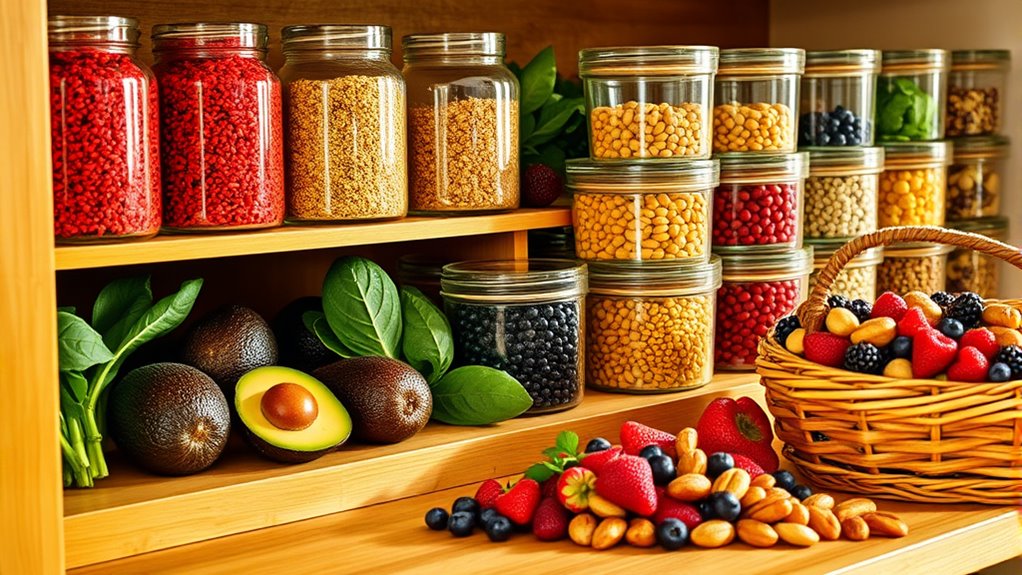
A healthy pantry starts with choosing the right staples because they form the foundation of nutritious meals. When you focus on staple selection, you guarantee your pantry is stocked with versatile, nutrient-dense ingredients. Proper pantry organization helps you keep these essentials accessible and visible, making meal prep quicker and easier.
Start with items like canned beans, whole grains, nuts, and dried fruits, which provide sustained energy and essential nutrients. By selecting quality staples, you set yourself up for healthy eating habits and reduce reliance on processed foods.
Efficient pantry organization allows you to see what’s available at a glance, preventing duplicate purchases and waste. When your staples are thoughtfully chosen and well-organized, you’ll find it easier to whip up wholesome meals on any busy day.
Building your pantry around these core ingredients creates a strong foundation for a balanced, nutritious diet.
Why You Should Stock Up on Whole Grains
Stocking up on whole grains is a smart move for keeping your pantry healthy because they’re a versatile and nutrient-rich base for many meals.
Whole grains provide fiber, vitamins, and minerals that are essential for good digestion, steady energy, and overall health.
Whole grains are packed with fiber, vitamins, and minerals for better digestion and sustained energy.
You can use them in so many dishes—think breakfast oatmeal, hearty salads, or tasty side dishes.
They’re easy to prepare, affordable, and store well, making them a practical staple to have on hand.
Adding whole grains to your diet can help stabilize blood sugar levels and keep you feeling full longer, so you’re less likely to overeat.
Plus, they add variety and texture to your meals, helping you stay satisfied.
Whether you pick brown rice, quinoa, oats, or barley, having a selection of grains means you can whip up nutritious meals quickly.
Stocking up on whole grains is a simple and effective way to boost your diet’s health and keep your pantry well-stocked.
Protein Sources That Boost Your Nutrition
Adding a variety of protein sources to your pantry can really give your nutrition a boost. It’s great to mix it up with plant-based options like beans and lentils, or you could go for animal proteins such as lean meats and eggs.
And don’t forget about those convenient snacks! Nut butter and protein bars are perfect for keeping your energy up throughout the day.
Plant-Based Protein Options
Plant-based proteins are a versatile and nutritious addition to your pantry that can help meet your dietary needs. With options like tofu varieties, seitan, and tempeh, you can create a variety of flavorful meals.
Lentil recipes and chickpea dishes are quick and hearty, making them perfect for lunch or dinner. Quinoa salads add a protein boost to your salads, while edamame snacks provide a healthy, satisfying crunch.
Protein smoothies with plant-based ingredients can give you energy to start your day. Here’s a quick overview:
| Protein Source | Best Uses | Quick Tip |
|---|---|---|
| Tofu varieties | Stir-fries, scrambles | Press to remove excess water |
| Lentils | Soups, salads | Rinse before cooking |
| Edamame snacks | On-the-go munching | Steam for flavor |
Animal Protein Choices
Animal protein sources are essential for a balanced diet, providing high-quality, complete proteins that support muscle growth and overall health. Choosing lean meats helps reduce saturated fat intake, while sustainable seafood ensures you eat ethically sourced options that benefit the environment.
Incorporate dairy alternatives like plant-based yogurts or fortified soy products to diversify your protein sources. Protein supplements can help fill gaps, especially during busy days or meal prep.
Focus on cooking methods like grilling, baking, or steaming to retain nutrients and avoid excess fats. Practicing portion control prevents overeating, and selecting ethically sourced products supports quality and sustainability.
Convenient Protein Snacks
Quick and easy protein snacks can really boost your daily nutrition, especially when you’re in a hurry. These snacks pack high nutrient density, giving you essential amino acids without loading up on extra calories.
When picking the right snack, go for options that keep your energy steady and help curb hunger. Think Greek yogurt, mixed nuts, or beef jerky—they’re portable and perfect for busy days.
Choose snacks that strike a good balance of protein and other nutrients. That way, you’re nourishing your body effectively and staying on track with your health goals.
Adding these quick protein sources to your routine can improve your overall diet and support muscle maintenance.
Keep a stash of these nutrient-dense options handy for whenever you need a healthy, satisfying boost.
Healthy Fats to Support Heart and Brain Health
Including healthy fats in your pantry is a great way to support your heart and brain health. Think about adding foods like avocados, nuts, seeds, and olive oil—they’re packed with essential benefits that your body loves.
You can easily incorporate these into your meals or snacks. For example, toss some nuts into your yogurt, drizzle olive oil over your salads, or slice up an avocado for a quick spread. It’s simple to make small changes that can really boost your overall well-being!
Sources of Healthy Fats
Healthy fats play an essential role in supporting your heart and brain health, so choosing the right sources can make a big difference. Incorporate options like fatty fish for omega-3s, which are known for their health benefits.
Avocado provides monounsaturated fats that help boost good cholesterol. Nuts and pumpkin seeds are great for healthy fats and fiber. Olive oil is versatile and packed with antioxidants.
Chia seeds give you omega-3s and fiber in small servings. Coconut oil and flaxseed are also good choices, with coconut oil containing medium-chain triglycerides. For a satisfying treat, enjoy dark chocolate and other plant-based options in moderation.
Benefits for Heart and Brain
Since healthy fats are crucial for ideal heart and brain function, choosing the right sources can greatly boost your overall well-being. Omega-3 benefits are well-documented, especially for supporting heart health and reducing inflammation.
Eating foods rich in omega-3s, like fatty fish or walnuts, can help lower blood pressure and cholesterol levels. This decreases the risk of cardiovascular disease. These healthy fats also support brain health by enhancing cognitive function and mood regulation.
Incorporating omega-3-rich foods into your diet can improve memory and mental clarity over time. Prioritizing sources of healthy fats keeps your heart and brain resilient and functioning well. They’re a smart addition to your grocery list for overall health.
Tips for Incorporating Fats
To effectively incorporate fats that support your heart and brain health, start by replacing saturated fats with sources rich in omega-3s and monounsaturated fats. Use olive oil or avocado oil for cooking, and add fatty fish like salmon to your meals.
Incorporate nut butters and tahini sauce for snacks or dressings, and sprinkle chia seeds or flaxseed meal into smoothies or oatmeal. For a creamy alternative, try coconut milk or grass-fed butter in recipes.
Dark chocolate in moderation can also boost your healthy fat intake. These choices help improve cholesterol levels and support brain function.
Fruits, Vegetables, and Herbs to Keep on Hand
Keeping a variety of fresh fruits, vegetables, and herbs on hand makes it easy to whip up nutritious meals and snacks. Stock seasonal fruits like berries, apples, or citrus for the best flavor and nutrients, which help boost your immune system and energy.
Vibrant vegetables such as bell peppers, spinach, and carrots add color, crunch, and essential vitamins to your diet. Aromatic herbs like cilantro, basil, and parsley can turn simple dishes into flavorful, nutrient-packed meals.
Fresh produce provides important antioxidants and fiber, making it easier to meet your daily nutrition goals. Choosing seasonal and colorful options ensures variety and freshness, helping you rely less on processed foods.
Keep herbs in your fridge or on your windowsill to improve taste and boost nutrient intake effortlessly. Having these items readily available encourages healthier choices and keeps you on track with a balanced, wholesome diet.
How Herbs, Spices, and Condiments Enhance Flavor and Nutrition
Herbs, spices, and condiments are powerful tools that can turn simple ingredients into vibrant, flavorful dishes while also boosting their nutritional value. They help you explore different flavor profiles and improve your cooking skills, making every meal more exciting.
Herb benefits include anti-inflammatory properties and extra vitamins, while spices offer antioxidants and metabolic boosts. Condiments like hot sauce or tahini add depth without adding many calories.
Herbs provide anti-inflammatory benefits and vitamins, while spices boost antioxidants and metabolism without extra calories.
Adding these elements can enhance meal presentation and inspire taste exploration, encouraging healthier eating habits. To get the most out of them, try using fresh herbs for vibrant flavor, experiment with various spices for complex tastes, and select condiments that complement your dish’s ingredients.
Incorporate seasonings during cooking for added nutritional benefits and better flavor. This way, you can create balanced, flavorful meals that support your health goals.
Tips for Maintaining an Organized and Accessible Pantry
An organized pantry makes meal prep easier and reduces stress during busy mornings. To do this, group similar items together—like grains, canned goods, and snacks.
Use clear, labeled containers for accessible storage so you can quickly find what you need without rummaging. Install shelves or stackable bins to maximize space and keep everything visible.
Regularly check expiration dates and rotate older items to the front. Keep frequently used items at eye level for easy access.
Consider using pull-out baskets or small bins for tiny items to prevent clutter. Maintain your system by tidying up weekly and reordering items as needed.
An accessible storage setup saves time and encourages healthier choices because you can see what’s available at a glance. With these tips, your pantry stays neat, functional, and stress-free, supporting your healthy eating habits every day.
Frequently Asked Questions
How Often Should I Rotate and Update My Pantry Staples?
You should rotate and update your pantry staples every 3 to 6 months to keep your pantry fresh. Regularly check your essentials for expiry dates and replace items when needed.
This habit ensures you always have healthy options available, reduces waste, and keeps your pantry stocked with fresh ingredients. Staying proactive helps you plan balanced meals and prevents clutter from expired or unused items.
Are There Budget-Friendly Options for Healthy Pantry Items?
They say “a penny saved is a penny earned,” and that’s especially true for healthy eating. You can find budget-friendly grains like brown rice, oats, and quinoa that pack a nutritious punch without breaking the bank.
Affordable canned goods such as beans, tomatoes, and tuna are versatile, healthy options that last long and save money. These choices help you maintain a nutritious pantry without overspending.
How Can I Tell if a Pantry Item Is Still Fresh?
You can tell if a pantry item is still fresh by checking expiration dates, but don’t rely on that alone. Use your senses to get a better idea.
Look for off smells, mold, or discoloration—that’s a sign it might be time to toss it. Do a quick visual check and feel the texture too.
If it feels off or has changed from when you first bought it, it’s best to discard it. Store items in airtight containers away from heat and moisture to keep them fresh longer.
Trust your senses and follow proper storage tips for the best results.
What Are Some Common Pantry Mistakes to Avoid?
You might think that avoiding expired foods is enough, but improper pantry organization tips often lead to overlooked items or spoilage.
Avoid common mistakes like stacking cans too high or neglecting to rotate older supplies with new ones.
Opt for healthy ingredient swaps, like whole grains instead of refined carbs.
Stay vigilant, keep your pantry well-organized, and regularly check expiration dates to guarantee freshness and prevent waste.
How Do I Store Perishable Healthy Foods Long-Term?
To store perishable healthy foods long-term, you should freeze produce promptly to lock in nutrients and freshness.
Use vacuum sealing to remove air, which helps prevent freezer burn and extends shelf life. Label your packages with dates to track freshness.
Keep your freezer at a consistent, cold temperature. This way, you can enjoy your healthy foods over time without spoilage, ensuring your pantry stays stocked with nutritious options.
Conclusion
So, after all this talk about healthy staples, it’s funny how the most tempting treats often hide in your perfectly organized pantry. But remember, a well-stocked, nutritious pantry isn’t just about avoiding junk food; it’s about choosing what truly fuels your body.
Ironically, the more you plan and prepare, the easier it becomes to resist those impulsive, less healthy snacks. Keep your pantry healthy—your body and taste buds will thank you, even if your cravings don’t.
Having these seven must-buy grocery store items for a healthy pantry makes all the difference in sticking to your goals and maintaining a balanced diet.