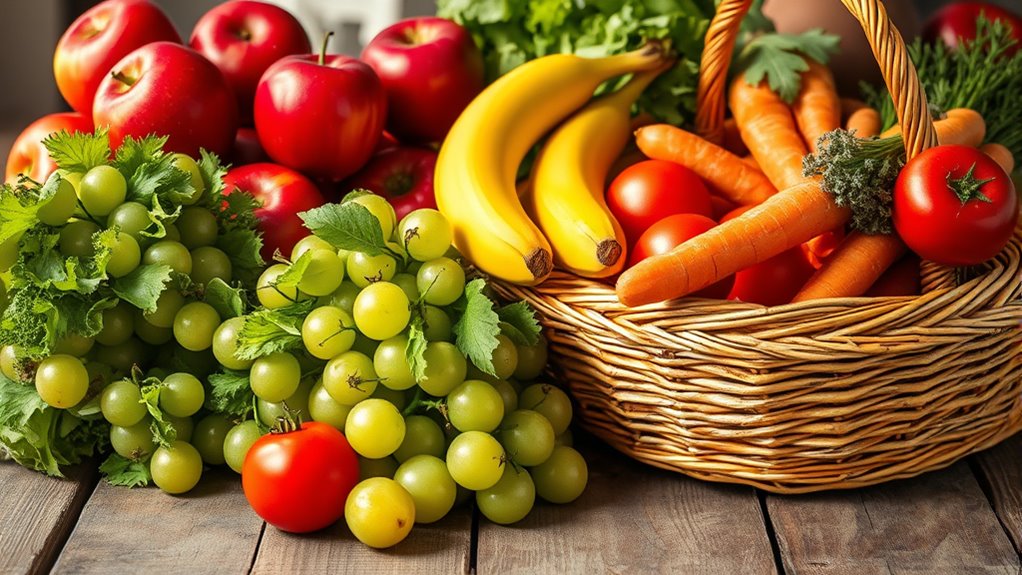
How Do You Say Groceries in Spanish?
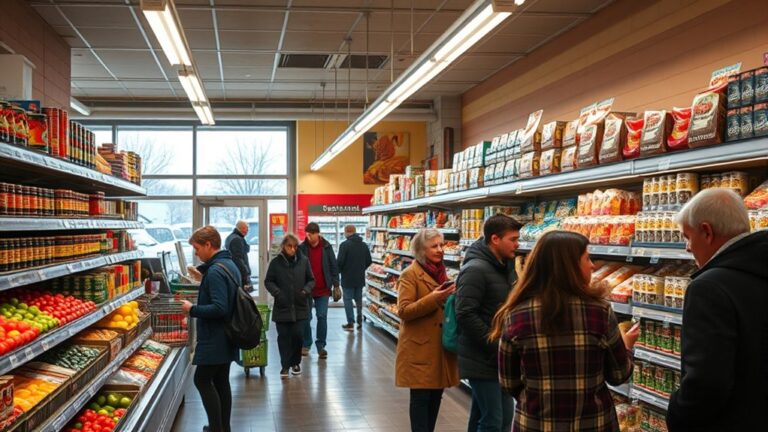
Are you feeling overwhelmed trying to navigate grocery shopping in a new country or language? You’re not alone—many people struggle with finding the right words to buy what they need.
Knowing how to say “groceries” in Spanish can make your shopping trips smoother and more confident. To say “groceries” in Spanish, you can use “víveres” or “comestibles,” which are common in many countries.
In everyday conversations, people often say “las compras” or “la compra de alimentos” when talking about grocery shopping. Regional terms vary, with “super” in Mexico and “mercado” in Argentina.
Learning these words helps you shop confidently. Keep exploring, and you’ll uncover even more useful vocabulary for your shopping trips.
Key Takeaways
- The most common Spanish words for “groceries” are “víveres” and “comestibles.”
- “Víveres” refers to general household food supplies, while “comestibles” is more formal.
- In some countries, “los abarrotes” or “los alimentos” are used for groceries.
- “Las compras” or “la compra de alimentos” also refer to grocery shopping or items.
- Regional variations influence terminology, so context and location affect how “groceries” are expressed.
What Is the Spanish Word for ‘Groceries’?
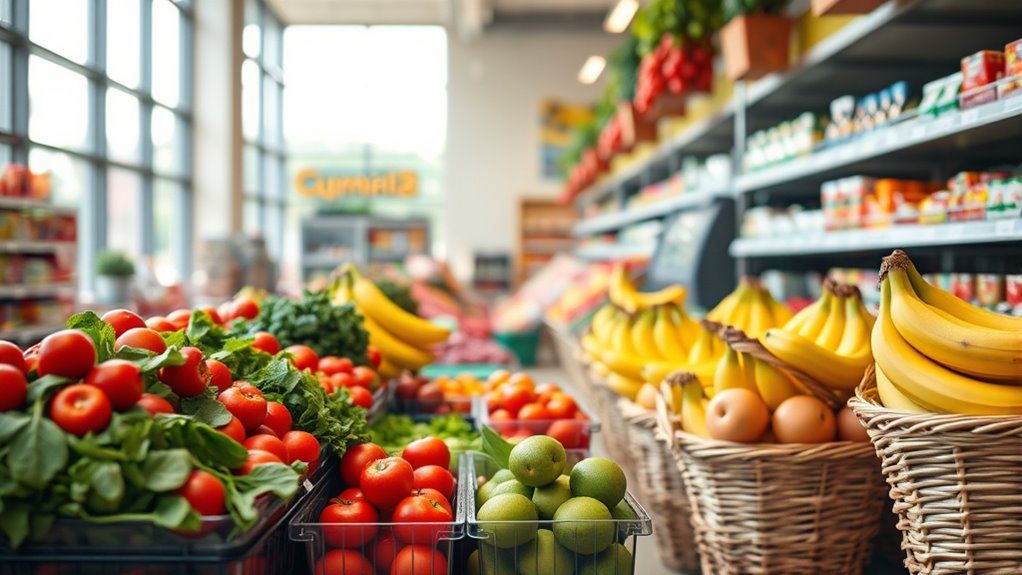
The Spanish word for “groceries” is “víveres” or “comestibles,” depending on the context. When you go grocery shopping, you’re likely to pick up various food items, from fresh produce to packaged goods.
The Spanish words for groceries are víveres or comestibles, depending on the context and formality.
In everyday conversation, “víveres” often refers to the general supplies needed for a household, especially food items that sustain daily life. Meanwhile, “comestibles” is a more formal term, typically used in written language or in markets that sell specialty foods.
Understanding these words helps you navigate stores and communicate your needs clearly. If you’re shopping for ingredients to prepare meals, knowing how to ask for specific food items in Spanish makes your experience smoother.
Whether you’re filling your cart with fruits, vegetables, or canned goods, these terms guarantee you’re talking about groceries accurately and confidently.
Common Ways to Say ‘Groceries’ in Spanish
When referring to groceries in Spanish, you’ll find several common expressions that vary by region and context. One popular term is “los víveres,” which refers to essential food supplies.
Another widely used word is “los comestibles,” often seen on labels or in formal contexts. If you’re shopping for healthy options, you might also hear “los alimentos saludables.”
In many regions, especially in Latin America, people often visit local markets or mercados to buy fresh produce and staples. They refer to their purchases as “las compras” or “la compra de alimentos.”
Depending on where you are, you might also hear “los abarrotes” in Mexico or “los alimentos” in Spain. Each term reflects different nuances and regional habits, but all generally refer to the groceries you buy for daily needs.
Different Words for ‘Groceries’ in Spanish-Speaking Countries
Different Spanish-speaking countries often have unique words for groceries, reflecting regional customs and language preferences. Cultural influences shape how people refer to everyday shopping items, so you might hear different terms depending on where you are.
For example, in Mexico, you might hear “super” for supermarket shopping, while in Argentina, “mercado” is common for markets where groceries are bought fresh. In some countries, the term “alimentos” is used broadly for food and groceries, highlighting local food traditions.
Shopping habits also influence vocabulary. In rural areas, people might use specific words related to local produce or traditional markets. These differences show how regional customs and culture impact everyday language.
Knowing these variations helps you understand local conversations better and adapt your vocabulary to different Spanish-speaking environments.
How to Use ‘Compras’ When Talking About Groceries
To talk about grocery shopping in Spanish, you’ll often use the word “compras,” which refers to the act of shopping or the groceries themselves.
To discuss grocery shopping in Spanish, use “compras” for shopping or groceries.
When you mention “hacer compras,” you’re talking about buying supplies or going grocery shopping. You can also say “las compras” to refer to the groceries you’ve purchased or plan to buy.
For example, if you’re discussing your trip to the store, you might say, “voy a hacer compras,” meaning you’re going grocery shopping.
Here are some ways to use “compras” effectively:
- “Necesito hacer compras para la semana.” (I need to do grocery shopping for the week.)
- “Las compras incluyen frutas, verduras y leche.” (The groceries include fruits, vegetables, and milk.)
- “¿Qué compras necesitas?” (What groceries do you need?)
This helps you communicate about buying supplies clearly and naturally.
Essential Phrases for Grocery Shopping in Spanish
Knowing a few basic shopping phrases and essential vocabulary in Spanish can really make your grocery trips in Spanish-speaking areas a lot easier. When you’re out shopping, being able to ask for items, check prices, and handle checkout smoothly—that’s a game changer.
Once you get the hang of these phrases, you’ll feel more confident chatting with store staff and navigating the stores. Plus, it helps ensure you get exactly what you need without any confusion. So, learning these key expressions can make your shopping experience more enjoyable and stress-free.
Common Shopping Phrases
When grocery shopping in a Spanish-speaking country, mastering a few essential phrases can make things much smoother. Knowing common shopping phrases helps you navigate cultural differences and communicate more effectively.
Here are three useful phrases:
- ¿Cuánto cuesta esto? (How much does this cost?) – Essential for asking about prices.
- ¿Dónde están los productos orgánicos? (Where are the organic products?) – Great for finding specific items.
- ¿Puedo pagar con tarjeta? (Can I pay with a card?) – Important for knowing your payment options.
These phrases will boost your confidence when shopping and help you adapt to different customs, making your experience more comfortable and enjoyable.
Essential Vocabulary for Groceries
Building a strong vocabulary of essential grocery-related words in Spanish can really make shopping easier. Knowing how to identify common food items helps you communicate better.
Start with basic words like *frutas* (fruits), *verduras* (vegetables), *carne* (meat), *pan* (bread), and *leche* (milk). These are the essentials to get you started.
Knowing how to ask for these items, like “Where are the *manzanas*?” (apples) or “Do you have *pollo*?” (chicken), makes navigating the store smoother.
How to Ask for Help Finding Groceries in Spanish
Ever find yourself lost in a grocery store, unsure of where to locate specific items? Don’t worry—asking for help is easy when you know how.
First, approach an employee politely by saying, “¿Puedes ayudarme?” (Can you help me?). If you need something specific, you can add, “Estoy buscando…” (I’m looking for…). For example, if you need bread, say, “Estoy buscando pan.”
Approach staff politely with “¿Puedes ayudarme?” and specify your needs with “Estoy buscando…” to find items easily.
Keep your shopping list handy to clarify what you’re after. When asking for assistance, here are some useful phrases:
- “¿Dónde están los productos lácteos?” (Where are the dairy products?)
- “¿Puedes indicarme dónde quedan las frutas?” (Can you tell me where the fruits are?)
- “¿Me puedes ayudar a encontrar esto?” (Can you help me find this?)
Using these phrases helps you navigate the grocery store smoothly and find everything you need.
Mistakes to Avoid When Talking About Groceries in Spanish
Talking about groceries in Spanish can be tricky if you don’t use the right words, so it’s a good idea to learn the correct vocabulary. Sometimes, mixing up quantities like “mucho” or “poco” can cause you to buy too much or not enough, which can be frustrating. Just pay attention to these little details, and you’ll find it gets a lot easier to communicate clearly.
Incorrect Vocabulary Usage
Misusing vocabulary is a common mistake when talking about groceries in Spanish, and it can cause confusion or misunderstandings. One main issue is choosing the wrong words because of common misconceptions.
For example, you might confuse “carne” (meat) with “pollo” (chicken) or use “fruta” for all fruits and vegetables. It’s important to use the correct words to communicate clearly.
Here are three key points to avoid: First, using “verdura” instead of “vegetal”—”verdura” is often incorrectly used for all vegetables. Second, confusing “pan” with “pastel”—”pan” is bread, while “pastel” is a cake. Lastly, misusing “queso”—it’s cheese, not a general dairy product like “yogur” (yogurt).
Avoid these mistakes to talk about groceries accurately and confidently.
Misunderstanding Quantity Terms
Understanding how to specify quantities is key to shopping effectively in Spanish. Quantity confusion often leads to measurement misunderstandings, causing you to buy too much or too little.
To avoid mistakes, learn common terms for amounts:
| Quantity Term | Example Use |
|---|---|
| Un poco | A little |
| Mucho | A lot |
| Algunos | Some (plural) |
Be mindful of these, especially when ordering or asking for items. Saying “un poco de arroz” means “a little rice,” while “mucho” indicates a large amount.
Misunderstanding these terms can result in incorrect purchases or confusing conversations. Practice these phrases to improve your clarity and confidence in grocery shopping in Spanish.
Tips to Remember Grocery Vocabulary in Spanish
To effectively remember grocery vocabulary in Spanish, try creating associations between the words and familiar objects or concepts. This makes memory techniques more effective and easier to recall.
You can also turn learning into fun with vocabulary games that challenge you to match words with images or definitions. These games help reinforce your memory and make vocabulary stick.
Here are some tips: Use flashcards with images and Spanish words to strengthen connections. Play vocabulary games like matching or fill-in-the-blank to make learning engaging. Create personal associations, like linking “leche” (milk) to your favorite breakfast, to make the word more memorable.
Practice Sentences for Talking About Groceries in Spanish
Let’s practice using some common grocery vocabulary in everyday conversations. We’ll go through some example shopping phrases, so you can get comfortable asking about prices and items. These sentences will help you speak more naturally when you’re out grocery shopping in Spanish.
Common Grocery Vocabulary
Talking about groceries in Spanish becomes easier when you know the common vocabulary used in everyday shopping. Knowing basic words helps you navigate grocery stores and manage your shopping lists more confidently.
Here are three key words to get you started:
- Frutas – Fruits, like apples (manzanas) or bananas (plátanos).
- Verduras – Vegetables such as carrots (zanahorias) or lettuce (lechuga).
- Lácteos – Dairy products like milk (leche) or cheese (queso).
Using these words, you can ask for items in stores or create simple shopping lists in Spanish. Familiarizing yourself with this vocabulary makes grocery shopping smoother and more enjoyable.
Sample Shopping Phrases
Learning some practical shopping phrases in Spanish can make your trips to the grocery store more efficient and confident. Start with simple sentences like, “¿Cuánto cuesta esto?” (How much does this cost?) or “¿Dónde están las frutas?” (Where are the fruits?). These phrases help you ask about products quickly, saving time and avoiding misunderstandings.
Incorporate basic questions into your shopping tips to stay on budget, like “¿Tiene ofertas?” (Are there any discounts?) or “¿Cuál es el precio más bajo?” (What’s the lowest price?). Practice these sentences to become more comfortable communicating with store staff.
Developing these skills allows you to shop smarter, stick to your budget strategies, and enjoy a smoother, more successful grocery shopping experience in Spanish-speaking environments.
Asking About Prices
- “¿Cuánto cuesta esto?” – Asking for the price of an item.
- “¿Puedo negociar el precio?” – Inquiring about price negotiation.
- “¿Este producto tiene un precio más barato?” – Comparing prices between options.
These phrases help you practice price comparison and bargaining. They make your shopping experience more effective and budget-friendly.
Regional Differences in Grocery Vocabulary Across Countries
While Spanish is spoken across many countries, the vocabulary for groceries can vary quite a bit from one region to another.
You’ll find that different countries have their own regional words and country-specific terms for everyday items. For example, what’s called “carne” (meat) in Spain might be called the same in Mexico, but the specific cuts or types can differ.
The word for “bread” also varies: “pan” is common, but in some places, you might hear “pan dulce” or specific names like “brioche” or “torta.” Local dialects influence these differences, so knowing country-specific terms helps you communicate better and understand shopping lists.
Bread names vary by region—know the terms like pan, pan dulce, brioche, or torta for better shopping and communication.
Being aware of these regional vocabulary differences makes traveling or shopping in different Spanish-speaking countries easier and more authentic.
Frequently Asked Questions
Are There Regional Slang Terms for Groceries in Spanish-Speaking Countries?
In Spanish-speaking countries, slang for groceries varies by region. In Mexico, you might hear “productos” or “mandado,” especially when talking about errands like visiting food markets or taco stands.
In some places, locals might call groceries “la despensa” or use casual terms like “compras” when discussing shopping. These terms can change depending on local dialects, but food markets and taco stands are usually central to sourcing your groceries.
How Do You Pronounce ‘Groceries’ in Spanish Accurately?
You pronounce “groceries” in Spanish as “los comestibles,” with emphasis on the second syllable: koh-meh-STEE-bles. When you’re shopping for food and want to talk about groceries, use this term to sound natural.
Can ‘Supermercado’ Be Used Interchangeably With ‘Groceries’?
You can use “supermercado” when talking about the place where you do your grocery shopping, but it’s not the same as “groceries” itself.
In supermarket terminology, “supermercado” refers to the store, not the items inside.
Understanding grocery shopping culture helps you see that “groceries” are the products, while “supermercado” is the venue.
What Are Common Spanish Phrases for Grocery Shopping Lists?
When making grocery shopping lists in Spanish, you usually include phrases like “Frutas y verduras” for fruits and vegetables. You might write, “Compra frutas y verduras,” or “Necesito productos lácteos y carnes.”
These common phrases help you organize your list clearly. They make sure you pick up all essentials like fresh produce, dairy, and meats during your shopping trip.
Is There a Difference Between ‘Mercado’ and ‘Supermercado’?
Yes, there’s a difference between ‘mercado’ and ‘supermercado.’ A ‘mercado’ usually refers to a traditional market or open-air space. It offers fresh produce, local goods, and sometimes artisanal items.
A ‘supermercado’ is a large, enclosed supermarket with a wide range of products. This includes packaged foods, household items, and more.
Mercado types tend to have a lively atmosphere, while supermarkets focus on convenience and variety.
Conclusion
Now that you know how to say “groceries” in Spanish and understand the regional nuances, you’ll confidently navigate any market like a seasoned adventurer of the New World.
Remember, mastering these terms is like wielding Excalibur in the language domain—powerful and precise. Keep practicing those phrases, avoid common pitfalls, and you’ll be chatting about your shopping adventures with the fluency of a seasoned conquistador.
¡Buena suerte en tus compras! Knowing how to say “groceries” in Spanish will make your shopping trips smoother and more fun.