5 Tips for Riding Your Bike to the Grocery Store
Many cyclists want to make grocery runs more eco-friendly and cost-effective, but figuring out how to do it safely can be tricky. You’re not alone—navigating busy streets and carrying heavy bags often feels daunting.
Luckily, with a few simple tips, you can make your bike grocery trips smoother and safer.
When riding your bike to the grocery store, plan your route with bike lanes and well-lit areas to stay safe. Use sturdy baskets or panniers to carry your items securely and distribute weight evenly.
Avoid overloading to keep your bike stable and maneuverable. Wear reflective gear and turn on your lights for visibility on busy streets.
For more tips on making your grocery trips easier and safer, keep exploring how to optimize your bike runs.
Key Takeaways
- Plan safe, bike-friendly routes with bike lanes and well-lit paths to avoid traffic hazards.
- Use baskets or panniers to securely carry your groceries without losing balance.
- Distribute weight evenly and pack heavier items at the bottom to keep your bike stable.
- Wear reflective gear and turn on your lights, especially when it’s getting dark.
- Secure loose items with straps and avoid overloading to stay safe and balanced.
Understand the Challenges of Grocery Shopping by Bike
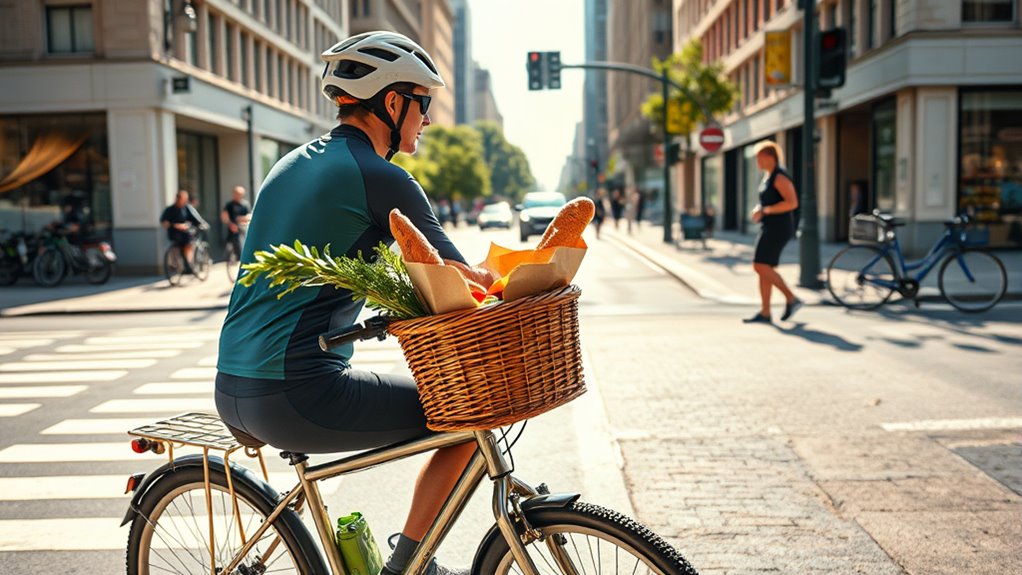
While biking to the grocery store is eco-friendly and healthy, it comes with its own set of challenges. One major issue is bike limitations, especially regarding cargo capacity. Your bike might not be designed to carry heavy or bulky items, making it tricky to transport large grocery hauls.
Biking to the store is eco-friendly but limited by cargo capacity and bike design.
You’ll need to choose a bike with enough space or add racks and baskets, but even then, weight limits can restrict what you can bring home. Overloading your bike can also affect stability and safety on the road.
Narrow or uneven bike paths might make maneuvering with a fully loaded bike more difficult. You’ll have to plan your shopping trips carefully to avoid making multiple trips or carrying too much at once.
Understanding these limitations helps you prepare better and ensures your grocery runs by bike remain manageable and safe.
Plan Your Route for Safety and Efficiency
Planning your route before heading out is essential for a safe and efficient grocery trip by bike. Knowing your options helps you avoid busy streets and find the safest path.
Start by exploring bike lane options along your neighborhood routes. Look for dedicated bike lanes, protected bike paths, or quieter residential streets to minimize hazards.
Use a map or cycling app to identify routes with less traffic and better visibility. Consider shortcuts that keep you on familiar terrain and avoid main roads during rush hours.
Check for bike lane options on your usual routes to stay protected from traffic. Choose neighborhood routes that have less vehicular congestion and good lighting.
Plan your stops at crosswalks and intersections with clear sightlines for safety. Taking the time to plan guarantees you reach your destination efficiently and safely.
It makes your grocery run smoother and more enjoyable.
Choose Bike Accessories That Make Grocery Runs Easier
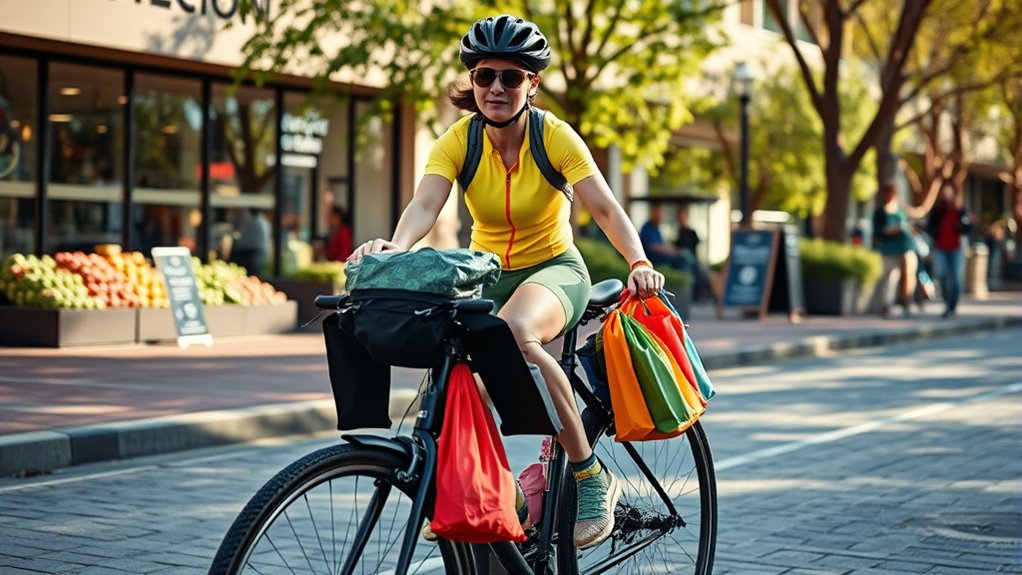
Having the right bike accessories can make your grocery runs much more convenient and stress-free. Start with basket options or cargo solutions like sturdy racks and panniers to keep your groceries secure.
Storage bags and specialized cargo solutions help distribute weight evenly, preventing imbalance. Invest in a reliable bike lock to secure your bike during short stops.
Weather gear, such as waterproof covers or rain ponchos, protects you and your groceries from unexpected weather. A hydration pack keeps you refreshed on longer rides, especially in warm weather.
Consider adding a handlebar or frame-mounted basket for quick access to small items. These accessories streamline your shopping trip, reduce clutter, and keep your groceries safe and organized.
Choose durable, weather-resistant options to withstand daily use and varying conditions. With the right accessories, biking to the store becomes more efficient, enjoyable, and hassle-free.
Pack Your Groceries Safely to Prevent Spills and Imbalance
To keep your groceries secure and prevent spills or imbalance while riding, it’s important to pack them thoughtfully. Proper organization helps distribute weight evenly, which keeps your bike stable.
Use sturdy bags that won’t tear easily, and pack heavier items at the bottom to lower your center of gravity. Place fragile items carefully to avoid crushing or shifting during the ride.
Here are some tips to improve your packing:
- Use panniers or baskets to keep groceries balanced on either side of your bike.
- Distribute weight evenly by placing heavier items in the center or lower compartments.
- Secure loose items with bungee cords or straps to prevent shifting when you hit bumps.
Stay Visible and Safe on Busy Streets
Once your groceries are securely packed, it’s important to make sure you’re visible to all road users. Wearing reflective gear, like vests or strips, really helps boost your visibility, especially in low-light or nighttime conditions.
Stay aware of your surroundings and keep good traffic awareness by regularly checking for cars, pedestrians, and other cyclists. Use hand signals clearly to show drivers what you’re planning to do, especially when turning or stopping.
Keep your front and rear lights on, even during the day, to be seen from every angle. Avoid distractions and stay alert to spot potential hazards on busy streets.
Position yourself in the lane where you’re most visible, ideally away from parked cars that could open suddenly. By combining reflective gear, proper signaling, and staying alert, you’ll travel safer and reduce the risk of accidents.
Frequently Asked Questions
How Do I Carry Fragile or Heavy Items Securely on My Bike?
To carry fragile or heavy items securely, use sturdy basket options or specialized cargo solutions. Place fragile items in padded containers or wrap them with cloth to prevent breakage.
For heavy items, opt for a rear rack or panniers that distribute weight evenly. Secure everything tightly with bungee cords or straps, making sure nothing shifts during your ride.
Properly balancing your load helps maintain stability and keeps your groceries safe. Taking a little extra time to secure everything pays off in a smoother, safer ride.
What Should I Do if I Encounter Bad Weather During My Grocery Ride?
If bad weather hits during your grocery ride, first, stop safely and seek cover. Wear rain gear like a waterproof jacket and pants to stay dry, and consider gloves for better grip.
Adjust your route by choosing covered or less exposed paths. If conditions get worse, it’s best to cut your ride short and head home safely instead of risking a slip or fall.
Always prioritize safety over convenience to stay safe during bad weather.
Are There Specific Bike Types Recommended for Grocery Shopping?
Imagine hauling a mountain of groceries on a tiny scooter. Not exactly ideal, right? For grocery shopping, cargo bikes, pannier bags, or sturdy bike baskets are your best bets—they can handle weight and keep your items secure.
Folding bikes work if you’re tight on space. But keep in mind, they might lack the cargo capacity you need. So, pick a bike designed for hauling to make sure your groceries stay safe and your ride stays smooth.
How Can I Lock My Bike Safely While Shopping Inside Stores?
To lock your bike safely while shopping, use a high-quality bike lock like a U-lock or heavy-duty chain lock for theft prevention. Secure the frame and wheel to a sturdy, immovable object, making sure the lock is tight and can’t be easily accessed.
Avoid locking your bike to flimsy structures that could be easily broken or moved. Also, remember to remove or lock up any accessories like baskets or racks to reduce the risk of theft.
These simple steps will help keep your bike safe while you’re inside shopping.
What Are Some Tips for Conserving Energy During Long Grocery Trips?
To conserve energy during long grocery trips, plan routes that are energy-efficient and avoid hilly areas. This helps you take the easiest path and reduces unnecessary effort.
Use a good pace by switching between riding and walking when needed. This way, you prevent fatigue and stay energized for the whole trip.
Make sure your bike is in good shape with properly inflated tires and smooth gears. It’ll make pedaling easier and help you save energy.
Stay hydrated and keep a steady rhythm while riding. This helps you cover more ground without tiring out too quickly.
Conclusion
Riding your bike to the grocery store transforms errands into a dance of balance and harmony. With some mindful planning and the right gear, you turn a simple trip into an artful glide through your neighborhood.
Welcome the rhythm of safe cycling, letting the wind whisper encouragement as you navigate busy streets. Soon, each grocery run becomes a graceful waltz—an elegant blend of adventure and sustainability.
Bike commuting to the store is a fantastic way to enjoy eco-friendly freedom. Every pedal stroke helps reduce your carbon footprint while keeping you active and energized.