How Much Do Groceries Cost Per Month?
Many people struggle with figuring out how much they should budget for groceries each month. It’s a common concern, especially with rising food prices and busy schedules. If you’re wondering how to keep costs in check without sacrificing quality, you’re not alone.
Your monthly grocery costs vary based on household size, shopping habits, location, and food choices. Smaller households may spend less, especially with bulk buying and meal planning.
Larger families might save through strategies like shopping sales and cooking skills. Urban areas tend to be pricier than rural regions.
By adjusting your habits and preferences, you can better manage expenses. Keep exploring for practical tips that help you cut costs without sacrificing quality.
Key Takeaways
- Grocery costs can vary a lot depending on your household size, where you live, and your shopping habits. Usually, they range from about $200 to over $1,000 a month.
- Buying seasonal produce, buying in bulk, and using store loyalty programs can really help cut your monthly grocery bills.
- Urban areas and coastal states tend to have higher grocery prices compared to rural areas or interior states.
- Planning your meals carefully and making detailed shopping lists can help you stick to your budget and avoid impulse buys.
- Keeping track of your expenses and reviewing your budget regularly can make it easier to keep your grocery costs manageable over time.
Key Factors That Affect Your Monthly Grocery Costs
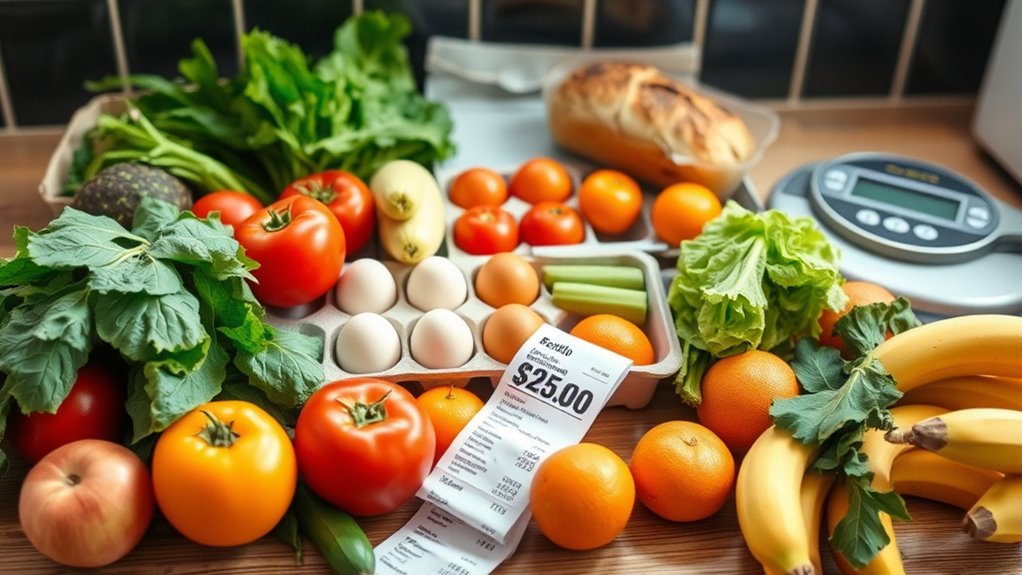
Your monthly grocery costs can vary a lot depending on several key factors. One big factor is seasonal produce; shopping for fruits and vegetables in season usually lowers costs because they’re more plentiful and cheaper. Off-season produce tends to be more expensive.
Another important factor is buying in bulk. Purchasing larger quantities often reduces the price per item, which can save you money over time, especially on staples like rice, pasta, and canned goods. Your choice of brands also matters—generic brands are generally cheaper than name brands and often just as good.
How often you shop and where you shop also affects your budget. Discount stores and warehouse clubs usually offer better deals, while specialty or convenience stores might charge more. Understanding these factors can help you make smarter choices and manage your monthly grocery expenses better.
How Household Size and Lifestyle Change Your Grocery Budget
Household size and lifestyle really shape how much you spend on groceries each month. A bigger family means buying in bulk and meal prepping are key to saving money and cutting food waste.
If you’re good at cooking, you can make nutritious meals quickly, involving family members to share the workload and make grocery shopping cheaper. Seasonal shopping at local markets often gives you fresh, affordable produce, helping you stay on budget.
Using grocery apps and coupons can boost your savings, while being mindful of nutrition helps avoid unnecessary expenses. Think about these factors to customize your grocery budget to fit your lifestyle.
| Household Size | Lifestyle Focus |
|---|---|
| Larger families | Bulk buying, family involvement |
| Single/duo | Grocery apps, quick meal prep |
| Active lifestyles | Seasonal shopping, local markets |
| Budget-conscious | Coupons, reducing food waste |
Average Grocery Spending in Different Regions
Grocery costs can really change a lot depending on where you live. Regional price differences make a big difference, and it’s not always the same everywhere.
For example, urban areas tend to have higher expenses than rural communities, but there are exceptions. Knowing these regional differences can actually help you plan your grocery budget better and avoid surprises.
Regional Cost Variations
Regional differences really impact how much you spend on groceries each month, with some areas consistently costing more than others. These price differences happen because of local market trends, transportation costs, and demand shifts.
For example, coastal states tend to have higher prices due to shipping expenses, while interior regions might be more budget-friendly. To give you a better idea:
| Region | Typical Monthly Grocery Cost | Key Factors |
|---|---|---|
| Northeast | $400 – $500 | Higher labor and rent |
| Midwest | $350 – $400 | Lower transportation costs |
| South | $370 – $450 | Diverse local markets |
Knowing these regional variations can help you plan your grocery budget more accurately based on where you live.
Urban vs Rural Expenses
While urban and rural areas often share similar food preferences, grocery costs can be quite different depending on where you live. Urban prices tend to be higher because of increased rent, transportation, and overhead costs for stores, which can make grocery bills go up.
In rural areas, savings come from lower living expenses and fewer store overhead costs, making groceries generally more affordable. But limited access to fresh and diverse food options can sometimes raise prices for certain items.
If you live near a city, you’ll likely pay more for convenience and variety. Rural residents, on the other hand, often find they can stretch their grocery dollars further thanks to lower overall expenses.
How Your Household Type Impacts Your Monthly Grocery Bill
Your household size really plays a big role in how much you spend on groceries each month. Naturally, the more people you have to feed, the higher your grocery bill tends to be.
But it’s not just about the number of mouths to feed—your dietary preferences matter too. If you’re into organic foods or following special diets, those choices can bump up your expenses quite a bit.
And don’t forget about how often you shop. If you’re making lots of trips to the store, those small visits can add up quickly, making your monthly grocery costs higher than you might expect.
Household Size Differences
The size of your household really shapes your monthly grocery bill. Larger households can share meal portions, which helps cut down waste and save money.
Cooking in bulk and dividing up portions makes shopping more efficient and less costly. Smaller households might end up spending more per person because they can’t take full advantage of buying in bulk.
Family dynamics also play a role—families with picky eaters or special dietary needs may see higher grocery costs. On the other hand, households with flexible eating habits can save money by choosing versatile ingredients.
Your household size affects how much food you need and how you shop. Knowing these differences can help you budget smarter, whether you’re cooking for one or many.
Dietary Preferences Variations
Dietary preferences can really change how much you spend on groceries each month. They influence the types and amounts of food you buy.
For example, vegan options and gluten-free diets tend to cost more because of specialty products. Organic choices and seasonal produce can also add to your bill.
Family meals and meal prepping might help you save money, especially if you buy in bulk or source locally. Food trends like plant-based eating or new diets can impact your shopping list and prices.
Shopping Frequency Impact
Household type plays a big role in how much you spend on groceries each month. Different living setups affect how often and how much you shop.
Your shopping habits, whether weekly or bi-weekly, directly impact your grocery bill. Analyzing how often you shop can help you spot patterns and find ways to save.
For example, larger families might need to shop more often, which can increase costs. Singles might shop less often, which could cut down on impulse buys.
To keep expenses in check, try budgeting wisely and tracking your spending regularly. Being aware of your shopping frequency helps you plan better, reduce waste, and find savings.
Adjusting how often you shop based on your household type can make your spending more efficient. It also gives you a clearer picture of your monthly grocery costs.
How Shopping Habits and Store Choices Influence Costs
Your shopping habits and the stores you choose can really impact your monthly grocery costs. Focusing on store loyalty programs can lead to discounts and rewards, saving you money over time.
Bulk buying at warehouse stores cuts down the per-item cost, especially for non-perishables and staples. Shopping seasonally at local markets lets you grab fresh produce at lower prices.
Online grocery options often offer competitive prices and added convenience. Using discount apps can alert you to deals and digital coupons, helping you save even more.
Meal prepping and keeping an inventory of your pantry items prevent impulse buys and reduce waste. This makes your shopping more efficient and budget-friendly.
Creating detailed shopping lists keeps you focused and avoids unnecessary spending. Choosing organic options might cost more upfront, but buying in bulk or during sales can make them more affordable.
Your smart store choices and shopping habits directly influence how much you spend each month.
How Meal Planning Saves You Money on Groceries
Meal planning really helps you cut down on those impulse buys because you have a clear shopping list ready. When you know exactly what you need, you’re less likely to wander around the store grabbing things you don’t really need. Plus, planning your meals for the week means you’re less likely to buy extra ingredients or snacks that could go to waste.
Reduces Impulse Purchases
When you plan your meals ahead of time, you’re less likely to make impulsive purchases that can add up quickly. Meal planning helps you stick to a clear shopping list, so you’re less tempted to buy unnecessary items.
Using grocery tracking and budget apps keeps you aware of your spending limits, helping you focus on essentials. Try comparing prices and looking for store promotions to get the best deals.
Buying seasonal produce and bulk items, along with organizing your pantry, also minimizes spontaneous buys. Coupon strategies can cut costs and prevent impulse splurges.
Encourages Weekly Planning
Planning your meals for the week helps you make a clear shopping list. This way, you buy only what you need and avoid extra items. It’s a simple trick to save money and reduce waste.
Having a plan also encourages meal prep, which saves time and cuts down on last-minute grocery runs. When you plan ahead, you can choose affordable ingredients and avoid splurging on things you don’t need.
Visualize your shopping with this easy table:
| Meal Type | Ingredients Needed | Estimated Cost |
|---|---|---|
| Breakfast | Eggs, oats | $5 |
| Lunch | Lettuce, chicken | $10 |
| Dinner | Rice, vegetables | $8 |
| Snacks | Fruit, nuts | $4 |
Sticking to a plan helps you stay within your budget and make smarter choices. It’s a great way to reduce waste and keep your grocery costs predictable and manageable.
Adjusting Food Preferences to Reduce Expenses
Adjusting your food preferences can significantly cut your monthly grocery bills. Just small changes can help you save without sacrificing nutrition or flavor.
Start by swapping expensive ingredients for more affordable options in your meals. Focus on budget-friendly recipes that use seasonal produce and pantry staples, which are often fresher and cheaper.
Buying in bulk for staples like rice, beans, and pasta can save you money over time. Use price comparison tools at local markets and stores to find the best deals.
Improve your cooking skills to get the most flavor out of fewer ingredients. Practice portion control to reduce food waste and make your groceries last longer.
To boost your shopping strategy, consider comparing prices at local markets versus supermarkets. Plan your meals around seasonal produce and incorporate versatile pantry staples into different dishes.
These simple adjustments can help you manage expenses while still enjoying a balanced diet.
How to Calculate Your Personal Grocery Budget
Figuring out your personal grocery budget is key to managing your finances and avoiding overspending. Use grocery tracking tools or budget apps to keep an eye on your monthly expenses.
Break down your spending by shopping trips, thinking about meal prepping to save money and cut down on waste.
Take advantage of seasonal buying and buying in bulk to score better deals. Using price matching and store loyalty programs can also help you save more.
Apply coupons both in-store and online to maximize your savings. Online shopping makes it easier to compare prices quickly.
Getting your family involved in planning and shopping helps everyone stay within budget and understand spending limits.
Keep track of your expenses regularly and adjust your budget as needed, especially when prices change or your family’s needs shift.
Managing Expectations Based on Income and Spending Goals
Understanding what you can realistically spend on groceries depends a lot on your income and financial goals. Setting clear expectations means developing a budget mindset that lines up your spending with your earnings.
This helps you avoid overspending and keeps your finances flexible. To manage expectations well, focus on making sure your grocery costs fit within your monthly income.
Start tracking your actual grocery spending versus your planned budget to build awareness. It’s also important to prioritize essentials and think about how future income changes might affect your spending habits.
Practical Tips to Cut Your Grocery Expenses
One of the quickest ways to lower your grocery bills is to plan your meals and make a shopping list before you go. This helps prevent impulse purchases and keeps you focused.
Consider bulk buying staples like rice, pasta, and canned goods, which often save money in the long run. Shopping seasonally at local markets guarantees you’re getting fresh produce at lower prices.
Store loyalty programs can offer discounts or rewards, so take advantage of those. Use coupon strategies and price comparison tools to find the best deals.
Meal prepping can reduce waste and save time, making it easier to stick to your budget. Keep a pantry inventory to avoid buying duplicates and see what you already have.
Online shopping can help you compare prices quickly and avoid unneeded temptations. Regularly track your budget to stay aware of your spending and make adjustments as needed.
Frequently Asked Questions
How Often Should I Review My Grocery Budget?
You should review your grocery budget monthly to stay on track with your grocery frequency and spending habits. Regularly checking allows you to spot trends, identify overspending, and make necessary budget adjustments.
If your needs or circumstances change, don’t hesitate to reassess more often, like every couple of weeks. This proactive approach guarantees your grocery budget remains realistic and helps you save money while meeting your dietary needs.
What Are the Best Ways to Save on Organic Foods?
You can save on organic foods by comparing organic food delivery services, buying in bulk, and shopping sales. Look for subscription discounts or loyalty programs to cut costs even more.
Opt for seasonal produce, which is often cheaper and fresher. Planning meals around sales helps you avoid impulse buys.
Using coupons and choosing store brands can also make organic options more affordable, helping you enjoy healthy eating without breaking the bank.
How Do Seasonal Changes Affect Grocery Prices?
Seasonal changes directly impact grocery prices through fluctuations in the cost of seasonal produce. When fruits and vegetables are in peak harvest, prices drop because supply is high.
Conversely, off-season produce often costs more due to limited availability and higher transportation costs. To save, buy seasonal produce when it’s abundant.
You can also consider frozen or canned options for off-season items, which can help you manage your grocery budget effectively.
Can Meal Kits Help Reduce Grocery Costs?
Meal kits can help reduce your grocery costs by offering convenient, pre-portioned ingredients that minimize waste.
By doing a thorough meal kit comparison and conducting a detailed cost analysis, you can see if they save you money compared to traditional grocery shopping.
They often include discounts or subscription deals, making meal kits an affordable option for many households. Planning meals in advance and avoiding impulse purchases also helps save money.
How Do Coupons Impact Overall Grocery Expenses?
Coupons notably lower your grocery expenses through effective coupon strategies. By using digital coupons and taking advantage of sales, you can unlock significant savings.
They also encourage brand loyalty, helping you stick with trusted products while still saving money. When you plan your shopping around coupons, you maximize discounts and make your monthly grocery bill more affordable.
Combining digital coupons with in-store deals is a smart way to stretch your budget further.
Conclusion
Now that you know what influences your grocery costs, imagine revealing a simple change that could save you hundreds each year.
Will tweaking your shopping habits or adjusting your household choices make the difference? The secret lies in understanding your unique needs and staying flexible.
Get ready to take control of your grocery budget because understanding your spending can lead to surprising savings.
Are you ready to uncover what’s next?