Are Plastic Grocery Bags Recyclable?
Many of us feel overwhelmed trying to find eco-friendly ways to handle plastic waste, especially when it comes to grocery bags. You’re not alone—lots of people struggle with the best disposal methods.
Plastic grocery bags are generally not accepted in curbside recycling because they can cause machine jams and are difficult to process. Instead, you should take them to designated drop-off points at local grocery stores or recycling centers.
Recycling facilities often struggle to handle these thin, flexible bags, so proper disposal requires special programs.
Want to uncover eco-friendly alternatives and community strategies? Keep exploring to find ways to reduce plastic waste effectively.
Key Takeaways
- Most home recycling programs don’t accept plastic grocery bags because they can jam machines and cause contamination.
- Many grocery stores have special bins for recycling plastic bags, but curbside pickup usually doesn’t include them.
- Recycling facilities find it hard to process thin, flexible plastic bags, which often leads to jams and higher costs.
- Reusable fabric bags and biodegradable options are better eco-friendly choices instead of single-use plastic grocery bags.
- To recycle plastic bags properly, it’s best to return them to specific collection points or community drop-off centers.
Can You Recycle Plastic Grocery Bags at Home?
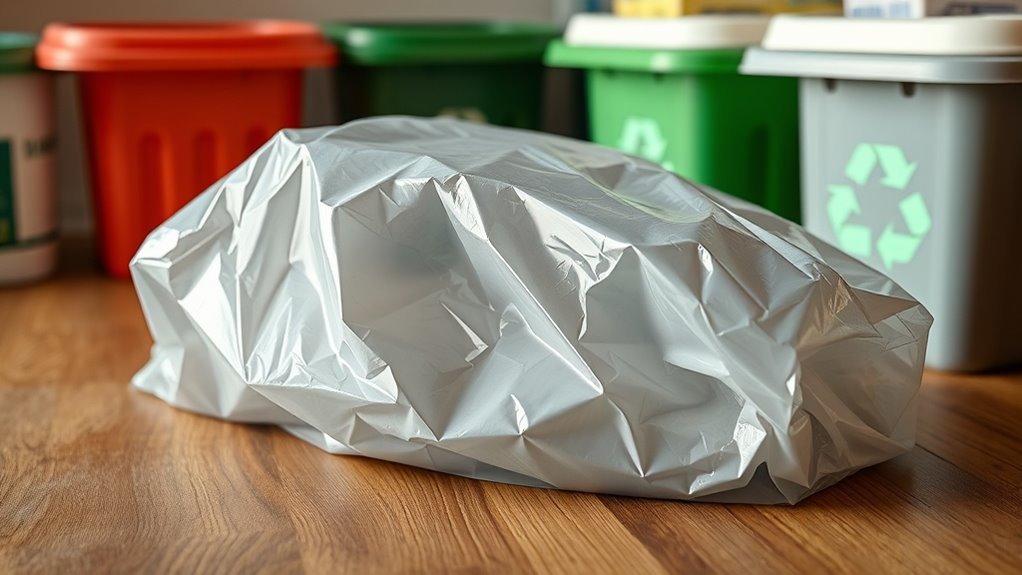
Many people wonder if they can recycle plastic grocery bags at home. The truth is, home recycling usually doesn’t accept plastic bags because they can clog machines and cause jams. Instead, you should focus on proper bag storage to keep them organized.
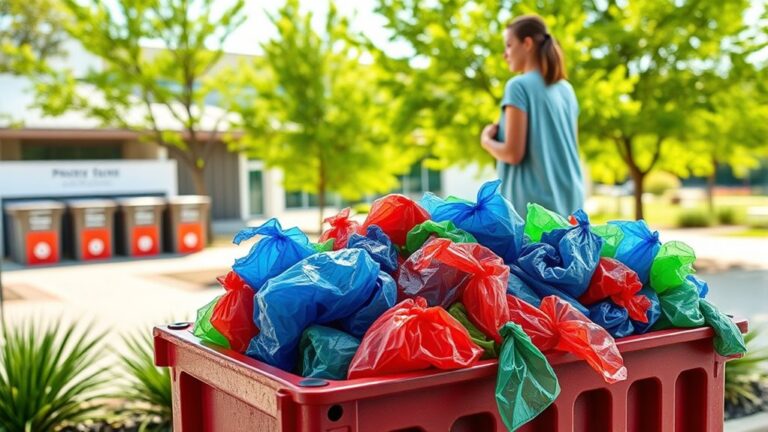
Designate a bin or a dedicated bag for storing your plastic grocery bags, making it easy to gather them in one place. When you have enough, take them to a local drop-off recycling center that accepts plastic bags or check if your grocery store has a dedicated bin.
While home recycling isn’t an option, preparing your bags for recycling through proper storage guarantees they won’t end up in the trash or in the environment. Remember, these bags are recyclable, but they need special handling outside your regular curbside recycling system.
Why Are Plastic Grocery Bags Not Usually Accepted in Recycling Bins?
You might be wondering why you can’t just toss your plastic grocery bags into the curbside recycling bin. Well, the thing is, those bags are really thin and flimsy, so they tend to get tangled up in the recycling machines. That can cause jams and slow everything down, which is a big problem for processing centers.
Plus, not all recycling facilities are set up to handle these bags properly. Their material and how they’re made make them tricky to process with the regular recycling equipment. So, it’s usually better to reuse them or find a special drop-off spot for plastic bags rather than putting them in your curbside bin.
Bag Material Limitations
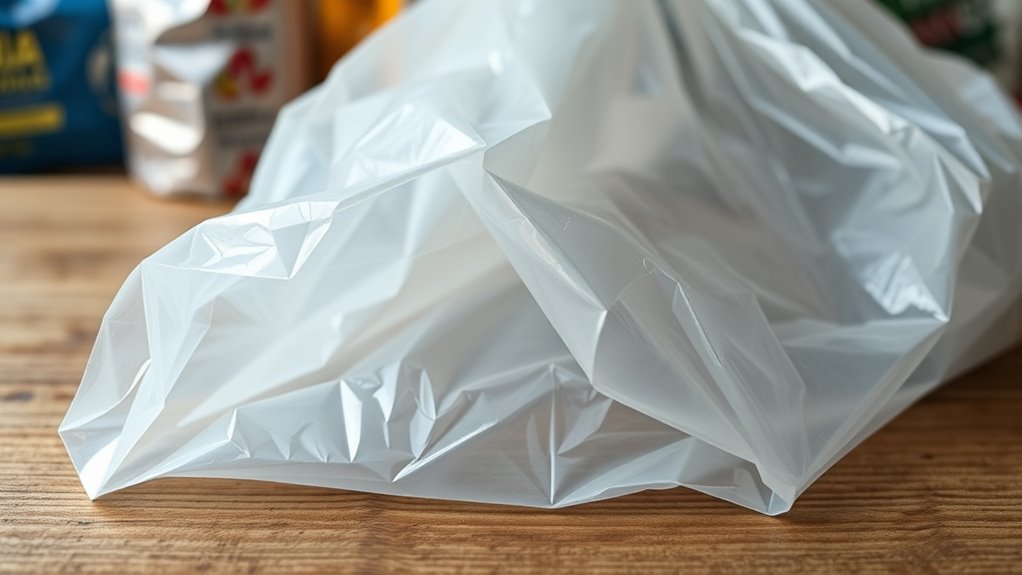
Plastic grocery bags are rarely accepted in recycling bins mainly because their material creates problems for standard recycling processes. These bags are made from thin, flexible plastics that can easily clog machinery, causing disruptions at recycling facilities.
Many bags are made from low-density polyethylene, which isn’t always compatible with recycling streams focused on rigid plastics. This issue is worse if bags contain biodegradable materials or additives, making sorting and processing even more complicated.
Because of these challenges, many recycling centers prefer shopping bag alternatives that are easier to recycle or compost. Choosing reusable bags or biodegradable materials helps avoid these issues and makes your waste reduction efforts more effective and eco-friendly.
Recycling Facility Restrictions
Recycling facilities often decline plastic grocery bags because their thin, flexible nature causes machinery to jam or clog during processing. Modern recycling technology is designed to handle rigid plastics like bottles and containers, but flexible bags tend to wrap around equipment or tangle, disrupting waste management operations.
As a result, many facilities exclude bags from accepted materials to prevent damage and delays. Separating plastic bags from other recyclables is difficult and costly, often leading to contamination.
Because of these restrictions, recycling centers recommend alternative methods, such as returning bags to specific collection points or participating in specialized recycling programs. This helps streamline waste management and ensures recyclable materials are processed efficiently without damaging recycling infrastructure.
How Do Recycling Facilities Handle Plastic Grocery Bags?
Although recycling facilities aim to process plastic grocery bags, they often struggle to do so efficiently because these bags can clog machinery. Plastic waste like grocery bags can jam equipment, causing delays and increasing costs.
During recycling processes, facilities rely on sorting technology to separate plastics from other waste, but thin bags often get tangled or missed. Facility challenges stem from these issues, making it difficult to recover high-quality recyclables.
Your consumer habits, such as not emptying or cleaning bags before recycling, also complicate the process. To reduce environmental impact, many facilities focus on waste education and encourage proper recycling practices.
Industry collaboration is essential to develop better equipment and strategies for handling plastic waste. While some recycling centers can process grocery bags, many still face hurdles.
What Makes Plastic Grocery Bags Difficult to Recycle?
Plastic grocery bags can be pretty tricky to recycle, mainly because they’re so thin and tend to break apart during processing. That makes sorting them a real challenge. Plus, if they’re contaminated with food or other debris, it can mess up the whole batch of recyclables, which isn’t good. And honestly, not all recycling centers have the special equipment needed to handle these bags efficiently, so they often end up not being recycled at all.
Material Composition Challenges
The material makeup of plastic grocery bags creates big challenges for recycling facilities. These bags are made from thin, flexible polyethylene, which causes issues during processing. Their lightweight nature often leads to tearing or clogging up equipment.
Plus, many plastic grocery bags don’t biodegrade. That means if they’re not recycled properly, they stick around in the environment for hundreds of years. Their composition makes sorting and recycling more complicated compared to other plastics.
Specialized equipment or processes are often needed to handle them, which adds to the difficulty. Because of this, many recycling centers either reject these bags or send them straight to landfills.
This complexity shows why we need better material choices that balance usefulness with environmental responsibility.
Contamination Risks Increase
Contamination is a major obstacle that makes recycling plastic grocery bags difficult. Common sources include leftover food, liquids, dirt, and other debris stuck to the bags.
When these contaminants are present, they can spoil entire batches of recyclables. This leads to higher processing costs and more waste.
Many people don’t have proper recycling knowledge, so they often discard non-recyclable items or contaminants with plastics. This misinformation hampers recycling efforts and increases contamination risks.
Recycling facilities often reject contaminated bags to protect machinery and maintain quality. To improve recycling rates, we need to raise awareness about contamination sources and encourage proper disposal habits among consumers.
Recycling Infrastructure Limitations
Recycling facilities often aren’t equipped to handle plastic grocery bags because their thin, flexible nature makes them tough to process with standard machinery. These bags tend to clog up sorting equipment, leading to delays and costly repairs.
This limitation shows why we need better recycling infrastructure and more public education about proper disposal methods. Many community programs try to cut down on plastic bag waste by promoting alternatives or setting up dedicated drop-off points.
But widespread recycling remains hard. Without specialized equipment or clear guidance, many bags end up in landfills or as litter. Improving recycling systems needs investment and raising awareness so these bags can be recycled or reused more effectively, helping reduce their environmental impact.
Where Can You Drop Off Plastic Grocery Bags for Recycling?
Wondering where to drop off your plastic grocery bags for recycling? Many stores and recycling centers offer convenient options, making it easy to reuse and recycle. Check with your local grocery stores, as they often have designated bins for plastic bags.
Some community recycling centers accept plastic grocery bags as part of their curbside recycling programs. Here’s a quick guide to common options:
| Location | Type of Recycling | Notes |
|---|---|---|
| Grocery Store Chains | Plastic bag drop off | Most have dedicated bins |
| Local Recycling Centers | Recycling drop off | Call ahead to confirm acceptance |
| Big-Box Retailers | Plastic film recycling | Some accept plastic bags and wraps |
| Community Drop-Off Points | Recycling kiosks | Usually in shopping centers |
| Special Recycling Events | Plastic bag collection drives | Seasonal or special events |
Using these local recycling options helps keep plastic bags out of landfills and supports eco-friendly practices.
What Are Eco-Friendly Alternatives to Plastic Grocery Bags?
Looking for eco-friendly alternatives to plastic grocery bags? Well, you might want to consider using reusable fabric bags. They’re pretty durable and can be used over and over again, which means less plastic waste ending up in the environment. Plus, they come in all sorts of styles and sizes, so shopping can be both eco-friendly and fun!
If you’re into composting, there are also compostable bags out there. These break down naturally in the environment, helping to reduce landfill waste. So, whether you go for fabric or compostable options, both are great ways to support sustainable living and do your part for the planet.
Reusable Fabric Bags
If you’re looking for eco-friendly alternatives to plastic grocery bags, reusable fabric bags are a smart choice. They help support sustainability by reducing waste and minimizing environmental impact.
Made from durable materials like canvas, cotton, or jute, fabric bags are built to last. Their sturdy construction means you can reuse them many times without worry.
These bags are great for carrying heavy groceries since they won’t tear or wear out quickly. Plus, they come in different sizes and styles, making them both practical and fashionable.
Compostable Bag Options
As concerns about plastic pollution grow, compostable bag options offer a promising eco-friendly alternative to traditional plastic grocery bags. These bags are made from biodegradable materials like cornstarch, PLA, or plant fibers, which break down naturally in composting environments.
By choosing compostable bags, you’re supporting sustainable packaging practices that reduce landfill waste and pollution. Unlike conventional plastics, these bags decompose within months, leaving no harmful residues.
When used correctly, they can be composted along with food scraps and yard waste, turning waste into nutrient-rich compost. Compostable bag options are a great way to lessen your environmental footprint while still enjoying grocery shopping.
They show a commitment to eco-conscious living by replacing single-use plastics with biodegradable alternatives.
How Can You Properly Recycle or Reuse Plastic Grocery Bags?
Properly recycling or reusing plastic grocery bags starts with understanding the best practices to keep them out of landfills and the environment. To practice bag reuse, consider turning old bags into trash liners or using them for storage. This reduces waste and extends their usefulness.
Regarding recycling, check if your local facilities accept plastic bags, as many don’t. Instead, gather your bags and take them to designated drop-off points, often found at grocery stores. These collection bins guarantee the bags are properly processed and recycled into new products.
Incorporate eco-friendly practices by avoiding single-use bags altogether when possible. But if you do use plastic bags, reuse them multiple times. This simple step decreases demand for new bags and minimizes environmental impact.
What Are Better Shopping Bag Options for the Environment?
Choosing eco-friendly shopping bag options can significantly cut down your environmental impact. Opt for bags made from sustainable materials like organic cotton, jute, or recycled fabrics. These options are biodegradable, renewable, and often require less energy to produce, making them a greener choice.
Reusable bags promote better habits by reducing single-use plastic waste. Bringing your own bags means less pollution and conserving resources used in making disposable options. It’s a simple way to help the environment every time you shop.
Using reusable bags reduces plastic waste and conserves resources, making every shopping trip more eco-friendly.
Invest in sturdy, multi-purpose bags that can last for years. This reduces the need to buy replacements often. Cloth or hemp bags are especially durable and environmentally friendly choices.
Developing the habit of carrying reusable bags with you ensures you’re always prepared. This way, you’re less likely to rely on plastic alternatives when shopping. By choosing sustainable materials and practicing conscious consumer habits, you can really make a difference in reducing plastic waste and supporting a healthier planet.
How Can Communities Improve Plastic Waste Management?
Communities can improve plastic waste management by setting up simple, accessible recycling programs that everyone can participate in. Promoting local initiatives encourages residents to recycle correctly and regularly.
Making recycling bins available in public spaces, neighborhoods, and businesses helps remove obstacles and boosts participation. Raising awareness is essential—educate residents about why recycling matters and how it benefits the environment.
Organize workshops, campaigns, and school programs to teach proper waste sorting and the importance of cutting down on plastic waste. Working with local groups and authorities can help create clear labels and instructions for recyclable plastics.
When community members understand their role and see easy options, they’re more likely to get involved. These steps can significantly cut plastic pollution and build a culture of sustainability in your community.
What Future Innovations Could Make Plastic Bag Recycling Easier?
Advancements in recycling technology and innovative materials are set to change how plastic bags are processed in the future. Biodegradable options could lead to plastics that break down naturally, cutting down waste and contamination.
Smart recycling systems, with sensors and AI, can better identify and sort plastic bags, making the process more efficient and reducing human error. Researchers are also exploring chemical recycling methods that turn plastics back into raw materials, making recycling more sustainable.
Plus, new packaging materials might be designed for easier recycling or composting, helping to streamline the whole process. These innovations aim to make recycling simpler, reduce contamination, and encourage a circular use of plastics.
As technology keeps improving, plastic bag recycling will become more accessible and eco-friendly. This progress can significantly reduce landfill waste and lessen environmental impact, promoting more responsible consumption and disposal habits.
Frequently Asked Questions
Are Biodegradable Plastic Bags a Better Recycling Option Than Traditional Ones?
Biodegradable plastic bags are generally a better option than traditional ones because they use biodegradable materials that break down faster in the environment. This helps reduce plastic waste and offers environmental benefits like less pollution and lower landfill buildup.
But they still need proper disposal conditions to fully decompose. If you care about being eco-friendly, choosing biodegradable bags can help minimize your environmental impact and support sustainable waste management.
How Do Plastic Bag Recycling Programs Impact Local Communities?
Plastic bag recycling programs boost your community engagement by encouraging residents to participate actively in sustainability efforts. They raise recycling awareness and make people more conscious of waste reduction and proper disposal.
When you join these programs, you help reduce litter and landfill overflow, which leads to a cleaner environment. Your involvement can inspire others to recycle, creating a ripple effect that benefits everyone.
In the long run, these programs promote eco-friendly habits that can transform your community into a greener, more sustainable place to live.
Can Plastic Grocery Bags Be Turned Into Other Useful Products?
Think of plastic grocery bags as a blank canvas waiting for new life. Yes, they can be transformed into recycled products like decking, containers, or even park benches.
This process turns waste into sustainable alternatives that help reduce pollution. By giving bags a second chance, you’re helping the environment and creating useful items from what once seemed worthless.
Recycling breathes new purpose into plastic bags, making them part of a greener future.
What Are the Health Risks Associated With Improperly Recycled Plastic Bags?
Improperly recycled plastic bags can pose health risks through pollution, contaminating soil and water sources. When recycling isn’t managed properly, toxic chemicals might be released, affecting nearby communities and ecosystems.
Make sure plastic bags are clean and properly sorted before recycling. Doing this helps prevent harmful chemicals from entering the environment and reduces health hazards related to pollution.
Are There Specific Brands That Produce More Eco-Friendly Plastic Bags?
Think of brands as the guardians of our planet’s future; some produce more eco-friendly plastic bags by using eco-friendly materials and sustainable packaging.
You can choose companies committed to reducing environmental impact, like those using biodegradable or recycled plastics. These brands symbolize hope, showing that sustainable choices are possible.
Conclusion
So, next time you’re clutching that crinkly plastic grocery bag, remember—you’re holding a tiny piece of recycling’s greatest mystery.
Instead of battling the system, why not adopt the glamorous world of reusable bags? After all, who needs recycling when you can save the planet one stylish tote at a time?
So go ahead, be a hero—just don’t expect your plastic bags to win any recycling awards anytime soon.
Remember, plastic grocery bags are not widely recyclable, so it’s better to use reusable bags to help the environment.