How Many Grocery Stores Are in the U.S.?
Finding the right grocery store can be overwhelming with so many options out there. You’re not alone—many people struggle to find the perfect spot that fits their needs and preferences.
There are about 38,000 grocery stores across the U.S., with more opening in urban areas and fewer in rural regions. You’ll find a mix of supermarkets, convenience stores, online services, and independent shops, which add unique community touches.
Factors like population density, economic strength, and market competition influence store numbers.
As the industry evolves with online shopping and sustainability trends, you’ll see the landscape of grocery retail changing. Stay with us for more insights.
Key Takeaways
- Over 38,000 grocery stores operate across the United States, including supermarkets and convenience stores.
- About 20,000 to 25,000 of these are independent stores that offer more personalized shopping experiences.
- Urban areas tend to have more grocery stores because of higher population density and demand.
- The total number of stores is affected by economic conditions, market competition, and regional demographics.
- Online grocery services are growing, which is changing the traditional store count and formats in the U.S.
How Many Grocery Stores Are in the U.S. Today?
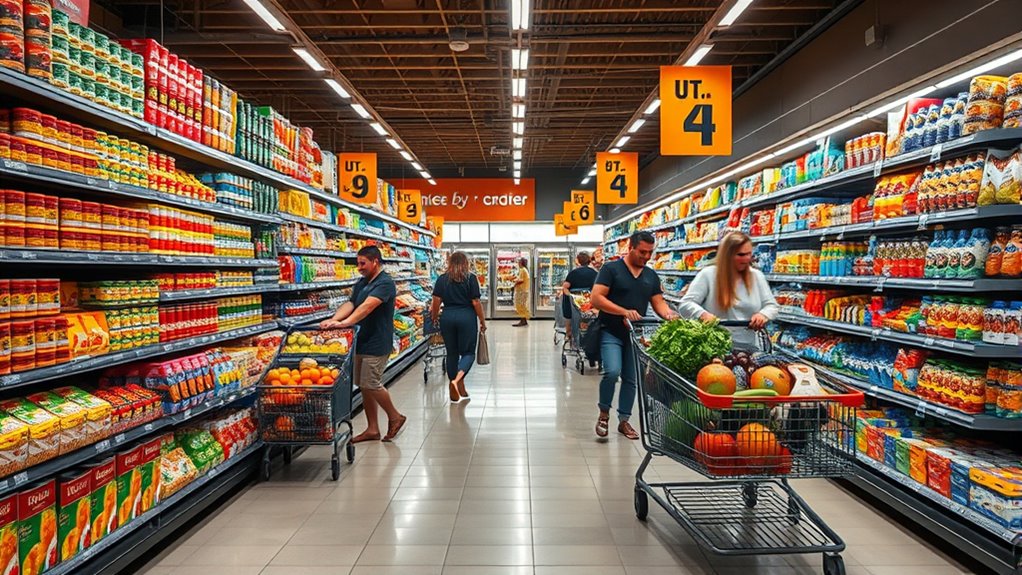
Have you ever wondered exactly how many grocery stores are operating across the United States today? Recent trends show a steady increase in the number of stores, especially with urban grocery expansion gaining momentum.
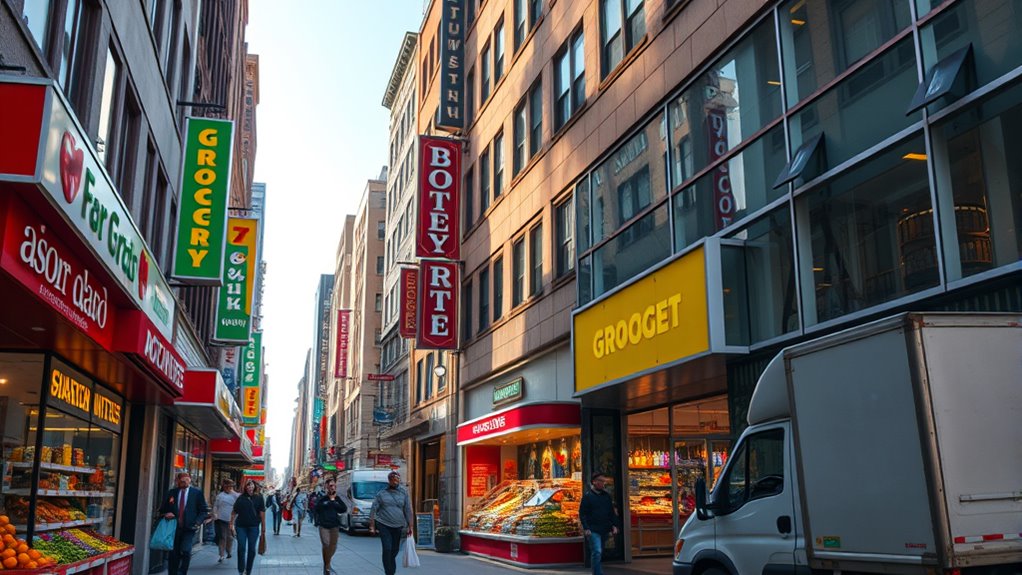
As cities grow, more grocery outlets open to meet the rising demand for convenient shopping options. This expansion isn’t just about larger chains; it includes smaller, local stores adapting to urban environments.
You’ll find that the total number of grocery stores now exceeds 38,000 nationwide, reflecting a resilient retail sector. The trend toward urban grocery expansion means stores are becoming more accessible within city neighborhoods.
This reduces the need for long commutes, making shopping easier for consumers. These changes are driven by people seeking faster, easier experiences and retailers capitalizing on dense populations.
What Factors Affect the Number of Grocery Stores in the U.S.?
The number of grocery stores you notice around you really depends a lot on where you live. For example, in densely populated areas, there tend to be more stores because there are more people to serve.
Economic factors also come into play—some regions have a stronger economy, which makes it easier for stores to stay open and thrive. On the other hand, in areas with lower income levels, there might be fewer stores or different types of grocery options.
Plus, how many grocery stores are in your area is influenced by competition. If there are many stores competing for customers, you’ll probably see more options. But if the market is less crowded, there might be fewer stores overall.
Population Density Impact
Population density plays an essential role in determining the number of grocery stores in different areas across the U.S. In urban areas, higher population densities support more stores because of greater demand and diverse consumer preferences.
Conversely, rural communities have fewer stores, often spaced farther apart. This reflects lower population growth and economic disparities. Store distribution aligns with demographic trends—areas with rapid growth see new stores opening to meet rising shopping habits.
Population density also influences shopping behaviors. Urban residents often prefer quick, convenient options, while rural shoppers may travel farther for groceries.
These patterns shape how grocery chains allocate resources and expand their presence. They aim to meet the needs of different communities based on density, economic factors, and changing consumer preferences.
Regional Economic Factors
Consumer preferences and cultural factors also play a role in the types of stores and what they offer. Local rules and zoning laws can either help or block new grocery stores, especially in urban zones or places with strict transportation rules.
Employment trends impact how much demand there is for grocery services. Food deserts highlight areas that lack access to fresh food options. Overall, economic stability and regional growth determine how densely stores are packed, making some areas crowded and others harder to serve.
All these factors come together to create a diverse grocery shopping landscape across the U.S.
Market Competition Levels
| Factor | Effect |
|---|---|
| Market saturation | Limits new stores and makes competition more intense. |
| Consumer preferences | Shape store offerings, formats, and promotional tactics. |
| Neighborhood demographics | Guide location choices and inventory management. |
| Brand loyalty | Decreases competition and influences store formats and counts. |
How Do Different Data Sources Count Grocery Stores?
Different data sources use different methods to count grocery stores, which can lead to discrepancies in the reported numbers. These differences come from various counting methods and industry definitions, making direct comparisons tricky.
Some sources focus on store types, like convenience stores versus larger supermarkets, while others group retail categories differently. This can cause variations in the numbers reported.
Different sources may categorize grocery stores differently, leading to variations in reported numbers.
Statistical differences also happen because of survey accuracy and sampling methods, which affect how reliable the data is. Census limitations add to this, as not all small or independent stores are consistently captured.
Each data provider might have its own criteria for what counts as a grocery store. This can lead to differences across reports. These variations show why it’s hard to get an exact count.
Ultimately, understanding these nuances helps explain why different reports show different numbers for the total grocery stores in the U.S.
Which Grocery Store Chains Dominate the U.S. Market?
You probably notice that some grocery store chains are everywhere, while others are more regional. But have you ever wondered which ones really hold the biggest slices of the market? It’s interesting to see how different areas favor certain stores, and their growth strategies make a big difference in how much they expand or hold onto their turf.
Getting a handle on these trends helps you understand how the grocery game keeps changing. It’s all about who’s innovating, who’s expanding, and how they’re competing to stay ahead in the busy world of grocery shopping.
Leading Market Share Holders
The grocery store industry in the U.S. is mainly led by a few big chains that hold a large chunk of the market. These top players succeed by matching what consumers want, building strong brand loyalty, and using smart pricing strategies.
They operate in different store formats, from regular supermarkets to smaller convenience stores, to fit different shopping styles. Promotions like discounts and loyalty programs help attract customers and increase sales.
Many of the leading chains focus on local sourcing, health trends, and sustainability to meet changing consumer needs. By adapting to these shifts and emphasizing responsible sourcing, they stay on top, shaping how Americans shop for food every day.
Regional Dominance Patterns
While some grocery chains have a national presence, regional dominance patterns show that certain brands are more popular in specific parts of the country. These trends highlight how store preferences differ between urban and rural areas.
For example, Kroger is the go-to in much of the Midwest and South, while Safeway is more common on the West Coast. Chains like ALDI and Lidl are expanding quickly across various regions, often appealing to rural shoppers with low prices.
Urban areas tend to prefer large supermarkets like Whole Foods and Trader Joe’s, which focus on organic and specialty products. These patterns reflect local tastes, economic factors, and how accessible stores are, shaping which grocery stores thrive in different parts of the U.S.
Growth Strategies Employed
Grocery store chains across the U.S. use a variety of growth strategies to expand their market share and stay competitive. They focus on building customer loyalty with targeted promotions and store formats that meet different shopping needs.
Technology plays a big role, with delivery services and better inventory management improving convenience and efficiency. Sustainability practices and sourcing locally attract health-conscious shoppers and help engage with the community.
Pricing strategies are carefully balanced to keep products affordable while still making a profit. Many chains also adapt to health trends by offering organic and gluten-free options.
Some companies grow by acquiring other stores or opening new ones, while others invest in online platforms to reach more customers. The table below highlights key strategies:
| Strategy | Focus Area |
|---|---|
| Customer Loyalty | Promotional tactics |
| Technology Integration | Delivery services, inventory |
| Sustainability | Eco-friendly practices |
| Local Sourcing | Fresh, local products |
| Store Formats | Different shopping experiences |
How Many Small and Independent Grocery Stores Are There?
Small and independent grocery stores make up a significant part of the retail food scene in the U.S., with thousands operating across the country. These stores are really important, especially in local communities, and their numbers show ongoing trends in small store growth.
Over the past few years, independent market growth has been steady. Consumers are drawn to these stores because of personalized service and unique product choices. Despite challenges from big-box stores and online shopping, many small stores continue to do well by focusing on fresh produce, local products, and community involvement.
Independent stores thrive by offering personalized service, unique products, and strong community connections despite large competitors.
The exact number varies, but estimates suggest there are around 20,000 to 25,000 independent grocery stores nationwide. Most of these are family-owned businesses, which help keep a local flavor and offer a personalized shopping experience.
As more people prefer to support local businesses, small and independent grocery stores keep growing. They remain an essential part of America’s grocery shopping landscape.
What Trends Are Reshaping Grocery Shopping in America?
As consumer preferences shift and technology advances, the way Americans shop for groceries is changing quickly.
You’re seeing more focus on sustainable sourcing and local options, reflecting a desire for environmentally friendly choices.
Plant-based products and health trends influence many buying decisions, with more people choosing plant-based foods and nutritious meal kits.
Grocery delivery has become a regular part of shopping, offering convenience and contactless options.
Digital coupons and apps help you save money and plan your shopping more easily.
Ethnic foods are growing in popularity, adding more variety to your diet.
Zero waste initiatives encourage reducing packaging and waste.
Consumers now look for stores that prioritize eco-friendly practices and offer a wider range of choices.
These trends point to a shift toward more mindful, healthy, and convenient grocery shopping experiences, shaping the future across America.
Where Are Grocery Stores Most Dense in the U.S.?
Have you ever wondered where grocery stores are most concentrated in the U.S.? Urban areas tend to have the highest density, driven by urban concentration and neighborhood diversity. These locations attract stores because of larger populations, diverse shopping habits, and consumer preferences.
Suburban expansion has also increased store density outside city centers, reflecting demographic shifts and changing shopping habits. Local economies influence where stores open, with grocery chains tailoring formats to fit community needs.
In densely populated areas, you’ll find a mix of large supermarkets, specialty stores, and smaller convenience outlets. However, some regions still face food deserts where transportation access is limited and store density is low.
Grocery store placement aligns with demographic trends, ensuring accessibility for different communities. As a result, store formats vary to meet neighborhood needs, from big-box stores to small local markets, shaping where grocery stores are most abundant across the country.
How Is Online Shopping Changing Grocery Retail?
Online shopping is changing grocery retail by making it more convenient and accessible for everyone. More people are choosing digital shopping over traditional stores as online grocery trends grow.
Now, you can browse aisles, compare prices, and order your groceries from your phone or computer, saving you time and effort. Delivery and curbside pickup are now standard options, letting you get fresh produce and household essentials without leaving home.
Browse, compare, and order groceries easily from your devices with convenient delivery and pickup options.
This shift is especially useful for busy schedules or people with limited mobility. Retailers are investing in easy-to-use apps and websites that offer personalized recommendations and real-time inventory updates.
As online grocery shopping expands, stores are changing how they operate, often combining digital and physical stores. Overall, these trends are making shopping more flexible, efficient, and tailored to your needs.
What Challenges Is the U.S. Grocery Industry Facing?
The U.S. grocery industry is dealing with quite a few challenges these days. One big issue is supply chain disruptions, which can cause delays in deliveries and sometimes leave shelves less stocked than customers expect. It’s frustrating for shoppers and makes managing inventory a real headache for store owners.
On top of that, there’s the rising cost of running a store. Expenses like wages and transportation are going up, which puts a lot of pressure on grocery retailers’ profits. To stay competitive and keep customers happy, they’ve got to find ways to adapt quickly to these changing conditions.
Supply Chain Disruptions
Consider these critical points:
- Transportation issues delay shipments and disrupt logistics strategies.
- Demand fluctuations make inventory management and procurement more complicated.
- Vendor relationships are strained, impacting product availability and pricing.
To keep grocery services reliable, we need agility and strategic planning to tackle these supply chain challenges.
Rising Operational Costs
Labor costs keep climbing, so stores are investing in tech solutions like automation and inventory control to cut overhead. Supply chain disruptions also squeeze profit margins, making sustainability and supply chain resilience more important than ever.
You’ll need to adjust your pricing strategies to stay competitive without losing margins. Investing in new technology can boost efficiency, but it often comes with upfront costs. Managing these rising expenses requires careful planning, strategic investments, and a focus on offering competitive prices that meet consumer demands for sustainability and quality.
What’s Next for Grocery Store Numbers in the U.S.?
As the retail landscape keeps changing, the future of grocery store numbers in the U.S. is still uncertain. Rapid advancements in technology and shifting consumer habits will play a big role in shaping what’s next.
You can expect several key trends to influence this space. First, there will be more automation and AI-driven shopping experiences, which could mean fewer traditional stores. Online grocery delivery will also continue to grow, changing how and where people shop.
Automation, AI, and online delivery will reshape grocery shopping, potentially reducing traditional stores and transforming the industry.
We’re also likely to see the rise of smaller, specialized stores focused on convenience and niche markets. These changes suggest a possible decline in the total number of brick-and-mortar stores. But at the same time, new formats and concepts will create fresh opportunities.
Consumer preferences for safety, speed, and personalization will drive where stores open and how they operate. As a result, grocery store numbers might go up or down as retailers adapt to new demands, balancing physical locations with digital options.
Keeping an eye on these trends will help you understand where the industry is headed next.
Frequently Asked Questions
How Do Seasonal Changes Impact the Number of Grocery Stores?
Seasonal changes cause fluctuations in the number of grocery stores’ inventory and displays, reflecting seasonal products and consumer behavior. During holidays or seasons like summer and winter, stores often expand or create pop-up locations to meet increased demand.
You’ll notice more seasonal products, which influence store layouts and stock levels. This adaptability helps stores attract customers and boost sales, responding directly to changing consumer behavior driven by seasonal preferences.
What Role Do Local Zoning Laws Play in Store Openings?
Local zoning laws greatly influence store openings by shaping zoning regulations and requiring store permits. You’ll often see community input playing a role, helping make sure new grocery stores meet neighborhood needs.
These laws also impact local economies and urban planning, dictating where stores can set up. By aligning store locations with community interests and urban development goals, zoning laws help balance commercial growth with residents’ needs and the overall neighborhood.
How Does Population Density Influence Grocery Store Placement?
Population density really shapes where grocery stores are placed, as urban planning tries to meet what consumers need efficiently.
In busy, crowded areas, stores tend to be closer together to serve more people quickly. In contrast, suburban or rural areas usually have fewer, bigger stores.
This setup influences your shopping habits, making convenience a top priority.
Retailers look at population density to choose the best locations, making sure they match local demand and stay flexible with changing consumer needs.
Are There Regional Differences in Grocery Store Availability?
Yes, regional differences impact grocery store availability. You’ll see different types of stores, like big-box retailers, specialty shops, and local markets, based on what people prefer locally.
Shopping habits also vary by area, which affects how many stores are around. Competition among stores and supply chains play a role too, making some places crowded with options while others have fewer choices.
All these regional factors create a unique grocery shopping scene across the U.S., tailored to local needs and cultural tastes.
How Do Economic Downturns Affect Grocery Store Closures?
During economic downturns, grocery store closures tend to increase because of the financial struggles businesses face. You might notice fewer options as stores shut down due to declining consumer spending.
Retailers often see lower sales, which can lead to layoffs and store closures. Your shopping habits could also shift, with more people turning to discount stores or online shopping.
Conclusion
To conclude, as you explore how many grocery stores are in the U.S., you’ll see the numbers change based on factors like population, preferences, and technology.
From big-box chains to local shops, the grocery store landscape is lively and diverse. Keep an eye on online shopping options and ongoing challenges because the future of grocery stores depends on adaptability and awareness.
Stay savvy, stay informed, and watch how the grocery scene evolves and shines.