10 Must-Have Items at Mart Asian Grocery
Many people want to cook authentic Asian dishes at home but feel overwhelmed by what to keep in their pantry. You’re not alone—building a well-stocked Asian grocery pantry can seem tricky at first.
To build a well-stocked Asian grocery pantry, you need essentials like jasmine or sushi rice, soy and fish sauces, dried noodles, and sesame oil.
Don’t forget key spices like five-spice powder and curry powder, plus versatile condiments like hoisin and Sriracha.
Stock up on tofu, dumpling wrappers, and rice vinegar for variety.
Mastering these basics helps you create authentic dishes, and if you keep exploring, you’ll uncover even more ingredients to enhance your cooking skills.
Key Takeaways
- Essential staples like rice varieties, soy sauce, fish sauce, sesame oil, and canned goods form the foundation of Asian cooking.
- Quality ingredients with clear labels, vibrant appearance, and fresh aroma help ensure authentic and flavorful dishes.
- Must-have sauces and condiments such as soy sauce, hoisin, sriracha, and fish sauce really bring out the authentic flavors.
- Versatile rice and noodle options like jasmine rice, udon, and rice vermicelli are key for a variety of recipes.
- Key spices and seasonings including five-spice powder, curry powder, and sesame oil add depth and complexity to your dishes.
Essential Asian Grocery Staples for Your Pantry
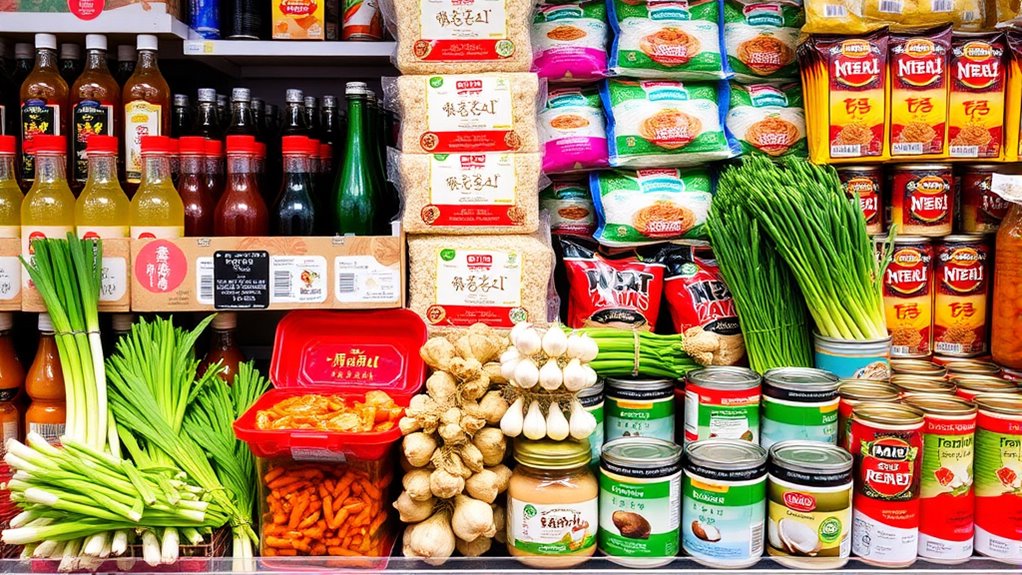
Having a well-stocked Asian pantry starts with key staples that form the foundation of many delicious dishes. These essentials help you master various cooking techniques, from stir-frying to braising, and ensure ingredient pairings come together effortlessly.
Start with rice varieties like jasmine and sushi rice, which are versatile and serve as a base for countless meals. Stock up on soy sauce, fish sauce, and sesame oil for flavor depth and authentic taste.
Incorporate canned goods like bamboo shoots, water chestnuts, and coconut milk for convenience and variety. Don’t forget dried noodles such as rice vermicelli or udon, perfect for quick meals.
Having these staples on hand allows you to experiment with ingredient pairings, balancing salty, sweet, sour, and umami flavors easily. With these essentials, you’ll find it easier to execute traditional techniques and create flavorful dishes that reflect true Asian cuisine.
How to Choose Quality Asian Ingredients at the Grocery Store
How can you guarantee you’re selecting the best Asian ingredients at the grocery store? Start by paying attention to ingredient sourcing. Knowing where the ingredients come from helps assure freshness and authenticity. Look for products with clear labels indicating their origin, especially for items like rice, spices, and dried goods.
Check quality indicators such as vibrant color, firm texture, and a fresh aroma. These are signs of good quality. For produce, avoid items with blemishes or soft spots, and opt for firm, brightly colored options. When selecting packaged goods, read expiration dates and inspect packaging for damage or leaks.
Authenticity often correlates with packaging that looks well-maintained and genuine. By focusing on ingredient sourcing and observing quality indicators, you increase your chances of choosing ingredients that will make your dishes flavorful and authentic.
Making mindful choices assures your cooking is both delicious and true to traditional Asian flavors.
Must-Have Sauces and Condiments for Authentic Flavor
To get authentic Asian flavors in your cooking, having the right sauces and condiments is key. They add depth and complexity, making your meals more vibrant and delicious.
Stock up on essentials that go well with different ingredients, helping you create perfect condiment pairings. Some must-have options include:
- Soy sauce: The versatile base for many dishes, from stir-fries to marinades.
- Fish sauce: Adds a salty, umami punch, especially in Thai and Vietnamese recipes.
- Hoisin sauce: A sweet and savory glaze, perfect for dipping or drizzling.
- Sriracha: Spicy and tangy, great for boosting soups, noodles, or meats.
Having these sauces ready allows you to easily customize flavors and stay true to authentic Asian cuisine.
Best Rice and Noodle Varieties for Asian Dishes
Pairing the right rice and noodles with your favorite sauces can elevate your Asian dishes to a new level of authenticity and flavor. For rice, jasmine rice is a popular choice because of its fragrant aroma and fluffy texture, perfect for stir-fries and curries.
Try exploring different rice varieties like short-grain or basmati to match the unique flavor profiles of regional dishes. When choosing noodles, udon noodles are thick, chewy, and great for hearty broths, while rice noodles are light and versatile for stir-fries or soups.
Understanding different noodle types and their cooking methods helps prevent overcooking or sticking. Regional differences also influence pairing—sticky rice works well with Thai and Chinese meals, while soba noodles are ideal for Japanese recipes.
Use proper techniques like rinsing rice or boiling noodles al dente. Serve your rice and noodles hot, garnished with fresh herbs or condiments for authentic flavor. Picking the right varieties can boost your cooking and help capture regional nuances.
Key Spices and Seasonings to Elevate Your Cooking
Raising your Asian dishes often comes down to the right blend of spices and seasonings that bring depth and authentic flavor. Stocking up on essential spice blends and key seasonings helps you craft vibrant, flavorful meals. Use seasoning tips like balancing salty, sweet, sour, and spicy elements to improve your dishes.
Here are some must-have spices and seasonings to keep on hand:
- Five-spice powder, for depth and complexity
- Sesame oil, for aroma and richness
- Fish sauce, for umami and saltiness
- Curry powder, for warmth and depth
These ingredients serve as the foundation for many Asian recipes. Incorporate spice blends like garam masala or chili paste to add layers of flavor. With these seasonings, you can easily turn simple ingredients into authentic, flavorful dishes.
Ingredients Every Asian Soup and Stew Needs
Building a flavorful base for Asian soups and stews starts with the right ingredients that bring depth and authenticity to each bowl. Vital ingredients include various soup bases, like miso, dashi, and chicken stock, which set the foundation for rich flavors.
To control stew thickness, consider adding cornstarch, rice, or taro for a hearty texture. Aromatics such as garlic, ginger, and scallions are essential to deepen the flavor profile.
Vegetables like bok choy, mushrooms, and carrots add freshness and complexity. Proteins like tofu, chicken, or seafood complete the dish.
Here’s a quick overview:
| Ingredient Type | Examples | Purpose |
|---|---|---|
| Soup Bases | Miso, Dashi, Chicken Stock | Flavor foundation |
| Thickeners | Cornstarch, Rice, Taro | Achieve desired stew thickness |
| Aromatics | Garlic, Ginger, Scallions | Improve flavor depth |
| Vegetables | Bok Choy, Mushrooms | Add texture and freshness |
| Proteins | Tofu, Chicken, Seafood | Make each bowl satisfying |
Simple Asian Snacks and Appetizers to Try
Asian snacks and appetizers offer a quick and delicious way to explore the diverse flavors of the region. They’re perfect for snacking or sharing with friends while trying new tastes.
Discover quick, delicious Asian snacks perfect for sharing and exploring new flavors at home.
You might start with crispy rice cakes, which are light, crunchy, and often topped with savory seasonings. Savory seaweed snacks are another great choice—these are thin, crispy sheets packed with umami flavor.
If you crave something spicy, spicy noodle cups deliver heat and comfort in a convenient package. For a touch of sweetness, sweet mochi treats are chewy, colorful, and come in various flavors, from classic red bean to fruity options.
These snacks are versatile and easy to enjoy anytime. They also add a fun element to your pantry, offering quick bites that highlight authentic Asian flavors.
Incorporate these snacks into your shopping list to bring a taste of Asia into your home effortlessly.
Tips for Properly Storing Your Asian Grocery Finds
Proper storage is key to keeping your Asian grocery finds fresh and flavorful for as long as possible. Follow temperature guidelines to prevent spoilage and maintain quality.
For perishable items like fresh vegetables, tofu, and seafood, store them in the refrigerator at 32-40°F (0-4°C). Use the coldest part of your fridge and keep items in airtight containers to avoid cross-contamination and moisture loss.
Dried goods such as rice, noodles, and spices should be kept in a cool, dry place away from direct sunlight. Transfer these staples into airtight containers to protect against humidity and pests.
For sauces and condiments, use clean, sealed jars or bottles. Store them in the fridge if the label recommends it. Regularly check expiration dates and organize your pantry to keep everything fresh.
Proper storage not only extends shelf life but also helps preserve the authentic flavors of your Asian ingredients.
How These Staples Help You Cook Authentic Asian Dishes
Storing your ingredients properly keeps them fresh and full of flavor, making it easier to cook authentic dishes. These staples are the foundation of many Asian recipes, providing authentic taste and texture.
For example, dumpling wrappers are essential for making homemade dumplings. Different tofu varieties add protein and absorb flavors beautifully.
Miso paste and fermented sauces deepen umami in soups and marinades, while chili oils add a spicy kick. Rice vinegar and pickled vegetables bring tang and acidity to balance rich dishes.
Seaweed sheets are perfect for sushi or soups, offering a salty, umami flavor. Curry pastes lend depth to stews, and cooking oils like sesame or peanut oil provide the perfect base for stir-fries.
With these ingredients on hand, you can effortlessly create dishes that taste just like those from traditional Asian cuisines. Turn your kitchen into an authentic Asian restaurant with ease.
Next Steps to Expand Your Asian Ingredient Collection
Expanding your ingredient collection starts with exploring new sources and trying out different flavors. Focus on sourcing from diverse markets like local Asian grocers, online shops, or specialty stores to find authentic products.
Don’t hesitate to experiment with unfamiliar ingredients like preserved vegetables, unique spices, or regional condiments. This helps broaden your flavor profiles, adding depth and authenticity to your dishes.
Experiment with preserved vegetables, spices, and condiments to deepen flavor and enhance authenticity in your dishes.
Keep a list of ingredients you want to explore and research how to use them in cooking. Attending cooking classes or watching tutorials can help you learn how to incorporate these new items properly.
As you collect more ingredients, you’ll discover how each one adds a unique taste and character to your recipes. The key is understanding how different ingredients influence flavors so you can create authentic Asian dishes and customize them to your liking.
Frequently Asked Questions
Which Asian Grocery Items Are Suitable for Gluten-Free Diets?
You can find plenty of gluten-free options at Mart Asian Grocery. Look for gluten-free sauces like tamari or coconut aminos, which are great soy sauce alternatives.
Also, stock up on rice alternatives such as cauliflower rice or sticky rice labeled gluten-free. These items help you enjoy Asian dishes without gluten, making your meals safe and delicious.
Always check labels to verify products are certified gluten-free.
How to Identify Organic Asian Ingredients in the Store?
Think of organic Asian ingredients as hidden gems waiting to be uncovered. They’re often marked with an organic certification label.
To identify them, look for symbols from trusted certifying bodies on the packaging. You can also ask store staff about ingredient sourcing and whether products are verified organic.
This way, you can be sure your ingredients come from farms that prioritize natural methods, giving your dishes authentic flavor with peace of mind.
Are There Vegetarian or Vegan Options for Common Asian Staples?
Yes, you’ll find plenty of vegetarian and vegan options for Asian staples. Look for plant-based proteins like tofu, tempeh, and seitan, which work well in many dishes.
Many stores also carry vegan sauces like soy, hoisin, and peanut sauces that don’t contain animal ingredients. Just check labels carefully to make sure they’re free from fish sauce or animal-derived additives.
These options make it easy to enjoy authentic Asian cuisine while sticking to your plant-based diet.
Can I Substitute Missing Ingredients in Traditional Asian Recipes?
You can absolutely substitute missing ingredients in traditional Asian recipes! Imagine transforming a dish with simple ingredient swaps that still capture those authentic flavors, like trading soy sauce for coconut aminos or tamarind paste for lime juice.
While it might not be exact, your kitchen becomes a flavor playground, and you’ll end up with delicious results. Just stay creative and trust your palate.
Keep in mind that the heart of traditional dishes often lives in the flavors and techniques, not just the ingredients. So don’t be afraid to experiment and make the dish your own!
How Do I Select the Best Quality Seafood Products at Asian Markets?
To pick the best quality seafood at Asian markets, look for fresh seafood with clear, bright eyes and firm flesh. It should look lively and appealing.
The smell is really important too. It should have a clean, ocean-like scent, not a strong fishy odor. Trust your nose to find the freshest options.
Choose vendors that focus on sustainability, offering wild-caught or responsibly farmed seafood. This helps ensure you’re getting good quality and supporting ethical practices.
Don’t hesitate to ask the staff about the seafood’s freshness and where it comes from. Getting the right info helps you pick top-quality, sustainable seafood for your dishes.
Conclusion
With these essentials in your pantry, you’ll be ready to whip up authentic Asian dishes that rival a bustling street food stall. Think of your kitchen as a vibrant bazaar, brimming with flavors and aromas waiting to unfold.
Keep exploring new ingredients and techniques. Soon, you’ll be crafting culinary masterpieces that transport your taste buds across continents.
So, don’t hesitate—your Asian-inspired culinary adventure is just a shopping trip away with these must-have items at Mart Asian Grocery!